Criticisms
Resupination
2004
Ryu Hanseung
◇ The camera lens projects the image of the object and passes it through to form an image on the film. This is the primary function of the lens and we know this fact relatively well. In this process, however, the lens is a nasty guy who turns the object upside down. This reversal of the image is called ‘resupination’, which is originally a botanical term referring to a state in which the organ of a plant is reversed from its original position. Like a stubborn lens looking at the world but trying to confirm its existence and receive the toll, Park Jung-huk's looking at the world means his strong ambition to overturn the world through his own perspective, rather than passing the visible reality as it is.
● The strategy of 'malocclusion' that Park Jung Hyuk presented in the first private exhibition is still valid for this exhibition. Malocclusion is a term related to teeth, which means that the occlusion of the upper teeth and the lower teeth is not in a normal relationship. However, our customary value judgment of dividing teeth into normal and abnormal depending on the state of the teeth is hidden in this term. In other words, the problems are the division system and stereotypes whose objective validity is suspected.
At the same time, he raises strong vigilance about the disciplinary thinking of society that the act of correcting the teeth of malocclusion is the treatment. As he hinted in the video of the process of training the dog the other day, whether conscious or unconscious, we continue to encounter something and edify it and are tamed by it. In this age when the way of control over individuals becomes sophisticated and complicated day by day, we may lose direction and passively follow others' paths.
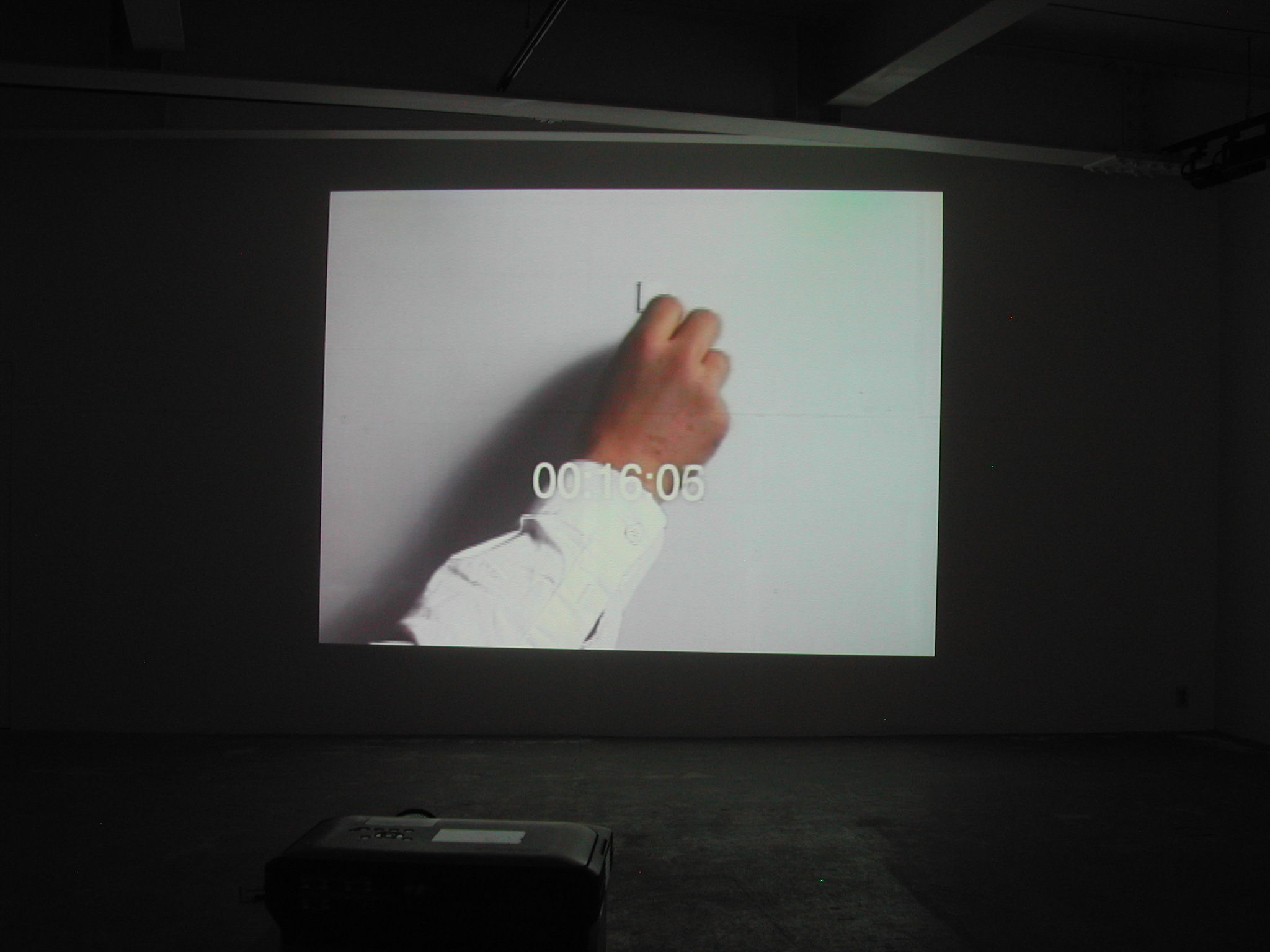
Park Jung Hyuk, 3min 33sec,2024, Single-channel video, 03:33
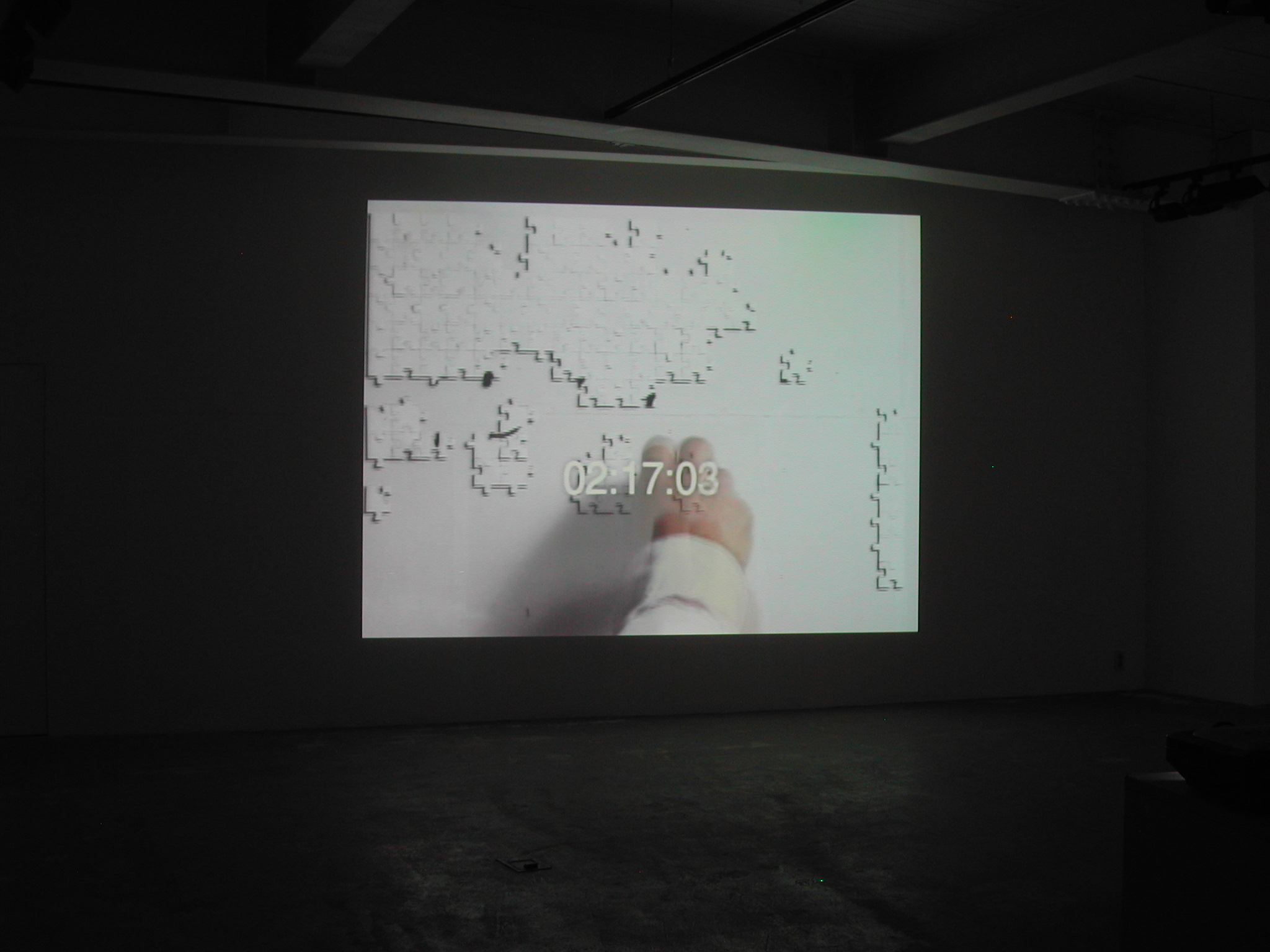
Park Jung Hyuk, 3min 33sec,2024, Single-channel video, 03:33
And it is Park Jung-hyuk's idea that the point where such control is executed most originally is the family unexpectedly. Of course, he does not deny the family system. Rather, he tries to find the customary logic of society being parasitic under the good-looking but deceptive name of family and throw it down. Thus, the family he mentions is not simply a family romance that traps and shrinks unconsciousness and desire into the family. His real concern is to go beyond the personal space of the family and extend it to problems outside the family, that is, social issues, and examine the discourses that are formed in relation to the family.
Needless to say, for us, the family is our birthplace where we are nurtured and learned to take the first step of socialization. However, under the irresistible appropriateness of ethics in the family, we transplant the order of society into ourselves the most unreasonably and most cleverly. The desire of parents forced to their children is nothing but the desire that society imposes on us. It is the canalization and coding that block and suppress a person's individual flow, making it flow in one direction that society wants.
● 3 minutes and 33 seconds, a single channel video with a subtitle 'family', contains a scene of matching a thousand pieces of puzzle. Unlike ordinary puzzles, which have the same shape, the puzzle pieces herein have different shapes, so it is not easy to find a solution to the problem than expected. However, the finished final screen is paradoxically "It's easy", which seems to reveal the complex internal circumstances of the family. On one hand, the charm of a puzzle is a sense of accomplishment that one himself/herself feels by finding a place for each piece according to rules set. On the other hand, its charm is a competitive psychology that emphasizes his/her superiority by discovering correct answers earlier than others.
However, puzzles follow the way in the rules that others have already set, and eventually people themselves test and evaluate their own learning abilities and cross joy and frustration at the same time. In addition, the temporal nature of the video process and puzzle game, which can control time artificially, is the occlusion of the video medium and puzzle object, that is different times, through which will shake and disturb the rules inherent in the puzzle.
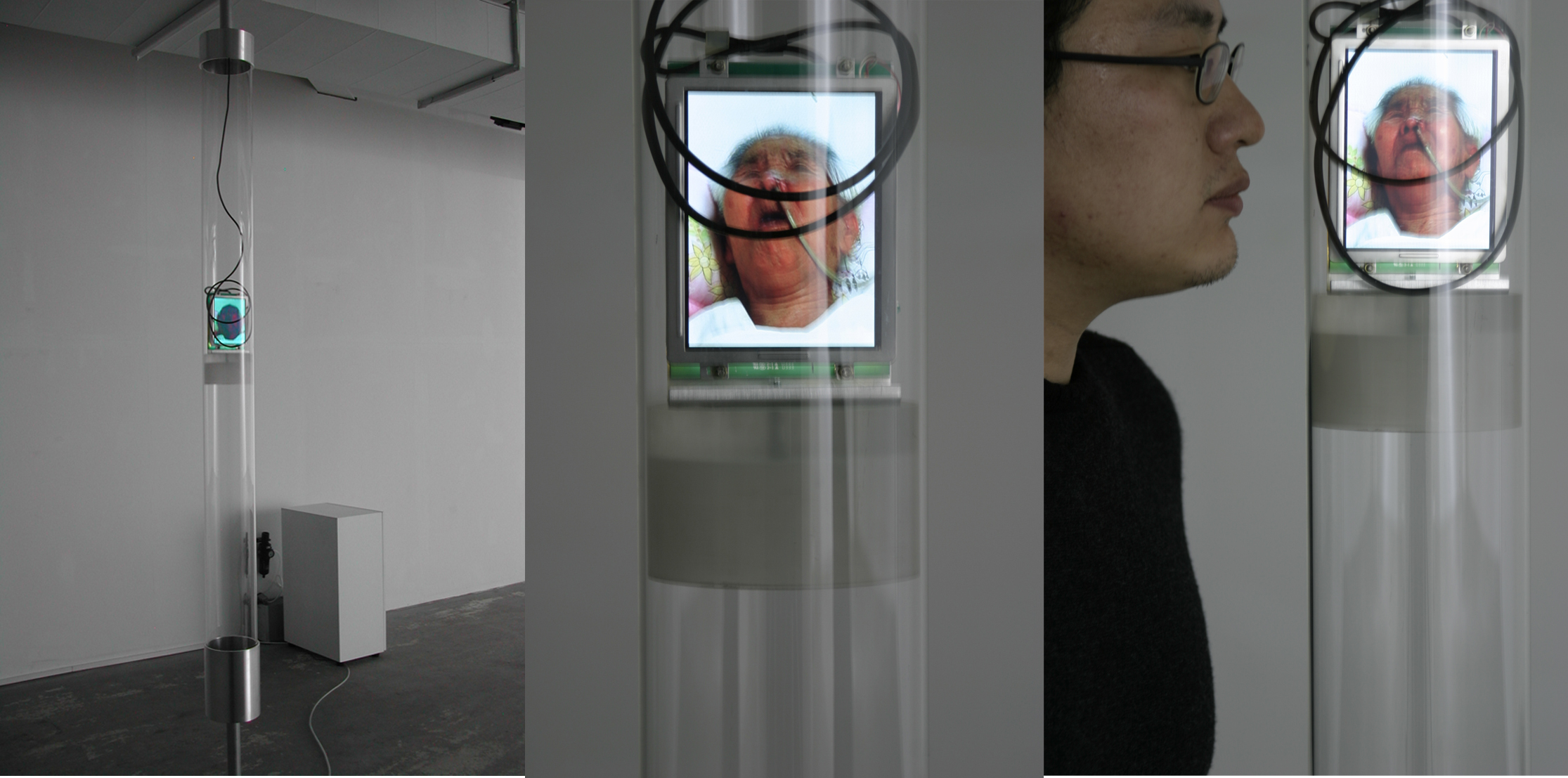
Park Jung Hyuk,166cm, 2004, Sound interactive video installation, Mixed media
● 166cm is a direct reflection of family history, and the motive of this work is the grandmother who lay in bed a year ago and the birth of nephew. The grandmother says ‘Aw’, and Park Jung-huk calculates the intensity of the sound to float the monitor with an air compressor. When the sound is at its peak, the monitor rises to 166 cm, which exactly matches the artist's eye level.
This encounter is a fateful ritual that once again confirms the sacred family duty for grandmother as a son. Although the grandmother is managed and looked after by a machine, the small gesture suggests that she is still alive. Though a gigantic chain of a shift in generations through life and death, that is, the cycle of life, dominates us, the last wish of man to escape from the fateful code is our natural desire.
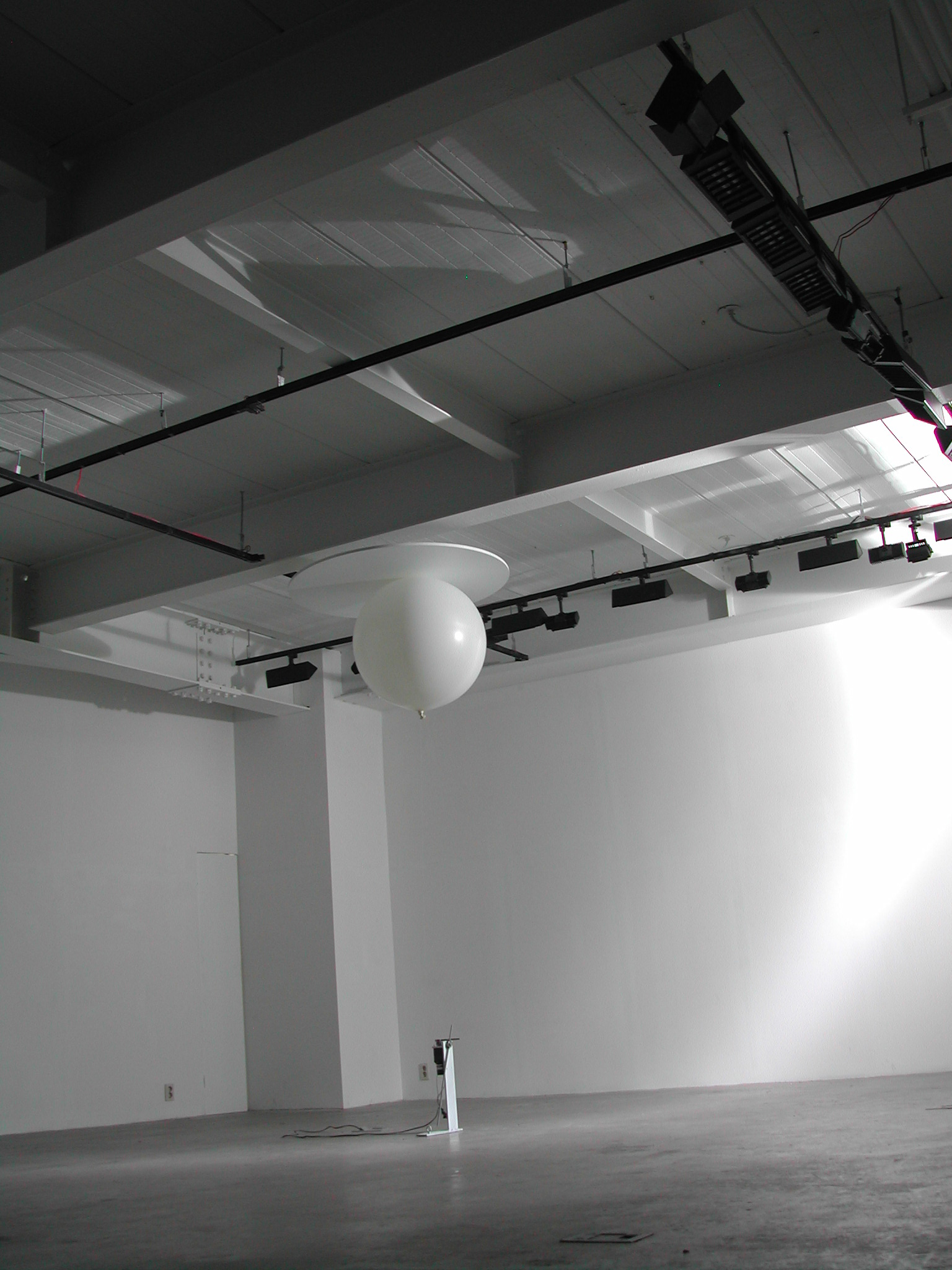
Park Jung Hyuk, 15seconds,2004, Installation, Mixed media
● 15 seconds, made up of white balloons and sounds, symbolize a dream, which originated from a dream that he had experienced in the past. The delicate sense of responsibility, anxiety, and comfort that he felt during the process of the family appearing and disappearing one by one caused mixed emotions. Dreams, the manifestation of latent unconsciousness, are shared only by living creatures, and the balloon to rise represents our fundamental willingness to cross institutions and customs.
Although the balloon must hit the ceiling and come down again in a short cycle of 15 seconds, the rise never stops. Freedom from coding is the unique ability of living human beings and is also the ultimate directing point of Park Jung-hyuk's work. The tapping of balloons heavily ringing on the exhibition center may be a heartbeat that awakens our potential power.
Writings