Criticisms
Park Jung Hyuk’s “Living Tentacles (觸手)”
2009
Park Cheon-nam | Chief Curator of Sungkok Art Museum
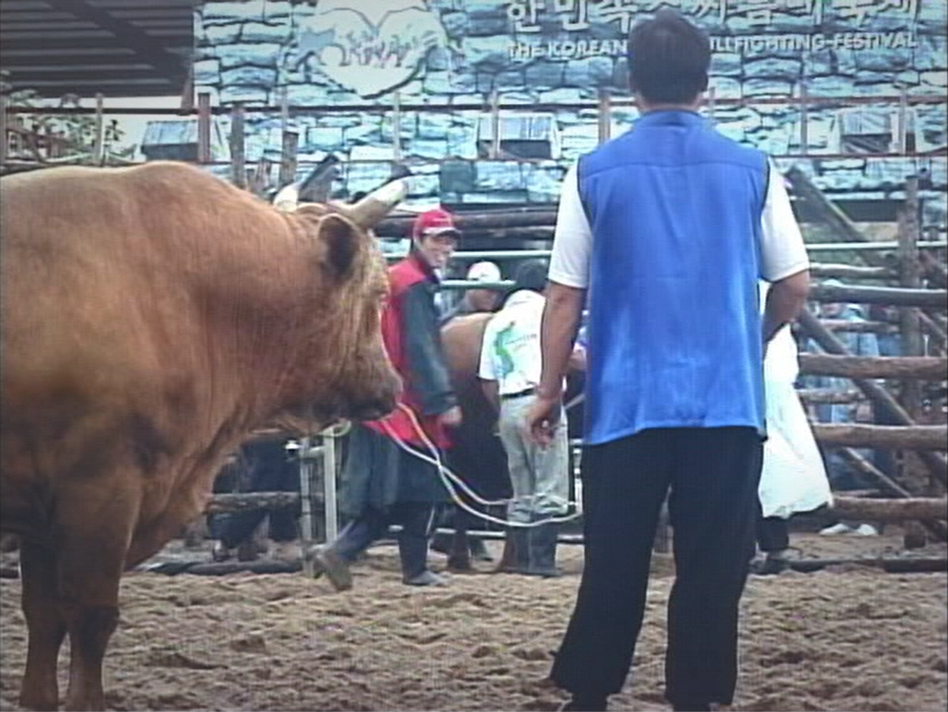
festival, 2003, Single-channel video, 4min 8sec
“Living tentacles' concept functions both as a pictorial theme (畵題, subject matter) and as a central agenda (議題, conceptual issue) that runs through Park Jung Hyuk’s work, from his early video pieces such as ‘Training’ and ‘Festival’, presented at his first solo exhibition, to the recent ‘Edge Series’.
As the saying goes, “If one does not live according to one’s thoughts, one comes to think according to the life one lives,” Park Jung Hyuk—a young artist who maintains an active attitude toward life—extends his conscious tentacles toward the world.
His awareness stands erect and alert, probing outward. Park points, in a layered and double-edged manner, to the contradictory reality of contemporary human life: people work in order to survive, compete in order to endure, and study in order to succeed, becoming conditioned not by autonomy but by external forces.
As a young artist, Park does not become absorbed in social reality that resembles sugar-coated pills (糖衣錠, sweet coatings that disguise bitterness). Instead, he maintains a critical and awakened distance, visually exposing and articulating that reality.
This is a welcome stance. For Park Jung Hyuk, the path of the artist—or artistic practice itself—is an intellectual effort and a reflective attitude that seeks to visually diagnose and respond to the contradictions of both himself and the world around him.
This stance is not directed solely outward toward society; it also remains open toward the artist’s own interior, operating as an active artistic orientation.
Park Jung Hyuk’s work, which can be described as a kind of video- and painting-based experimental report, contains pointed observations about the world and effectively, though paradoxically, addresses the joys and sorrows, pleasures and angers, and the contradictions of life experienced by those who live within it.
These experiences are presented at times through solitary figures, and at other times through images resembling experimental subjects or collective portraits.
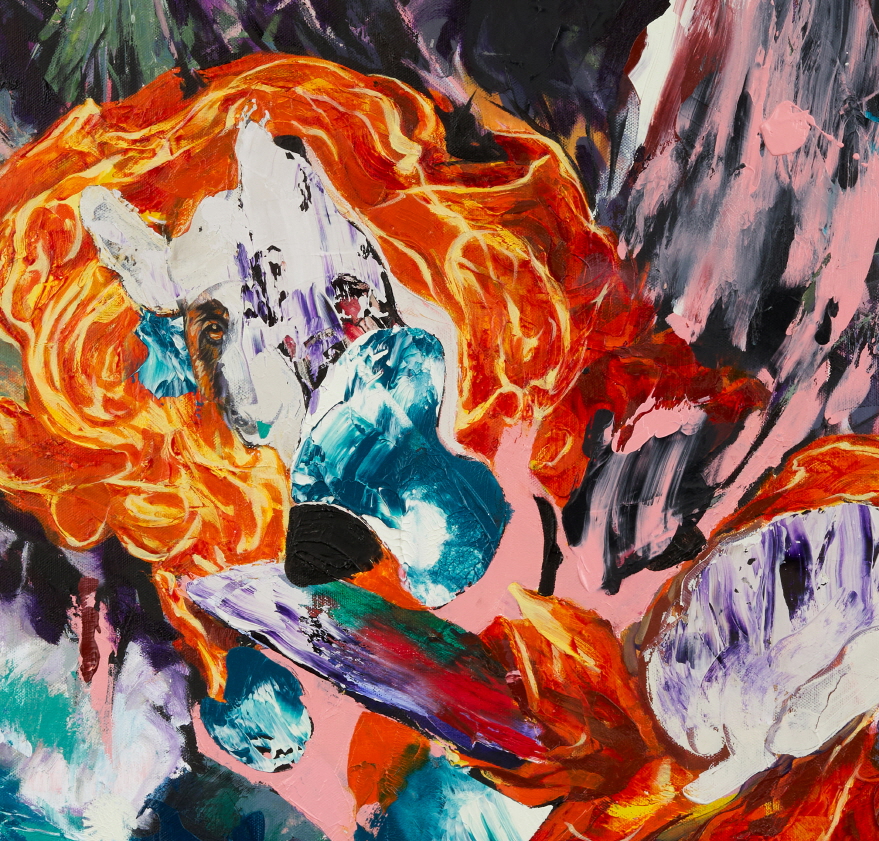
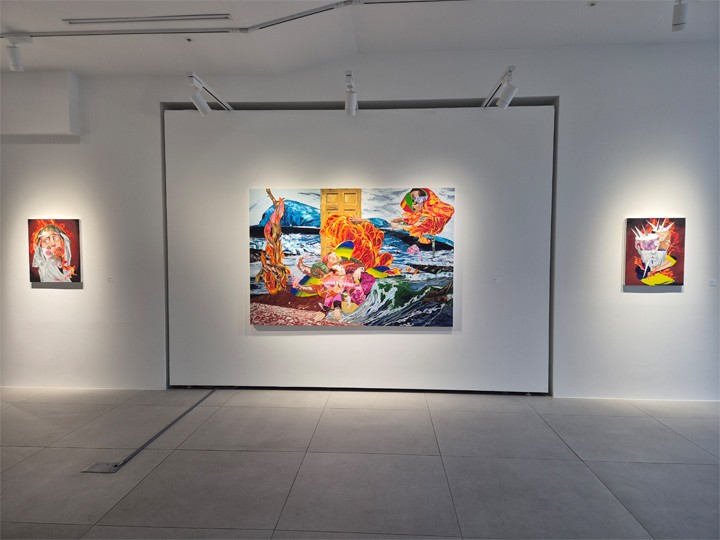
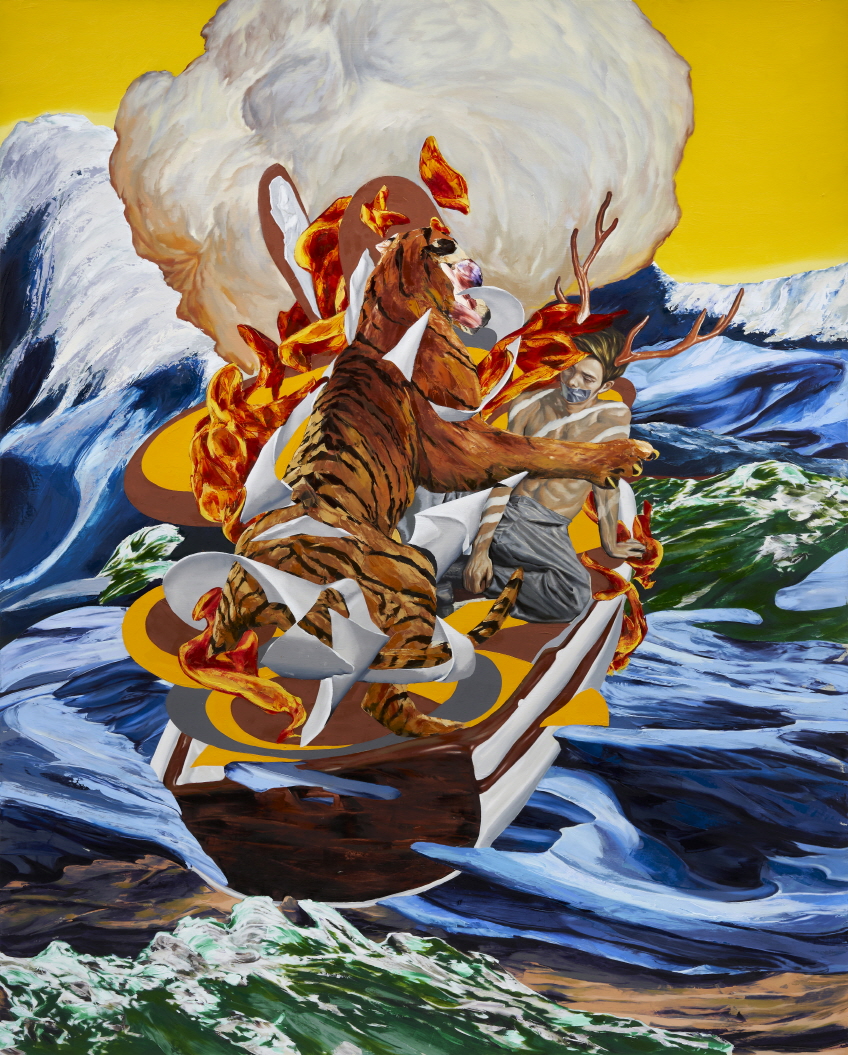
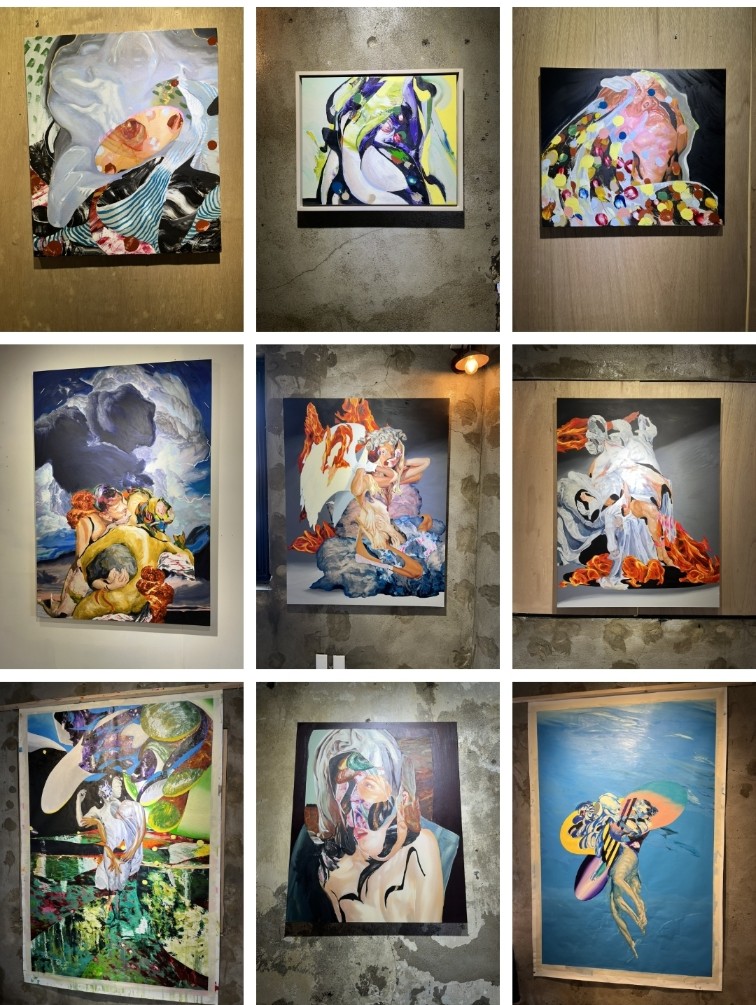
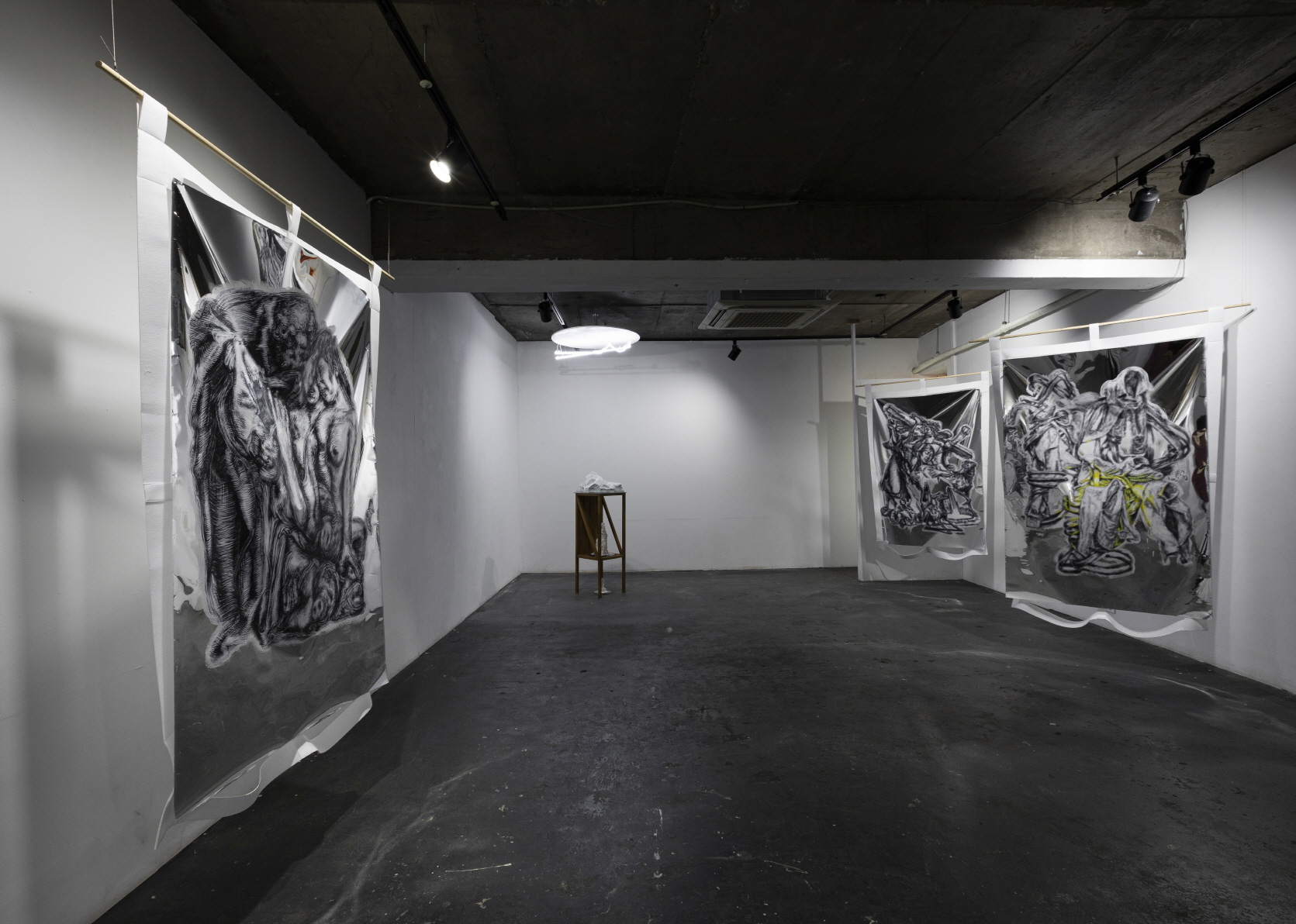
Moving fluidly between painting, video, and photography, Park employs diverse modes of expression, narrative structures, and formal strategies to reveal—without filtration—the conflicts and confrontations between opposing values in a world saturated with contradictions. In his recent paintings, the collective portraits function as pictorial intersections of different temporalities.
Through these intersections, he unsettles and disrupts the rules that are subtly concealed and shielded within the world—a place that resembles a battlefield without gunfire.
Reflectively addressing the contradictions of social reality that he has directly witnessed while living as a member of a family and of society, Park Jung Hyuk does not simply present personal experience or visible objective reality as fixed truths.
Instead, he reveals them in multiple layers through his distinctive perspective as a young artist, attempting through this process to overturn and re-examine the world from the outside.
Although he uses a camera, his aim is not to reproduce the world through the mechanical eye of the lens, but to translate the world as seen through the human eye—that is, the world he has directly encountered—into a formative visual language.
Just as the final human desire may be described as a “self-generated impulse” (自生的欲求), Park Jung Hyuk emphasizes through his work the importance of my own will as the subject of life. Through his characteristic use of mise-en-scène, he points to lives that resemble theater—lives shaped by compulsion and external regulation rather than by autonomy.
Most of his works are accompanied by sound. Whether physically audible or not, this sound may be understood as a heartbeat that awakens our latent inner force.
Text from the catalogue of the 2009 Goyang Cultural Foundation Emerging Artists Competition: “Discovery Beyond Newness.”
Writings