Park's Land 31-Blonde, Veil
2024 Oil on canvas 60.6 x 50 cm
Provenance
Artist Collection, 2026
Exhibitions
2025–2026,《Su! Su! Susu! Supernormal!!》, Space Supernormal, Seoul
2025《Rebellious possibility》, Yeol Jeong Gallery, Seoul
2024《When Ero·Gro·Nonsense Combines Nonlinearly – Episode 1》, Museum1, Busan
2023《When Ero·Gro·Nonsense Combines Nonlinearly》, Arting Gallery, Seoul
About The Work
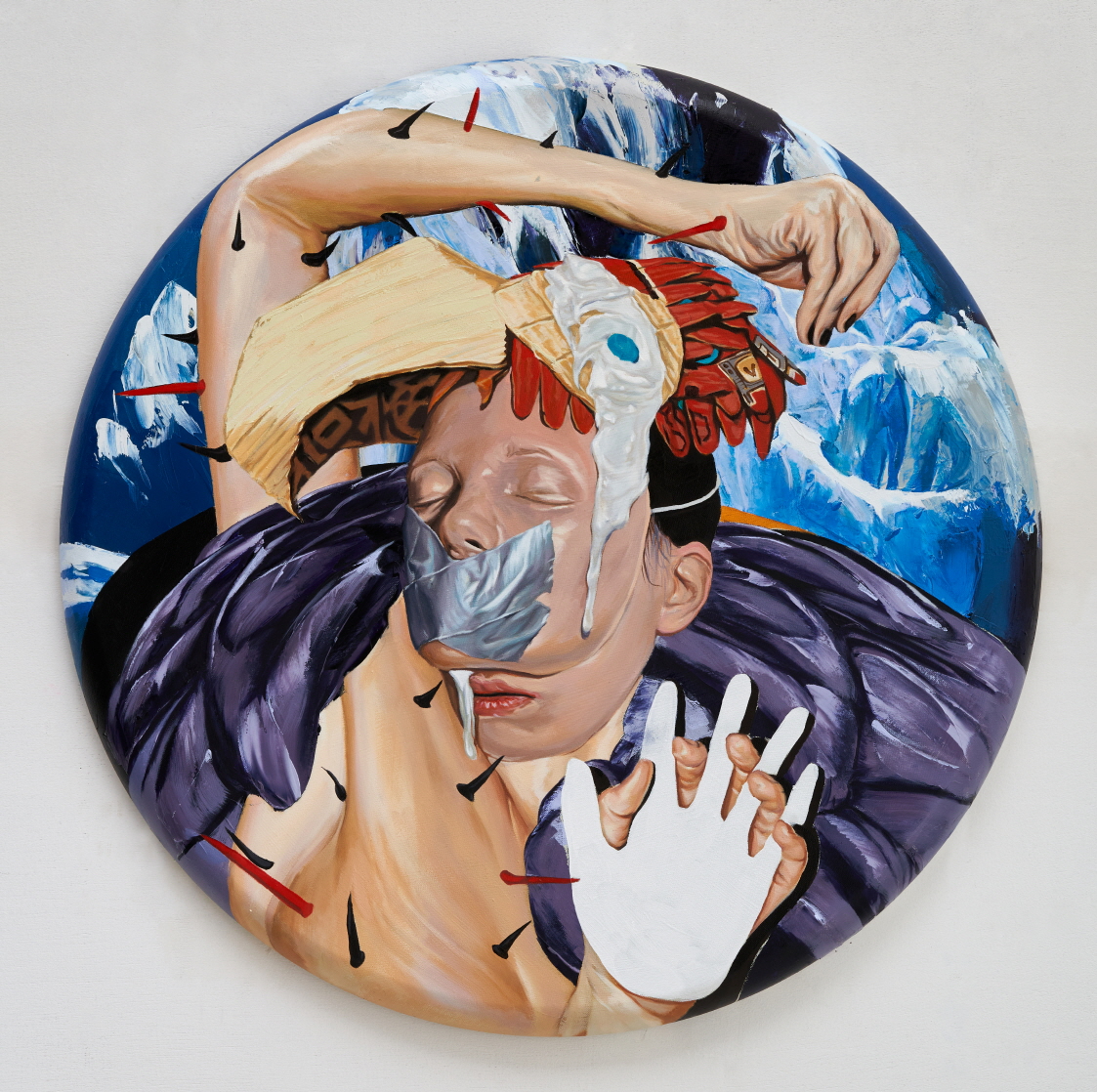
This work seeks to pictorially capture the moment when desire permeates the body. The figure within the pictorial field is divided as images of a blonde, feminine figure and a saint overlap and intermingle, while the face and the cloth undergo processes of disintegration and reassembly through the heat of fire. This process reveals that desire is not a singular emotion, but an impulse that continuously changes and seeks to transition into another mode of existence.
The sign of blond hair carries an ambivalent meaning that simultaneously encompasses purity and desire, sacredness and worldliness. This duality demonstrates that the nature of desire cannot be defined in a singular way. Through pictorial strategies of dismantling and reassembly, this work attempts to visually construct such ambivalence. Fire here functions not as simple destruction, but as a heat that alters form; and at the moment when the cloth ceases to be a sacred outer shell and becomes a surface that reveals traces of desire, desire transitions into a new state of being.
Ultimately, this work is an attempt to show that sacredness and desire are not opposing emotions, but layered affects that arise and transform simultaneously within a single body. I hope that this contradictory and multilayered movement of desire does not become fixed as a single form within the painting, but remains in a state of continuously becoming something else.
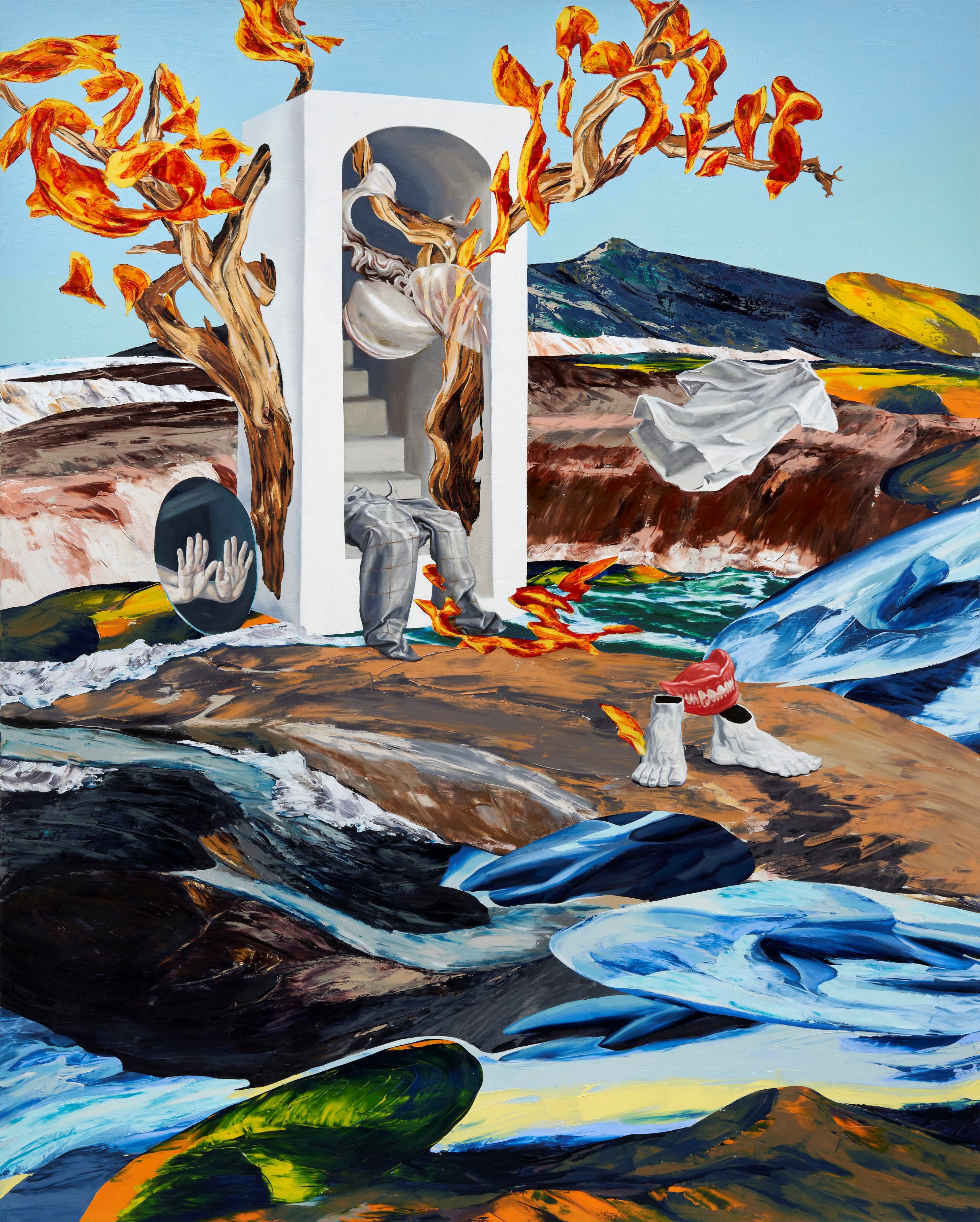
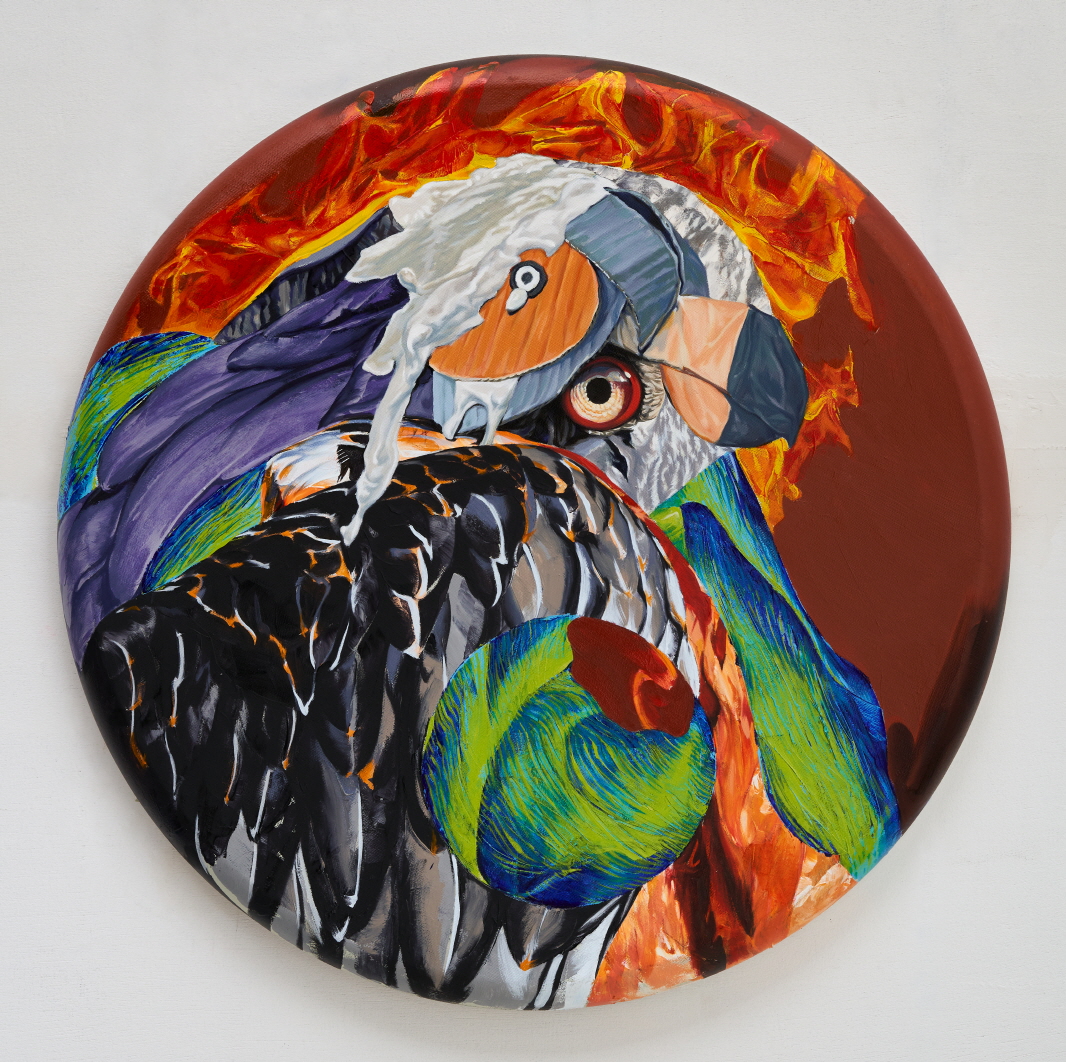
Park Jung Hyuk’s third painting series, ‘Park’s Land’, unfolds around the idea of “transformation.” When beginning this body of work, the artist was interested in exploring a sense of possibility, and transformation became the theme through which that notion could be articulated. Here, transformation does not refer to a simple shift from A to B, as in familiar mythic or cinematic narratives.
Instead, it encompasses a broader spectrum of states—what something could become, how roles shift according to circumstance, and the latent conditions inherent within a subject.
Figures and forms in the paintings appear structurally dismantled, blurred, or distorted through layered brushwork. These visual disruptions are less about depicting physical change and more about revealing multiple potential states at once.
Ultimately, ‘Park’s Land’ considers the conditions that allow transformation to occur rather than the moment of change itself. Through overlapping imagery and fluid gestures, the series presents a world defined not by what is changing, but by what can change—an expanded terrain for the artist’s ongoing exploration of painterly imagination.