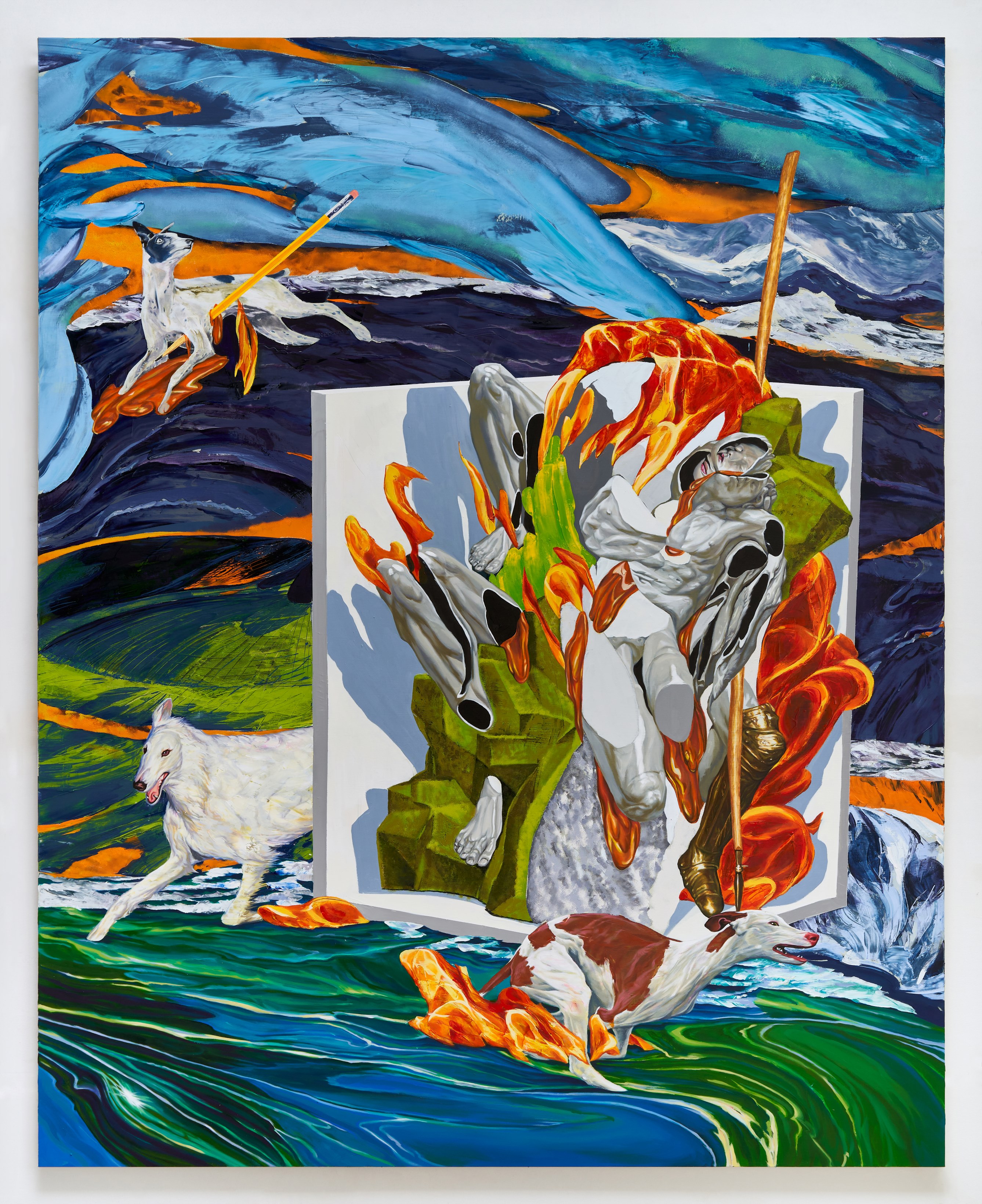
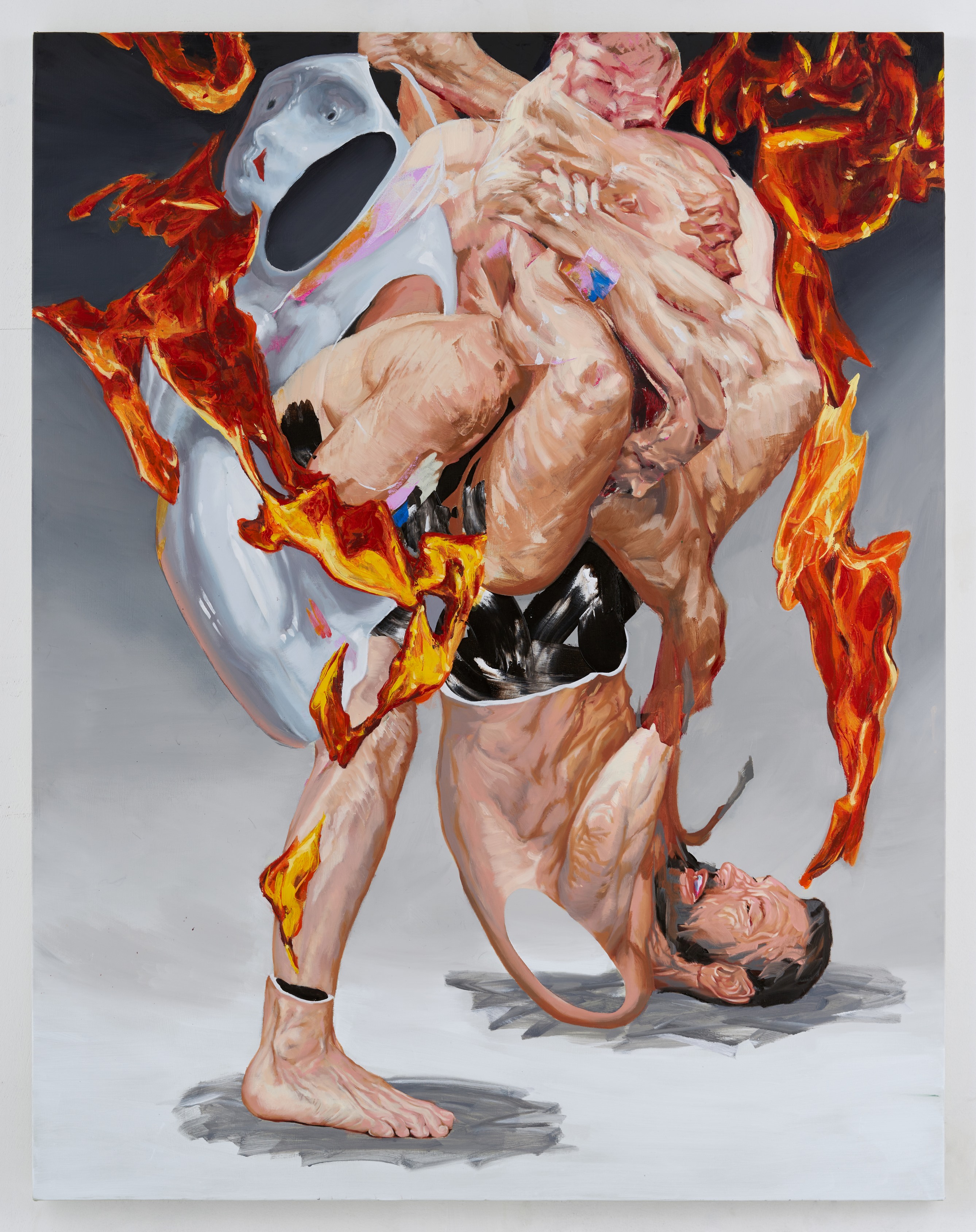
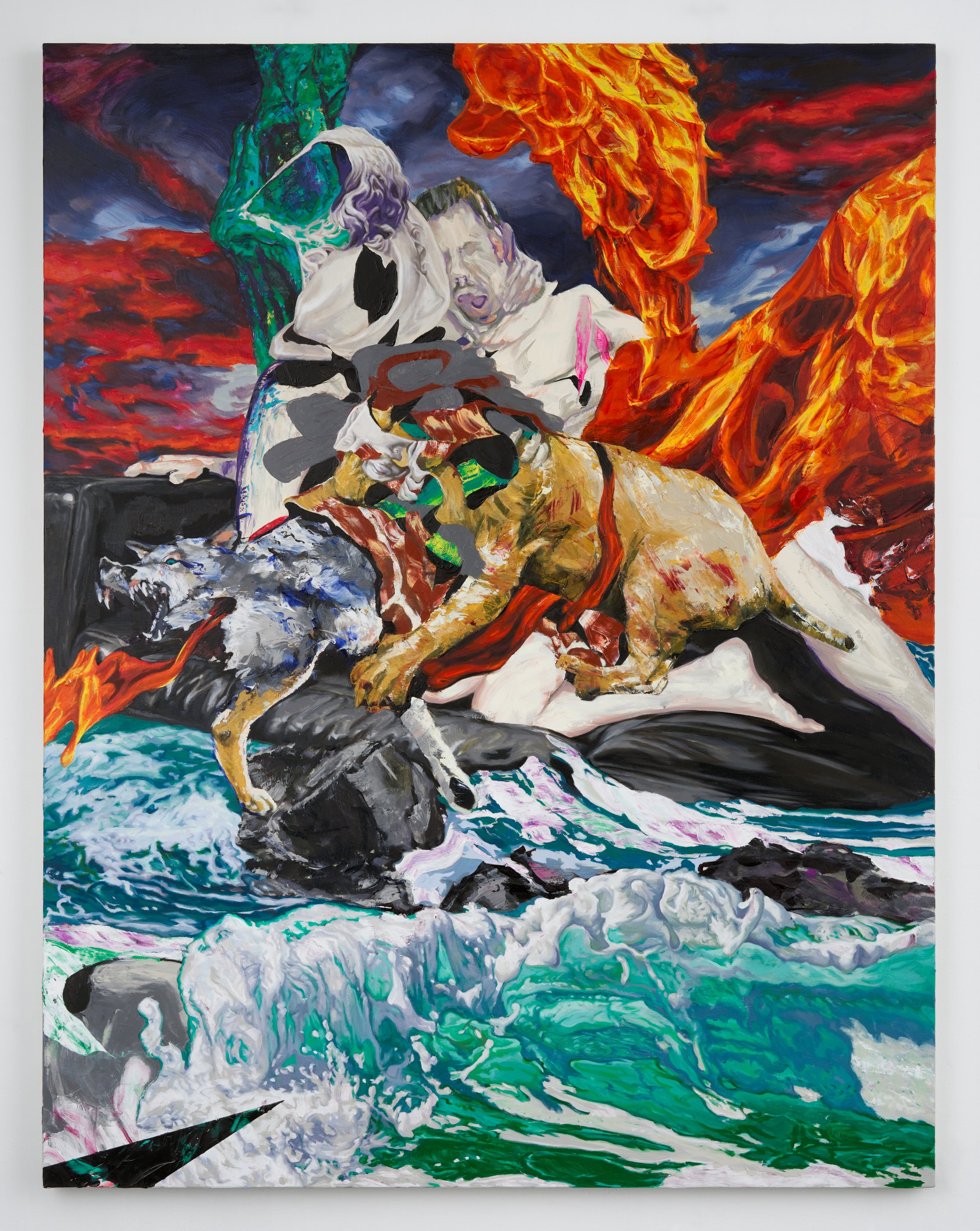
Park's Land 38-A Fierce Night, Instinct
2024 Oil on canvas 162.2 x 130.3 cm
Provenance
Artist Collection, 2026
Exhibitions
2024-2025《Myth: The Beginning Story》, Museum1, Busan
About The Work
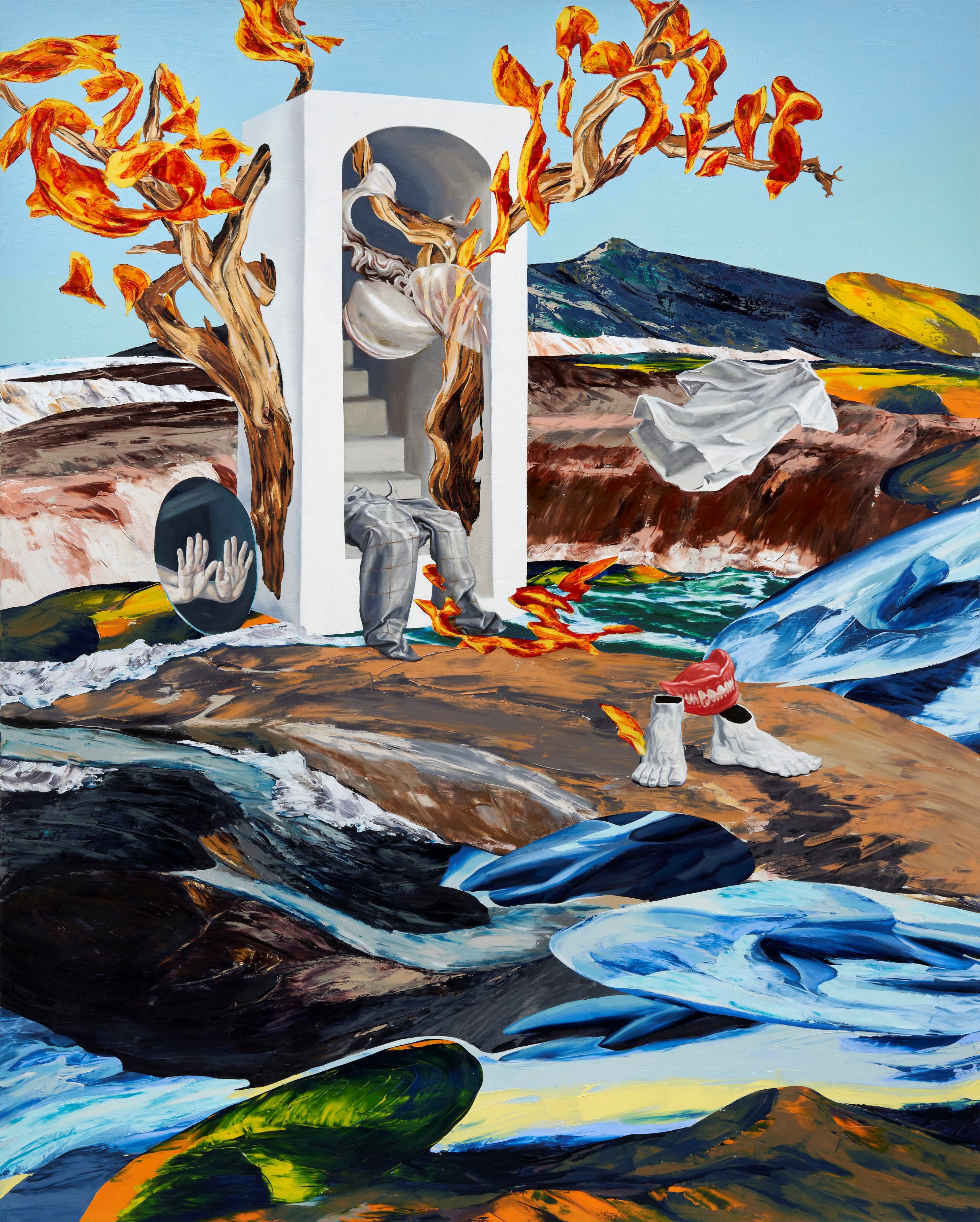
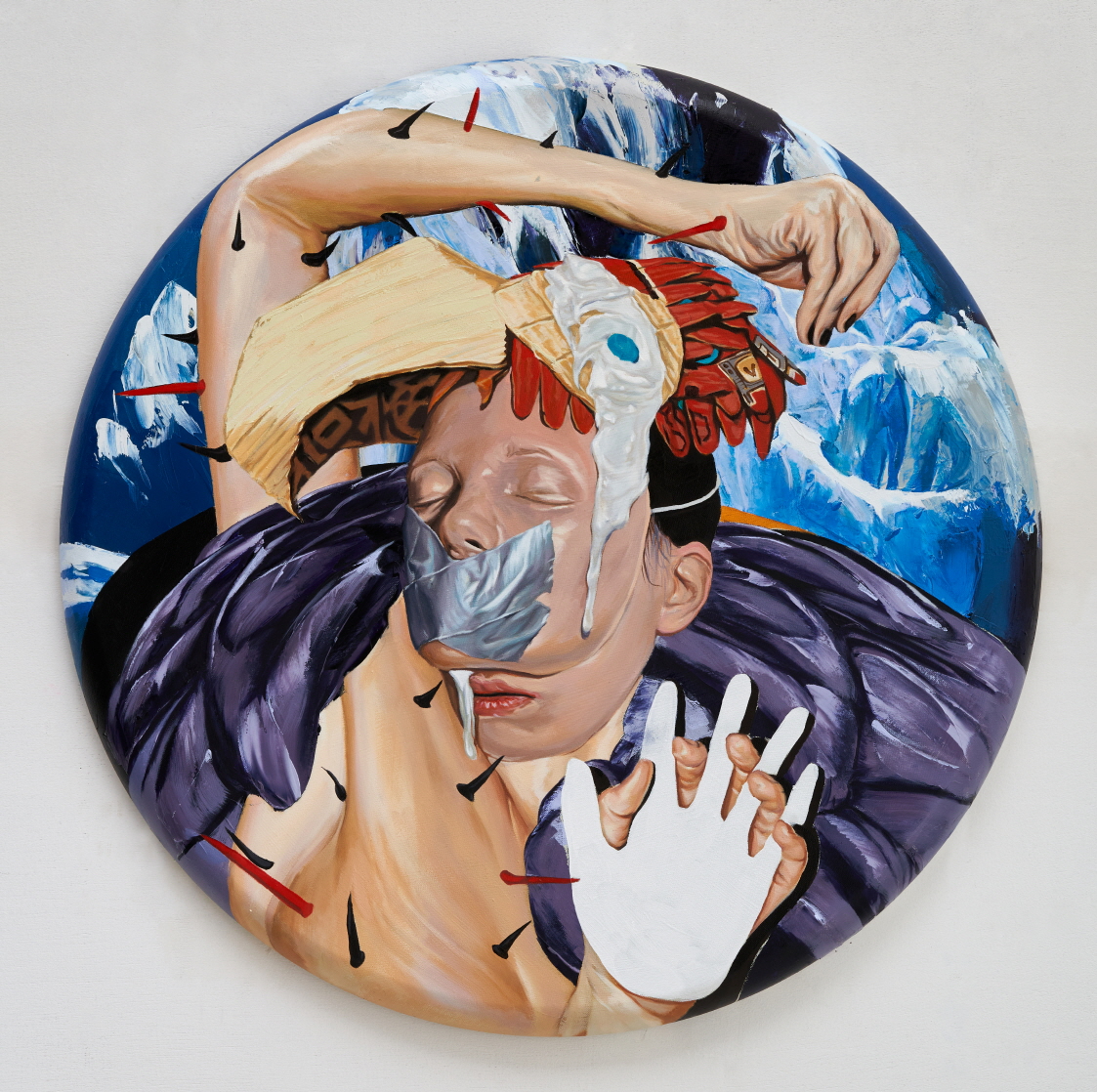
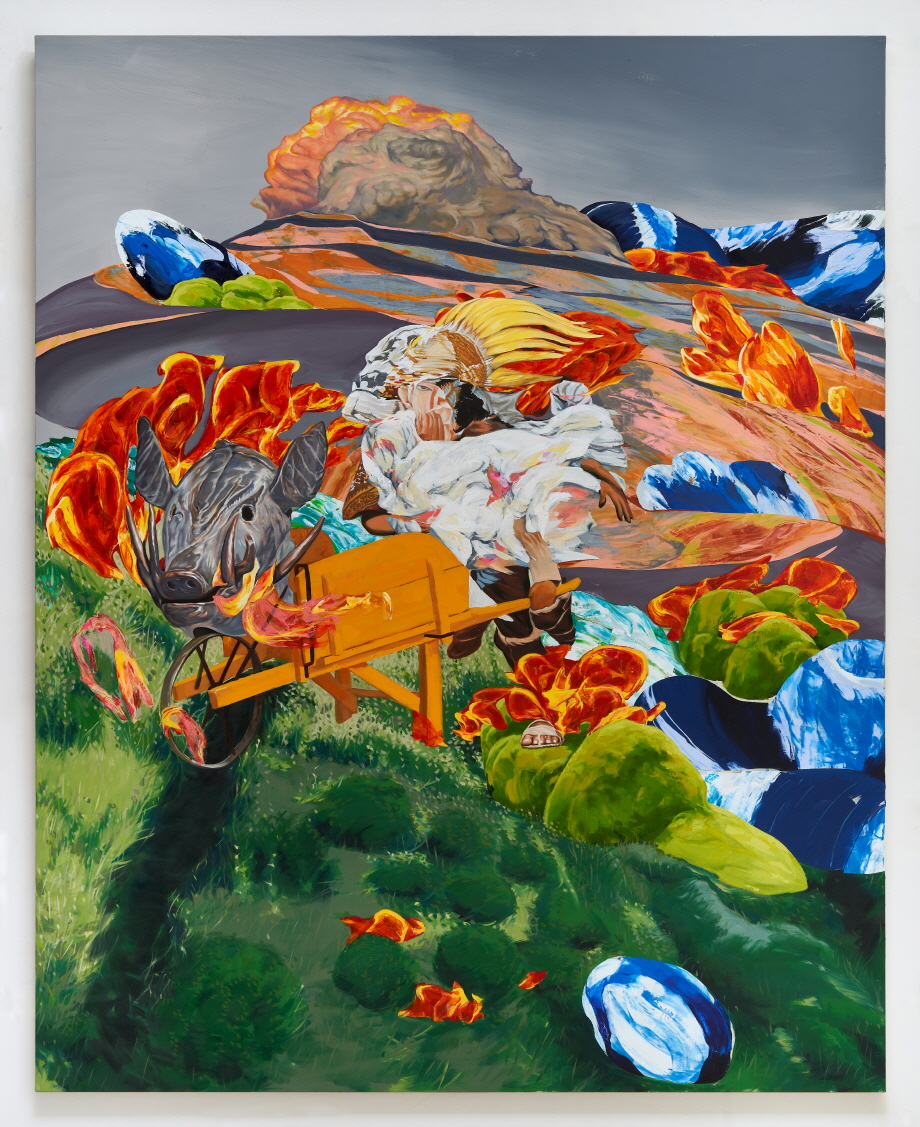
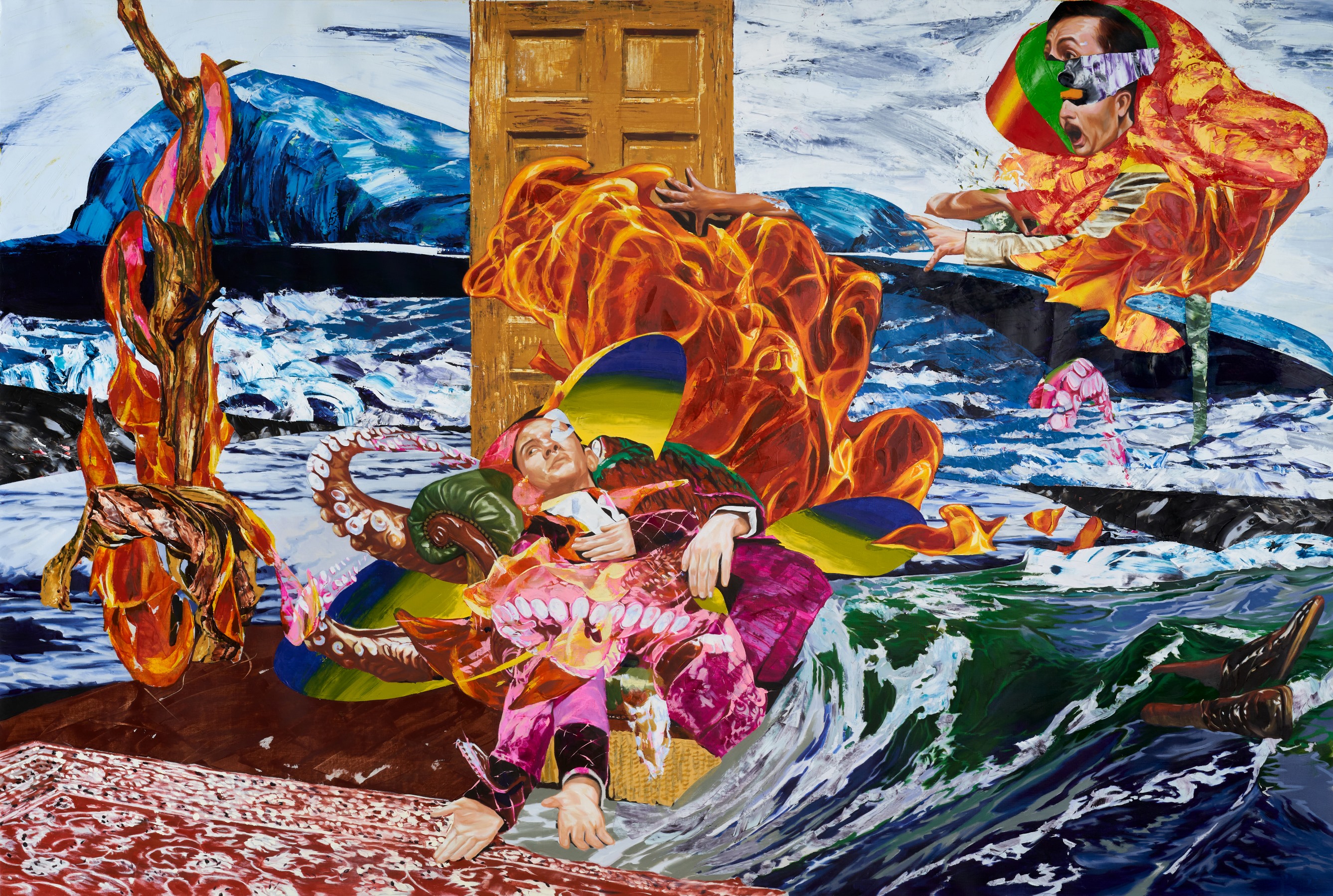
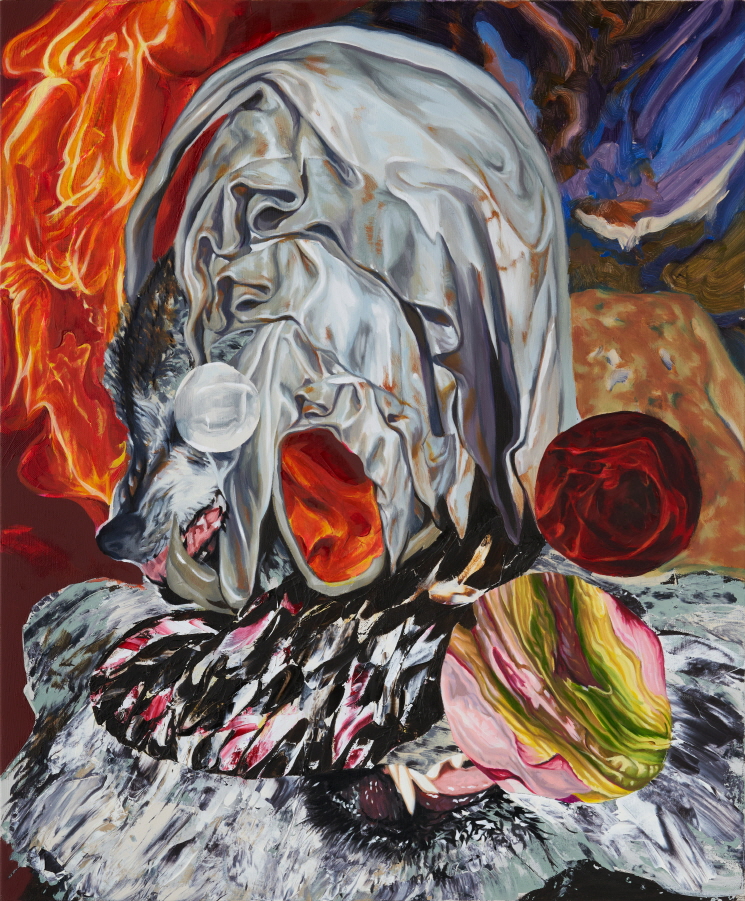
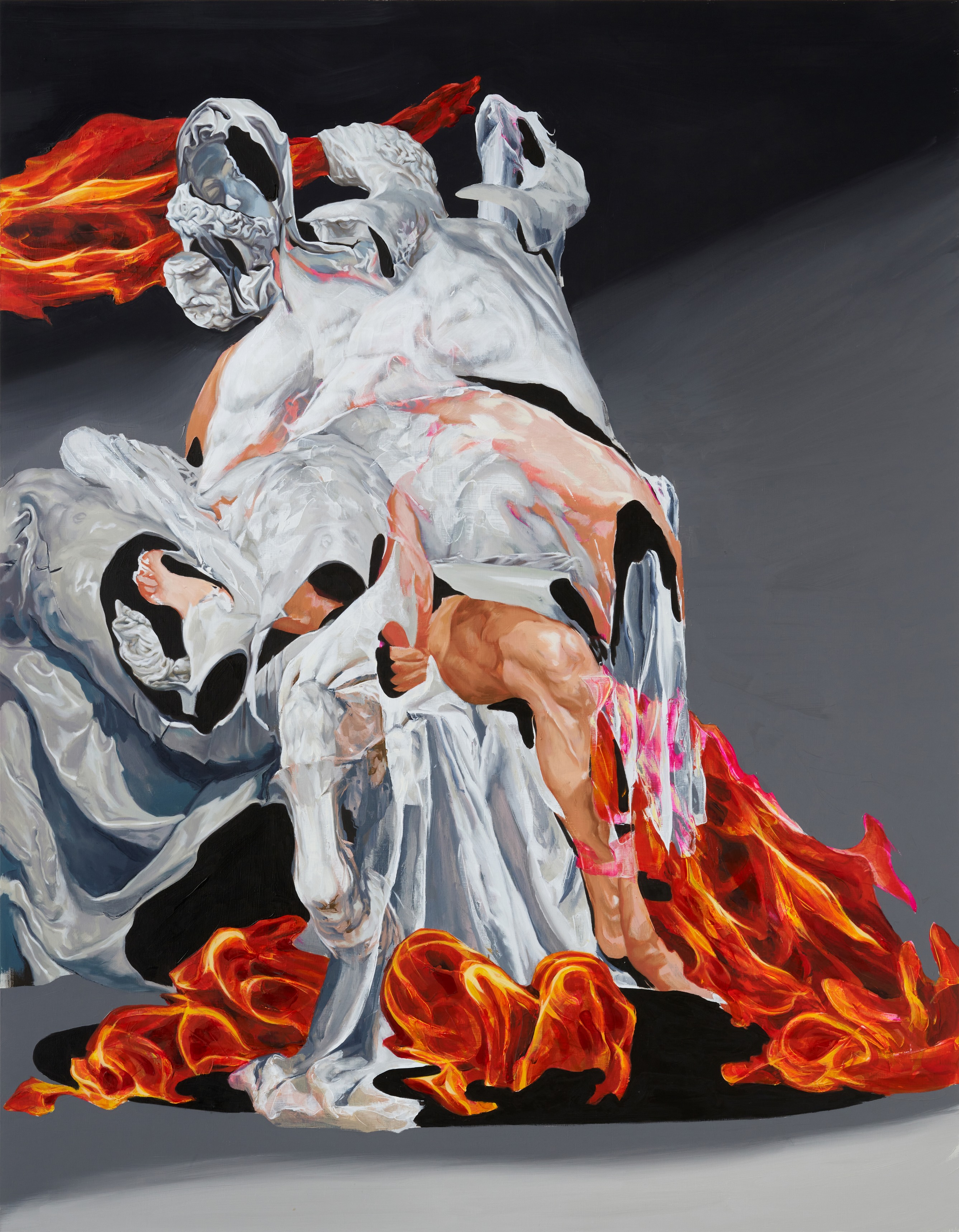
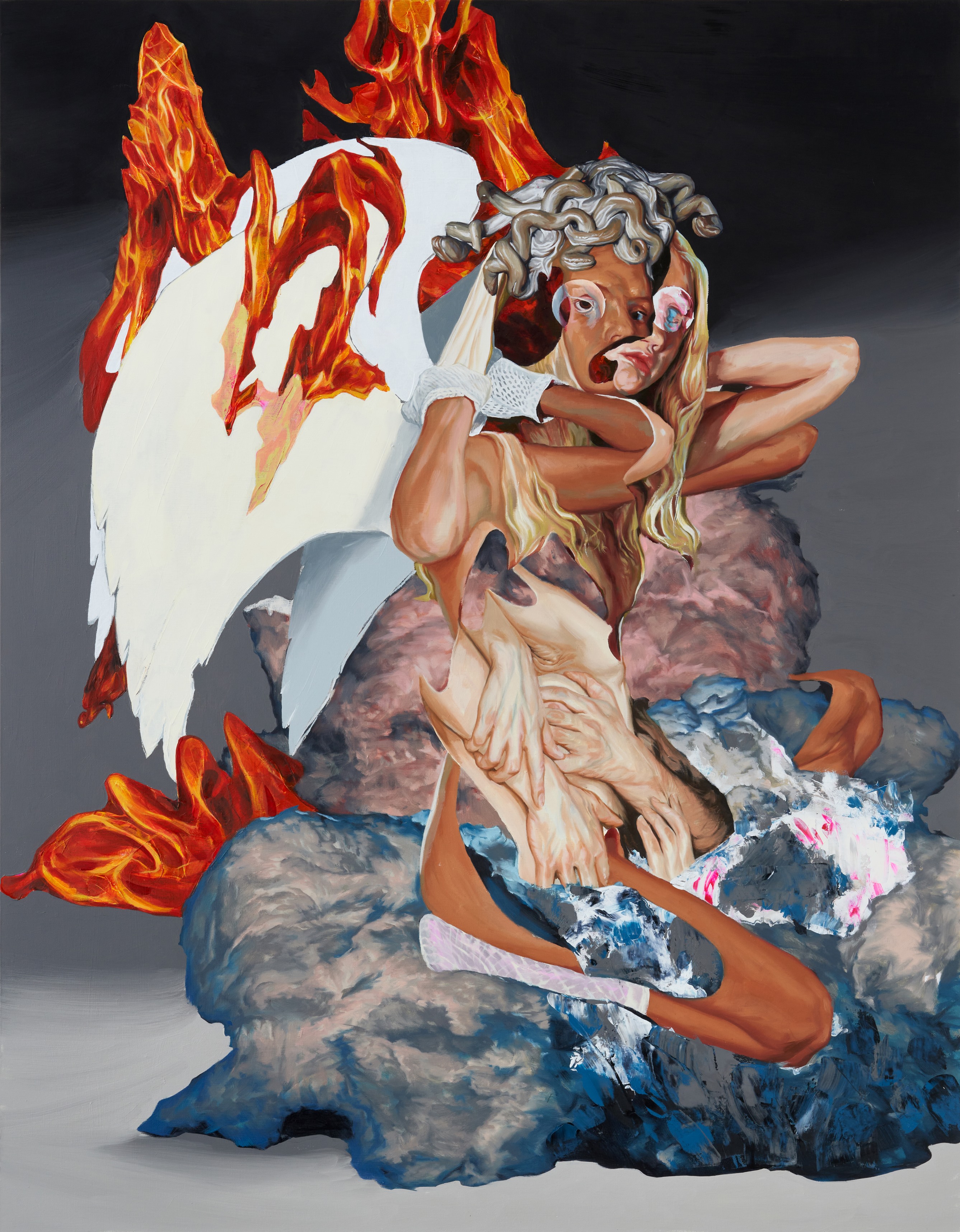
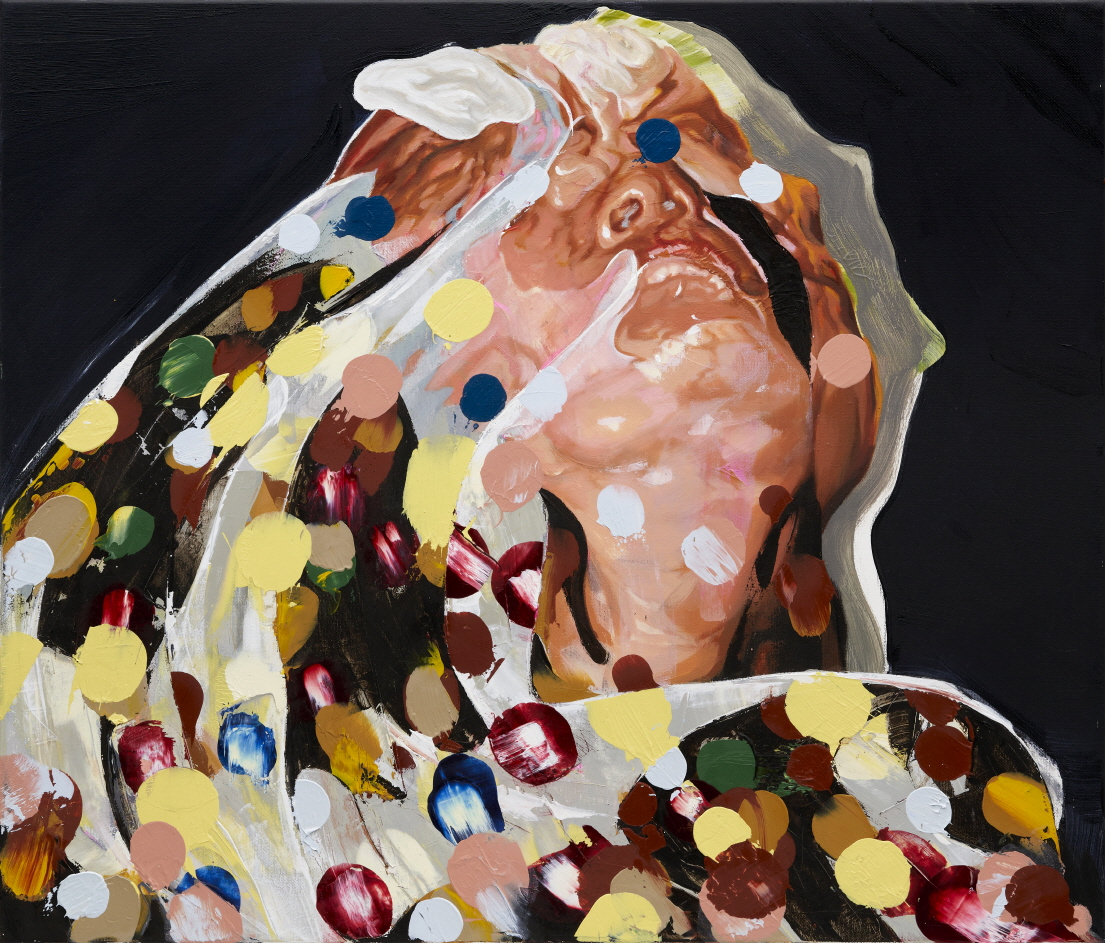
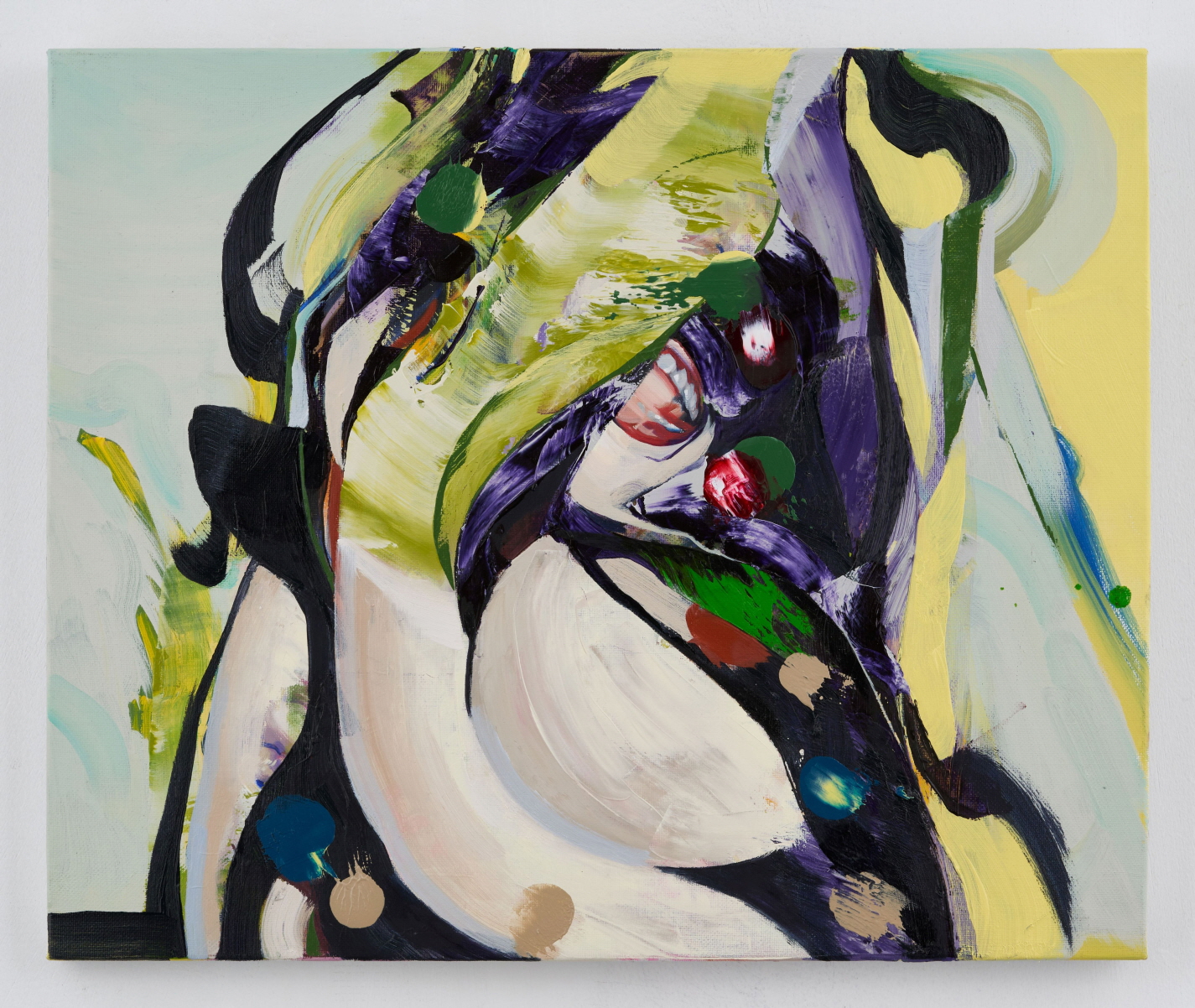
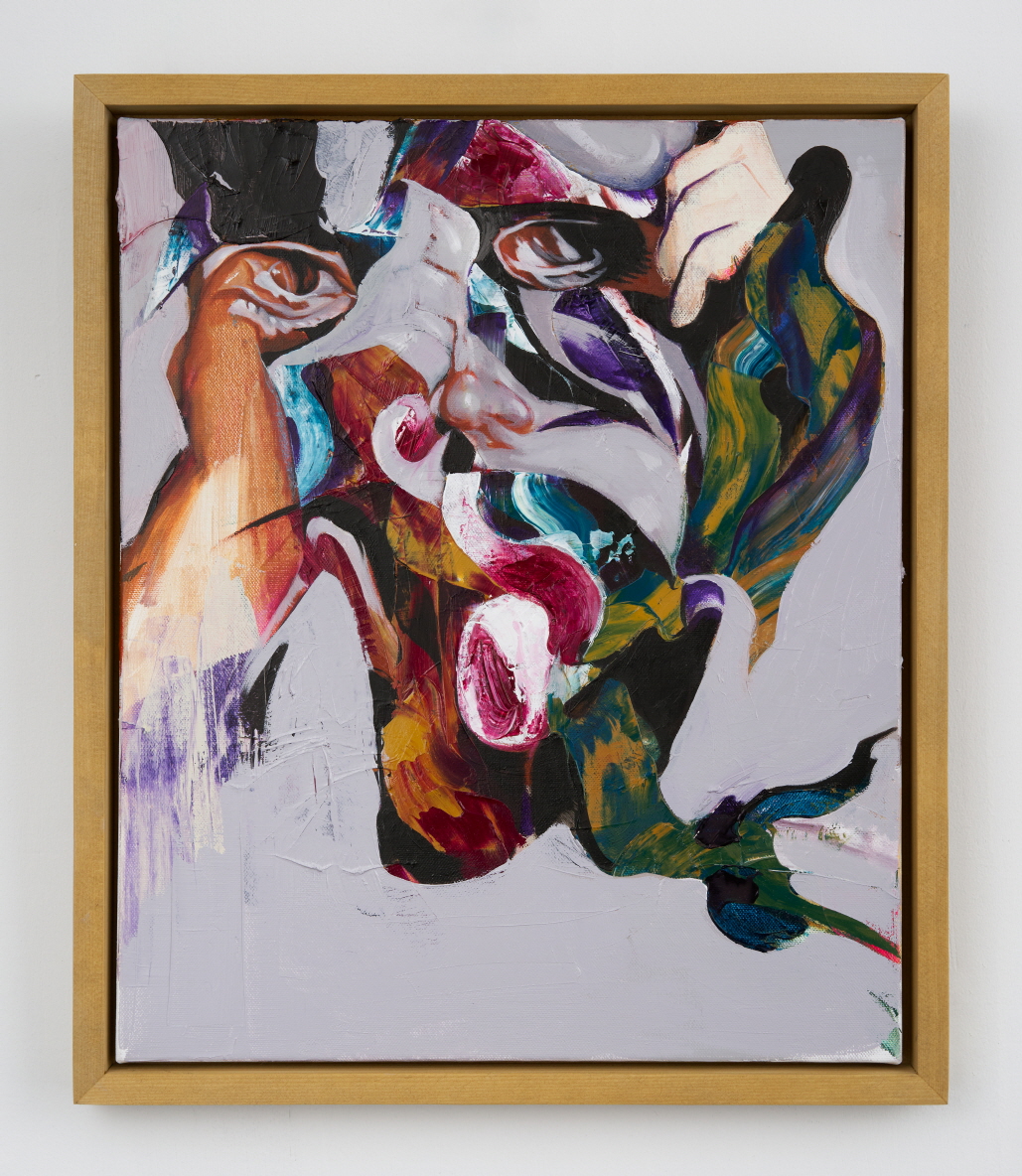
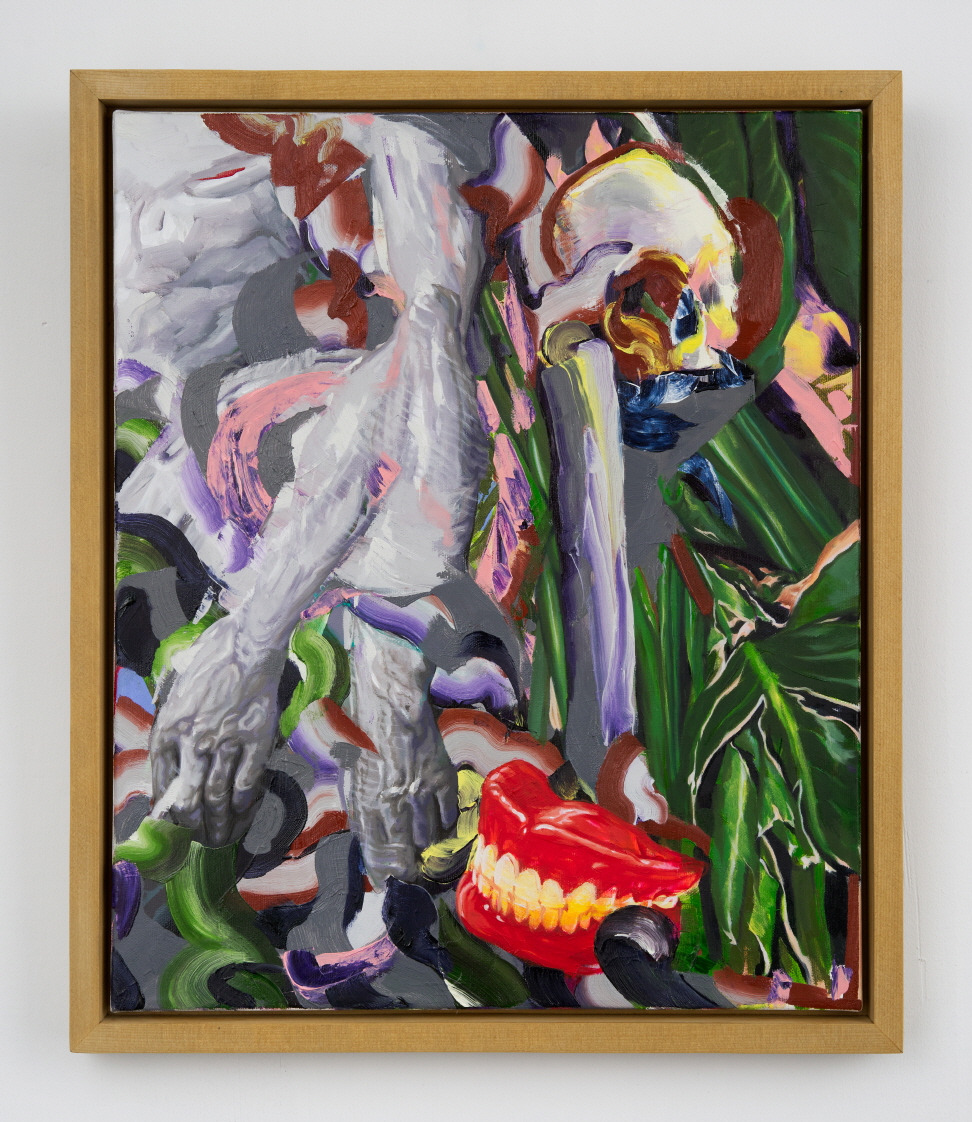
This work draws its motif from the episode “Metamorphoses – The Calydonian Boar Hunt” by Ovid. As Part 4 of this series, Park’s Land 38 focuses on the conflict that unfolds after the hunt.
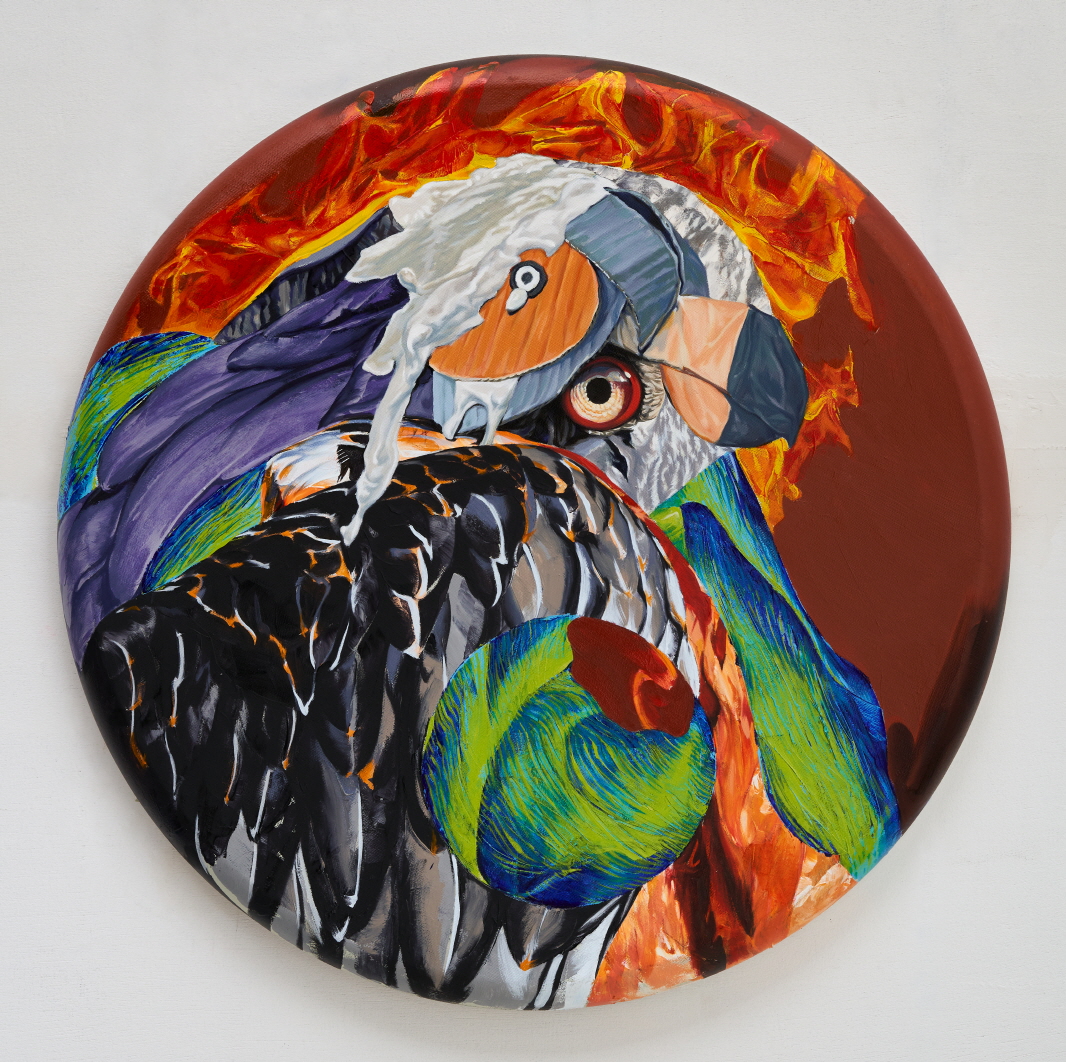
The log symbolizing the life of Meleager functions here as the residue of remaining lifespan and time. The flame appears as a living presence and, simultaneously, as a trace of a process moving toward extinction, while fate reveals itself in a material form that settles into ash.
After the hunt, the heroes are no longer able to sustain a singular identity. The clustered, multi-limbed bodies within the pictorial field are fragments of a divided self, revealing hybrid forms that remain after existence has been dismantled. Through these fragmented bodies, I sought to expose the condition in which human beings are continuously placed within a process of ‘becoming’.
The circular stage does not signify a severed event, but rather symbolizes a structure of repeated mythological return. Heroic narratives do not arrive at completion; instead, they revert to conflict and annihilation. Transformation, therefore, is not a finished state, but forms a cycle in which, through disintegration and disappearance, it returns as another trace.
Ultimately, the fire in this work operates as a dual apparatus that both destroys existence and foretells the emergence of new forms. Through the debris and residual shapes left by fire, I seek to visually record that human existence is not a fixed entity, but a condition of perpetual transformation.
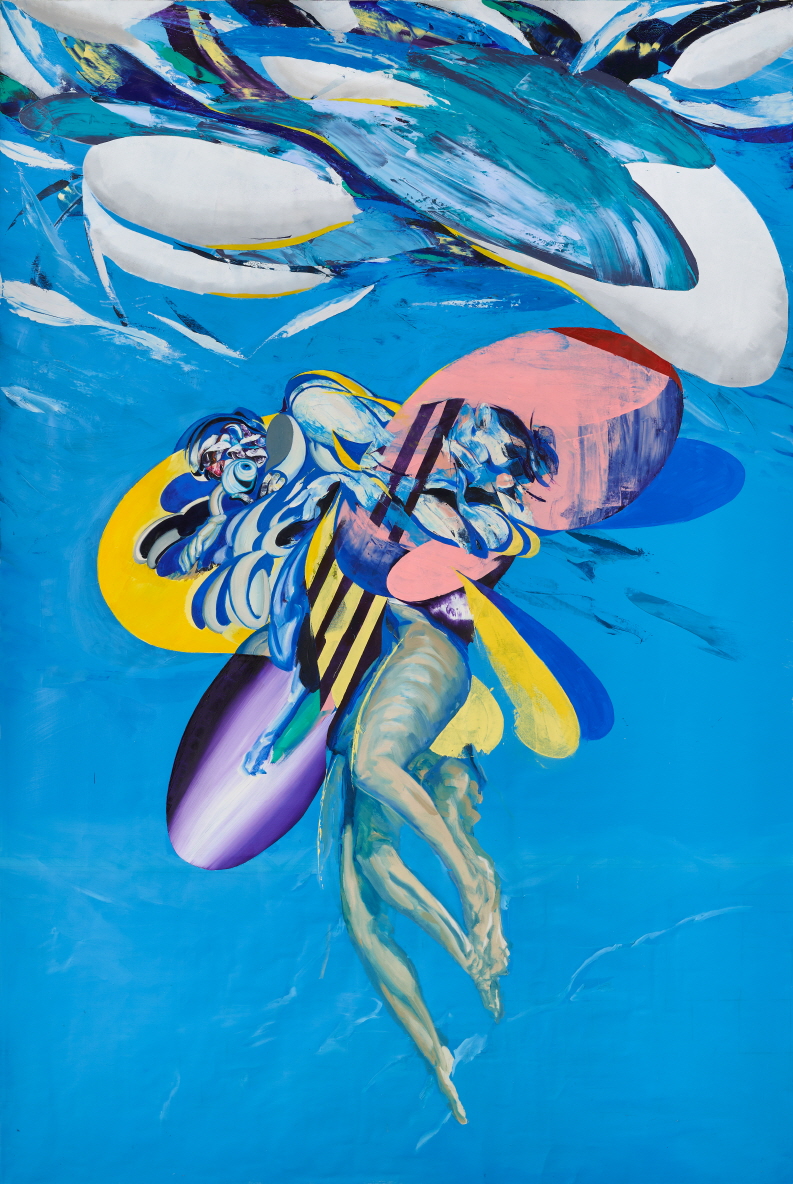
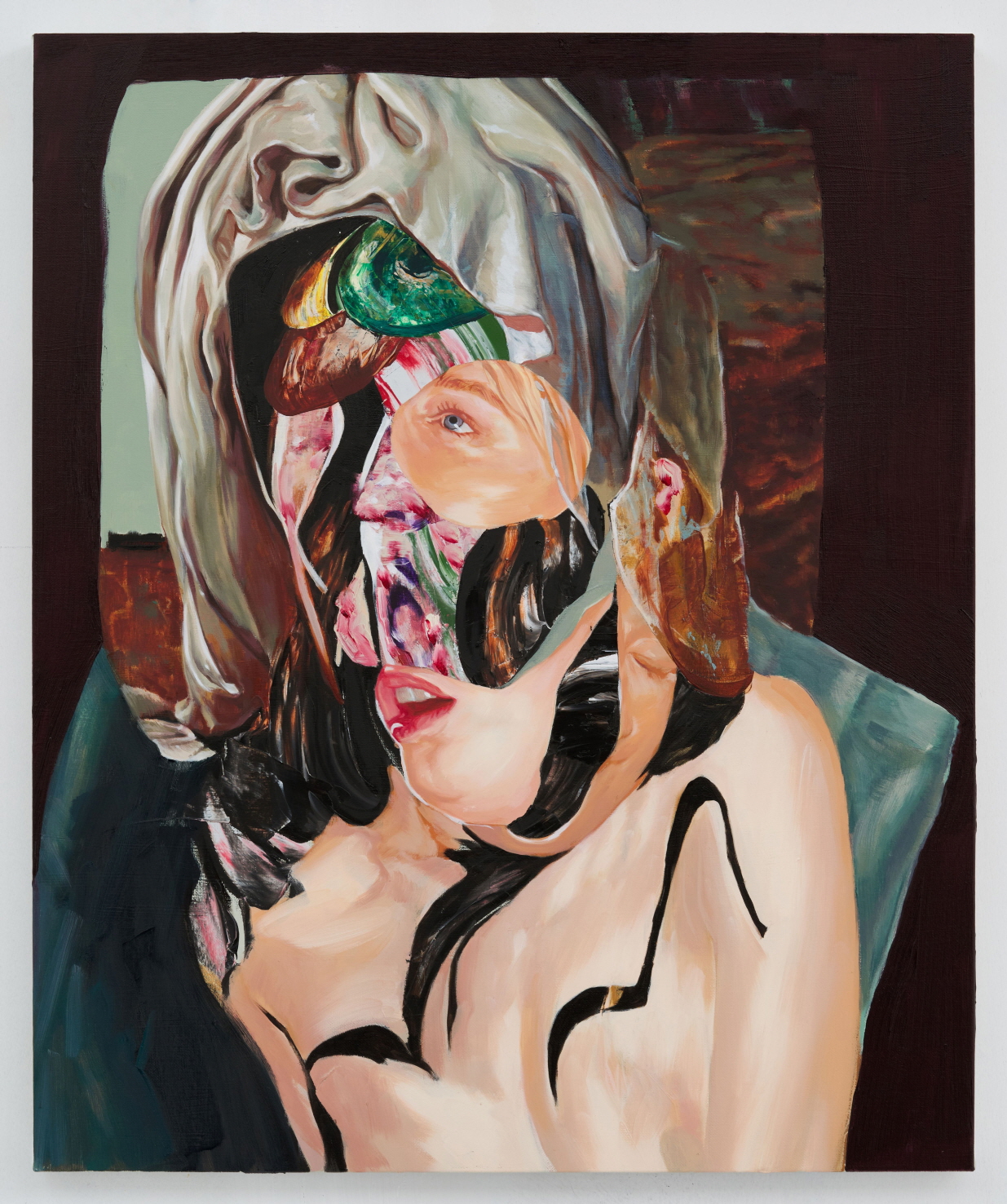
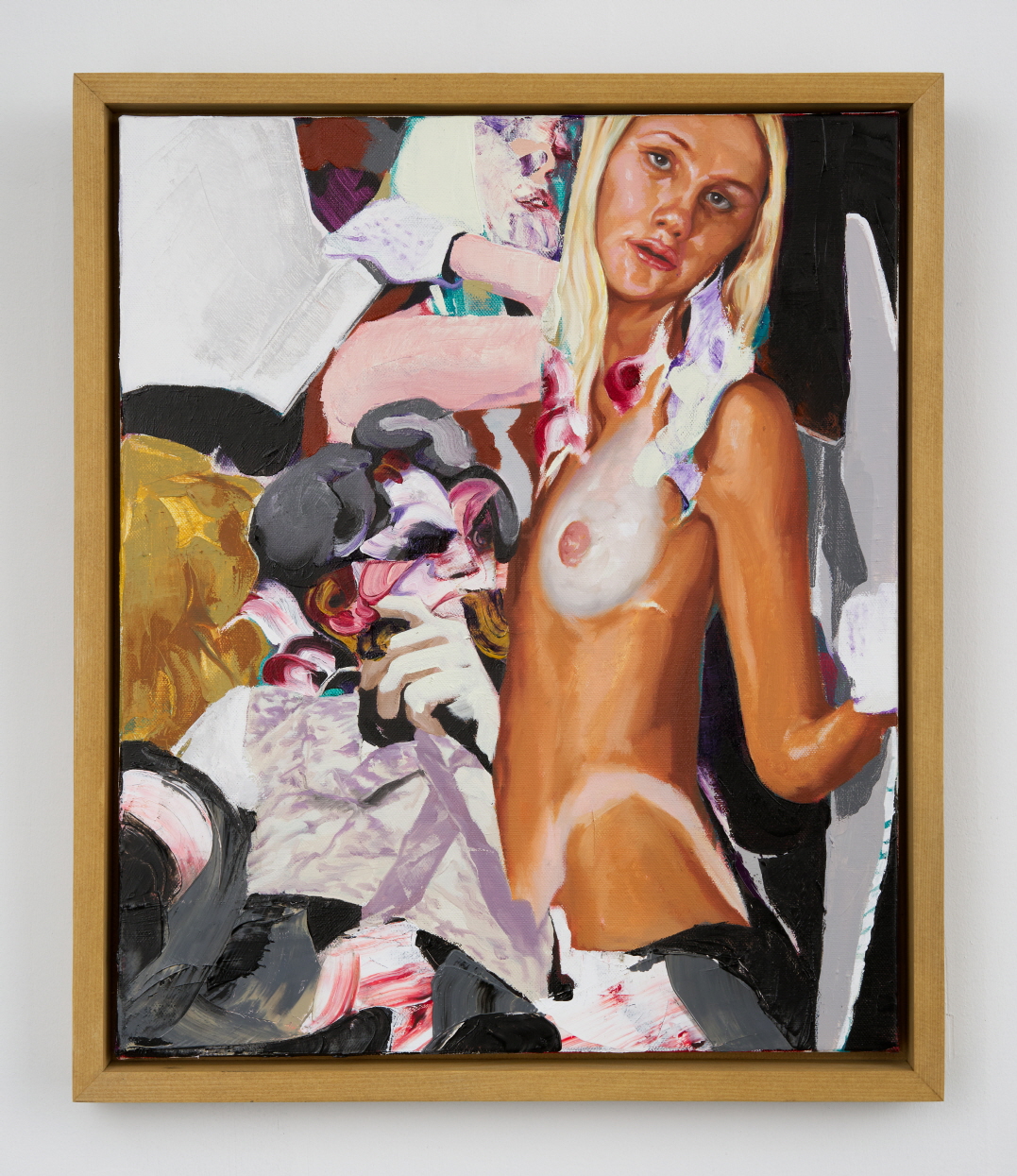
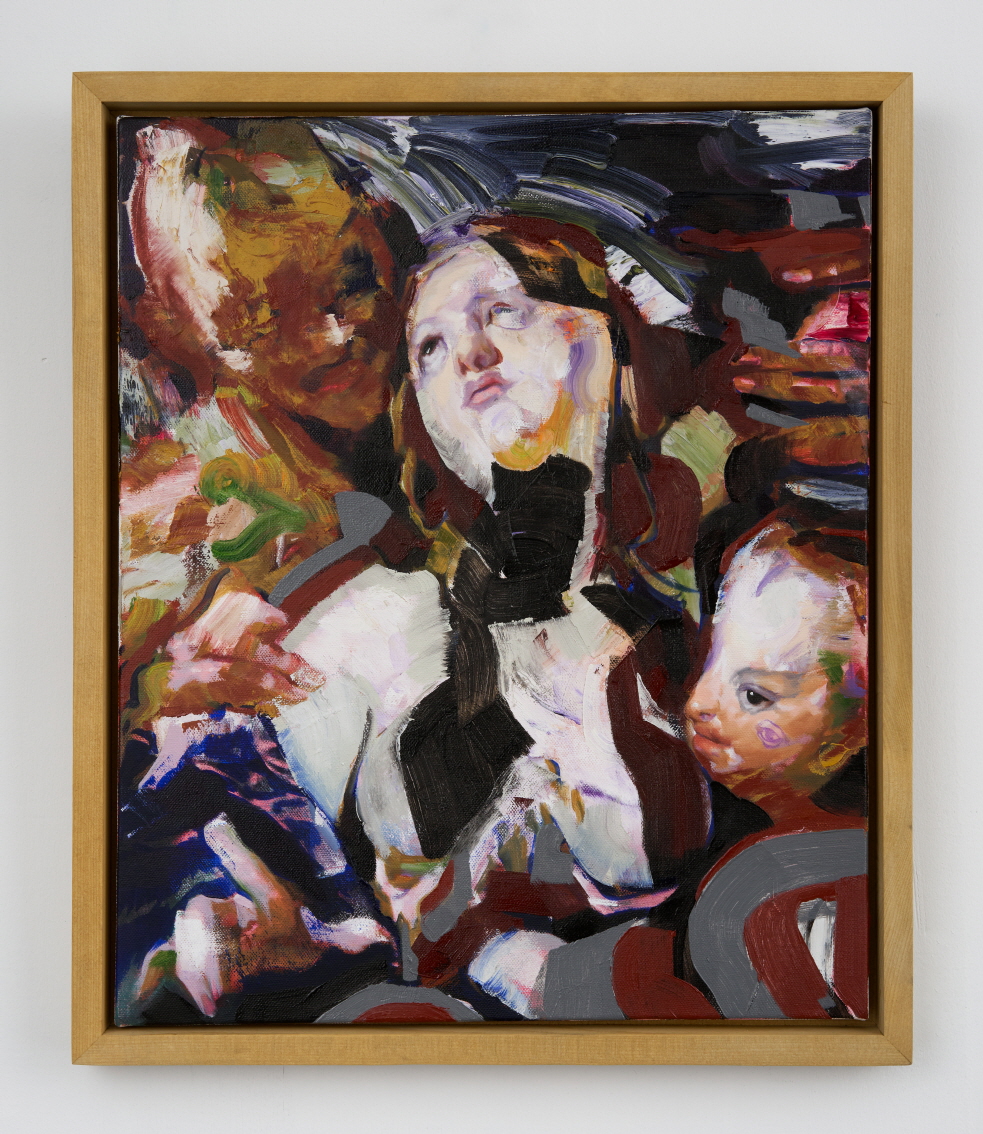
Park Jung Hyuk’s third painting series, ‘Park’s Land’, unfolds around the idea of “transformation.” When beginning this body of work, the artist was interested in exploring a sense of possibility, and transformation became the theme through which that notion could be articulated. Here, transformation does not refer to a simple shift from A to B, as in familiar mythic or cinematic narratives.
Instead, it encompasses a broader spectrum of states—what something could become, how roles shift according to circumstance, and the latent conditions inherent within a subject.
Figures and forms in the paintings appear structurally dismantled, blurred, or distorted through layered brushwork. These visual disruptions are less about depicting physical change and more about revealing multiple potential states at once.
Ultimately, ‘Park’s Land’ considers the conditions that allow transformation to occur rather than the moment of change itself. Through overlapping imagery and fluid gestures, the series presents a world defined not by what is changing, but by what can change—an expanded terrain for the artist’s ongoing exploration of painterly imagination.