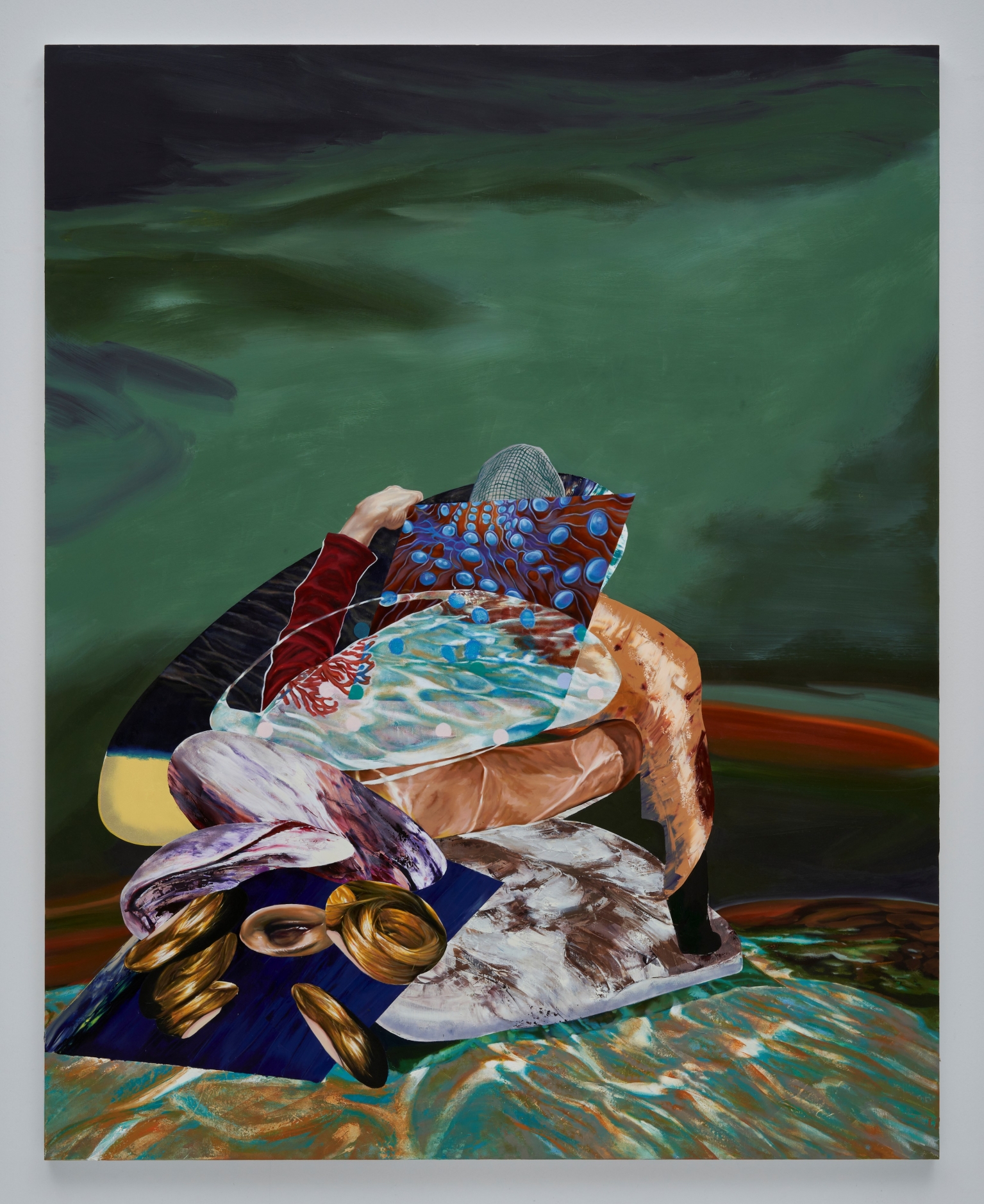
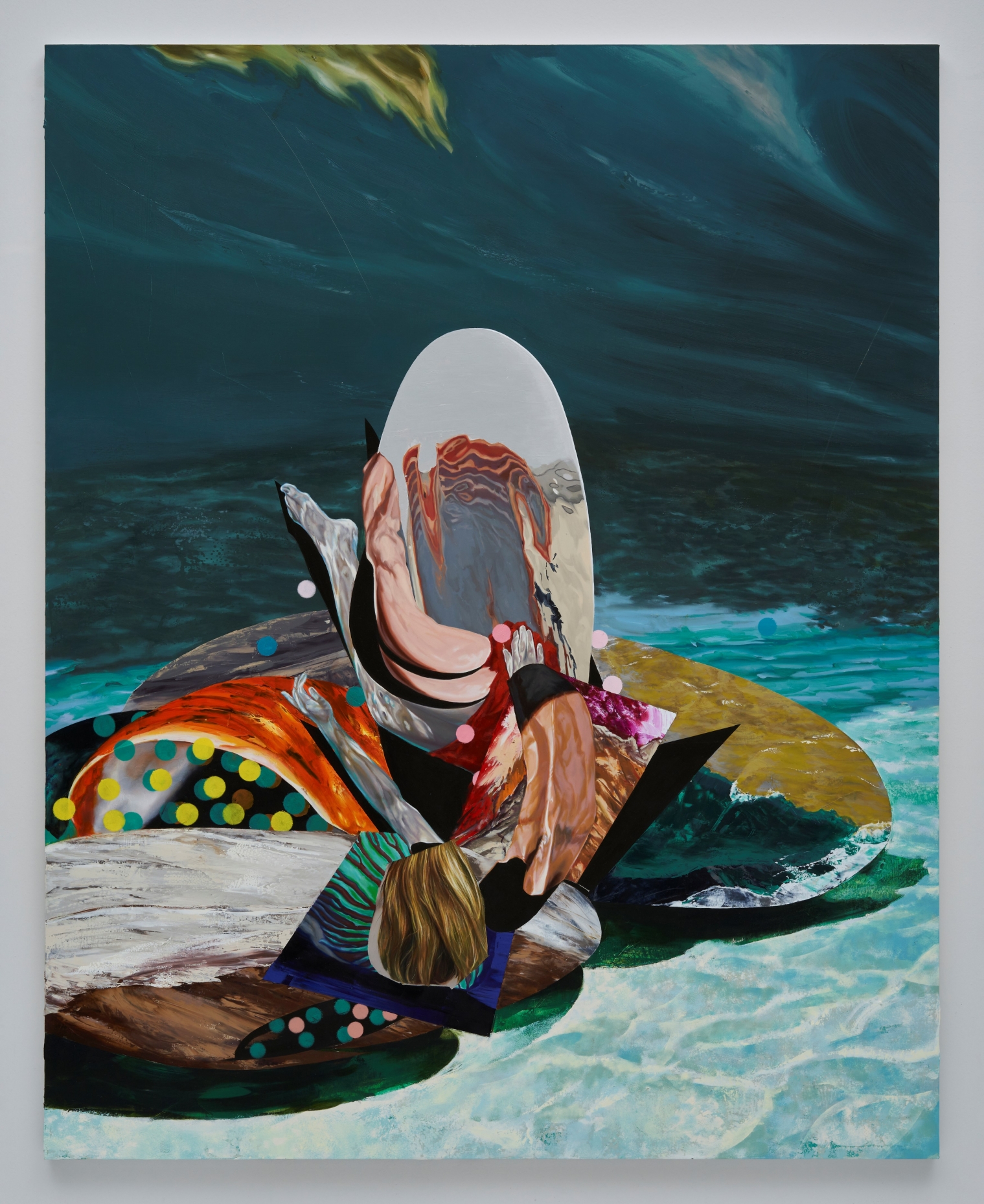
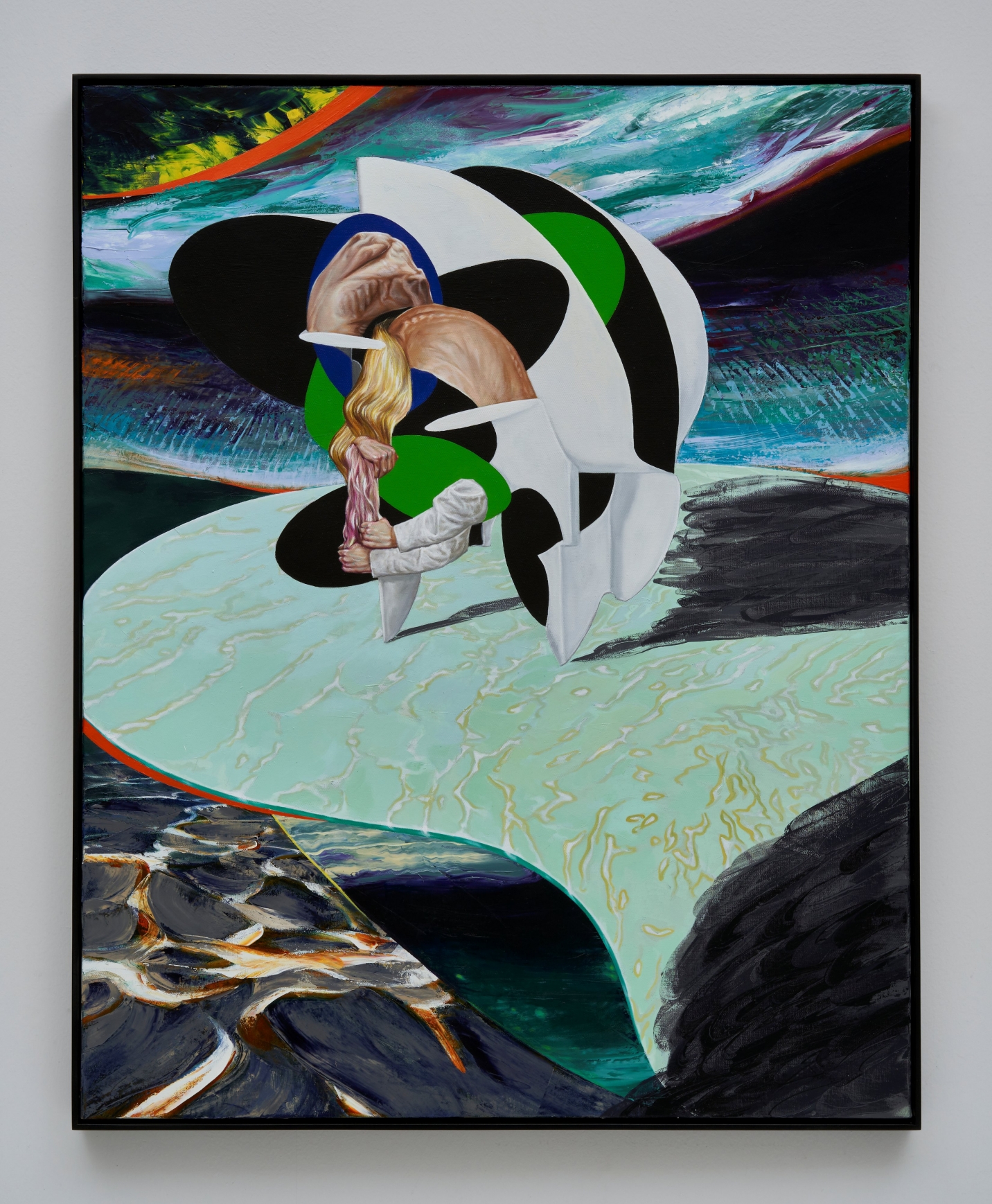
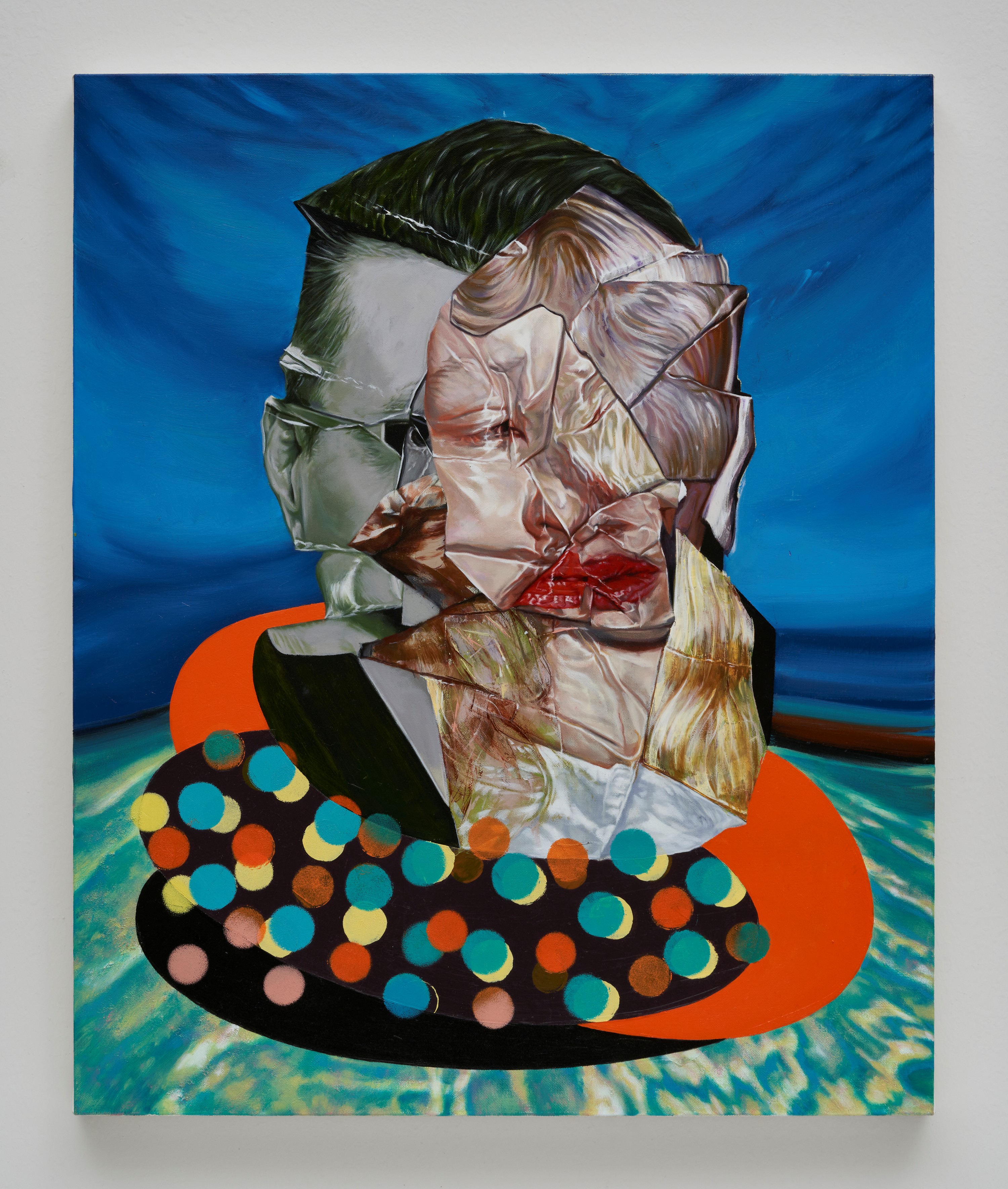
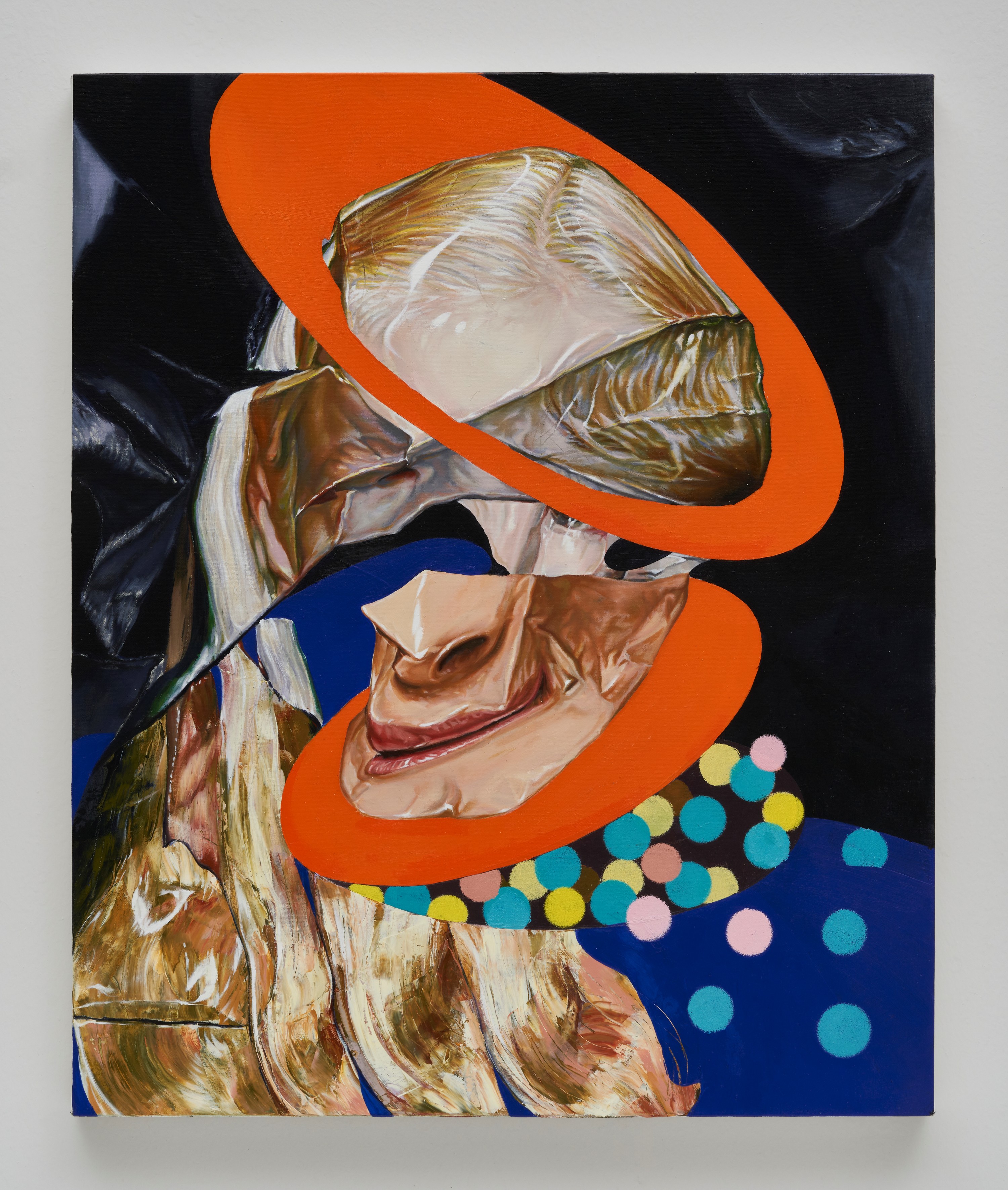
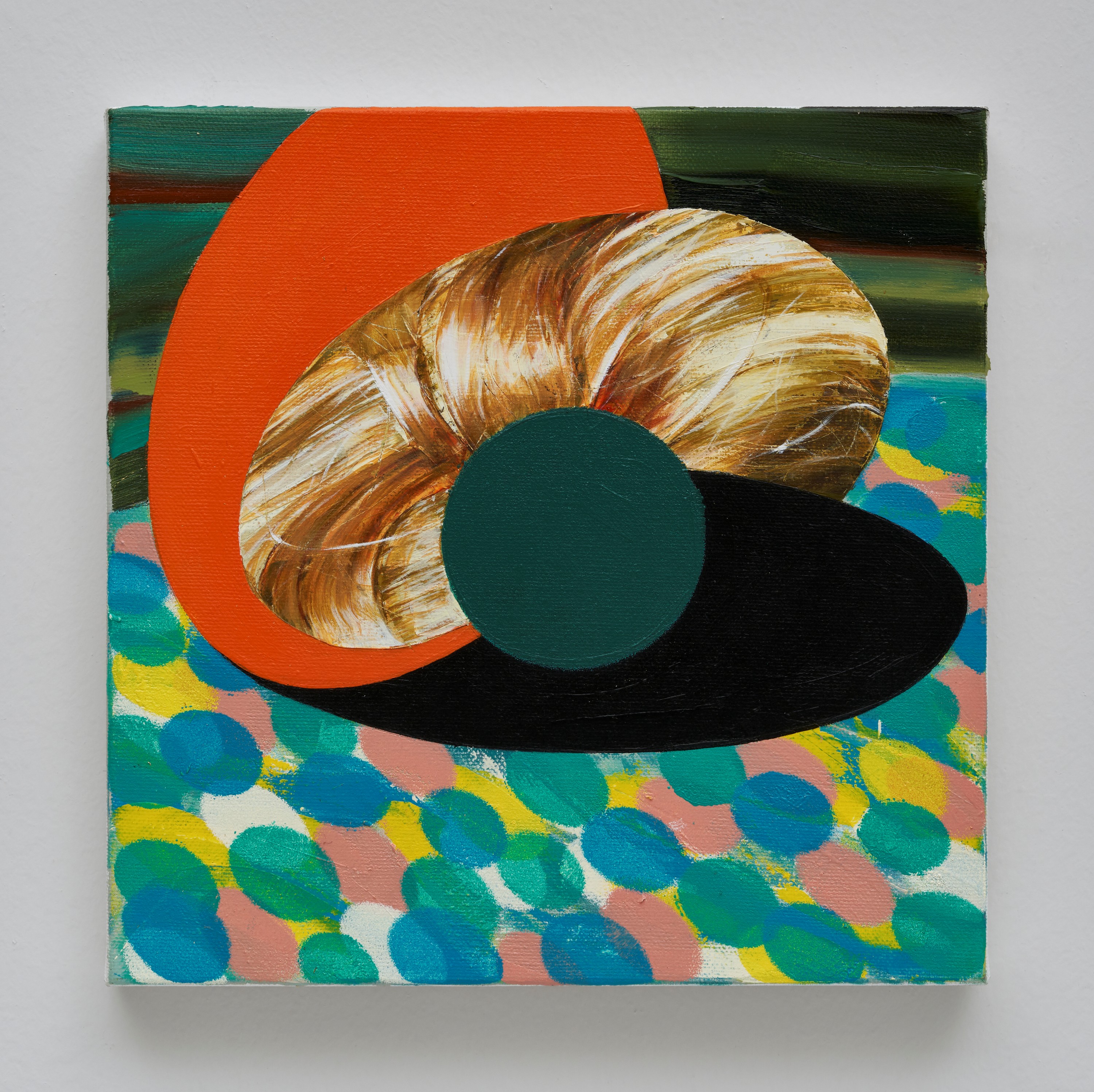
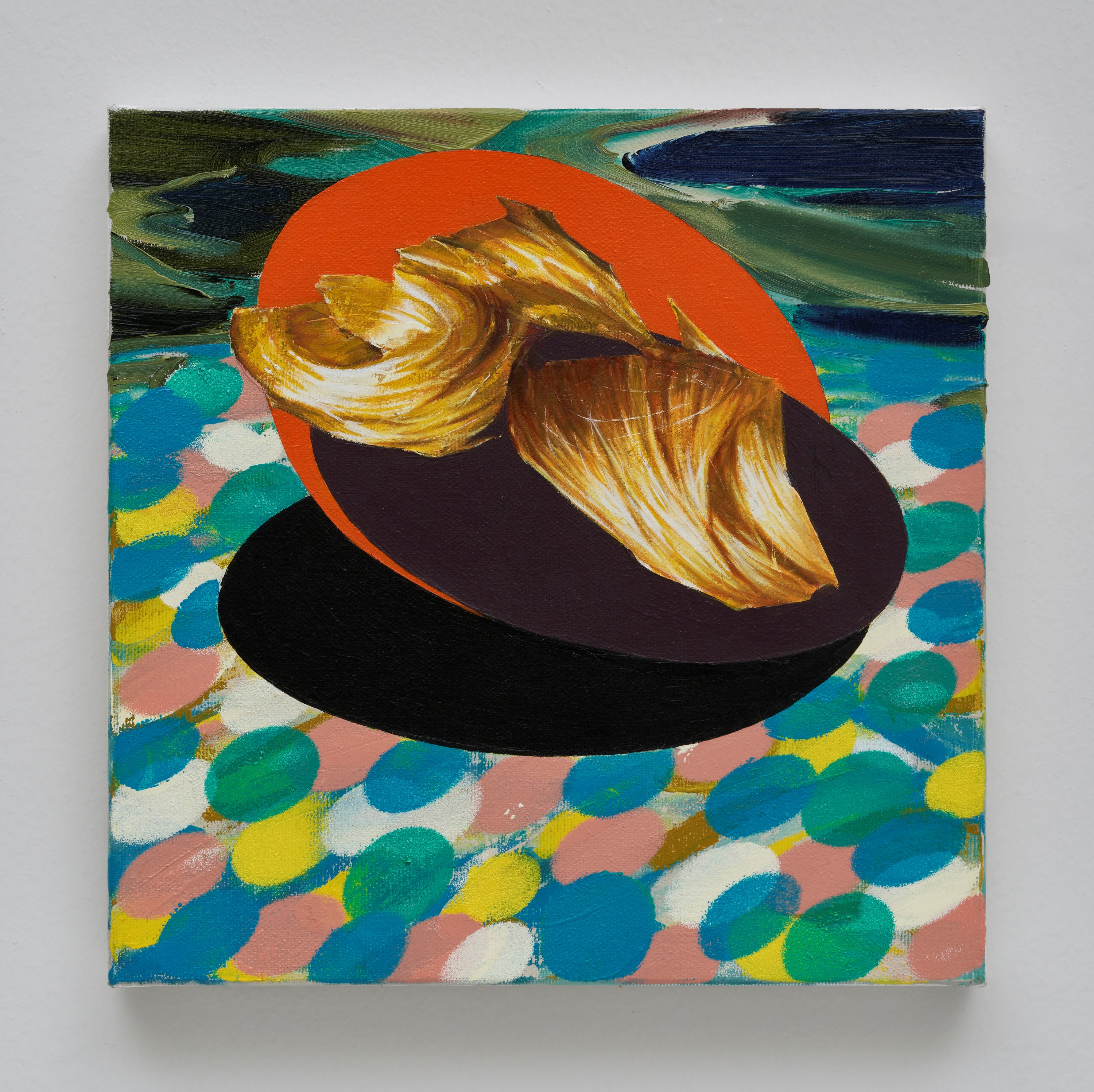
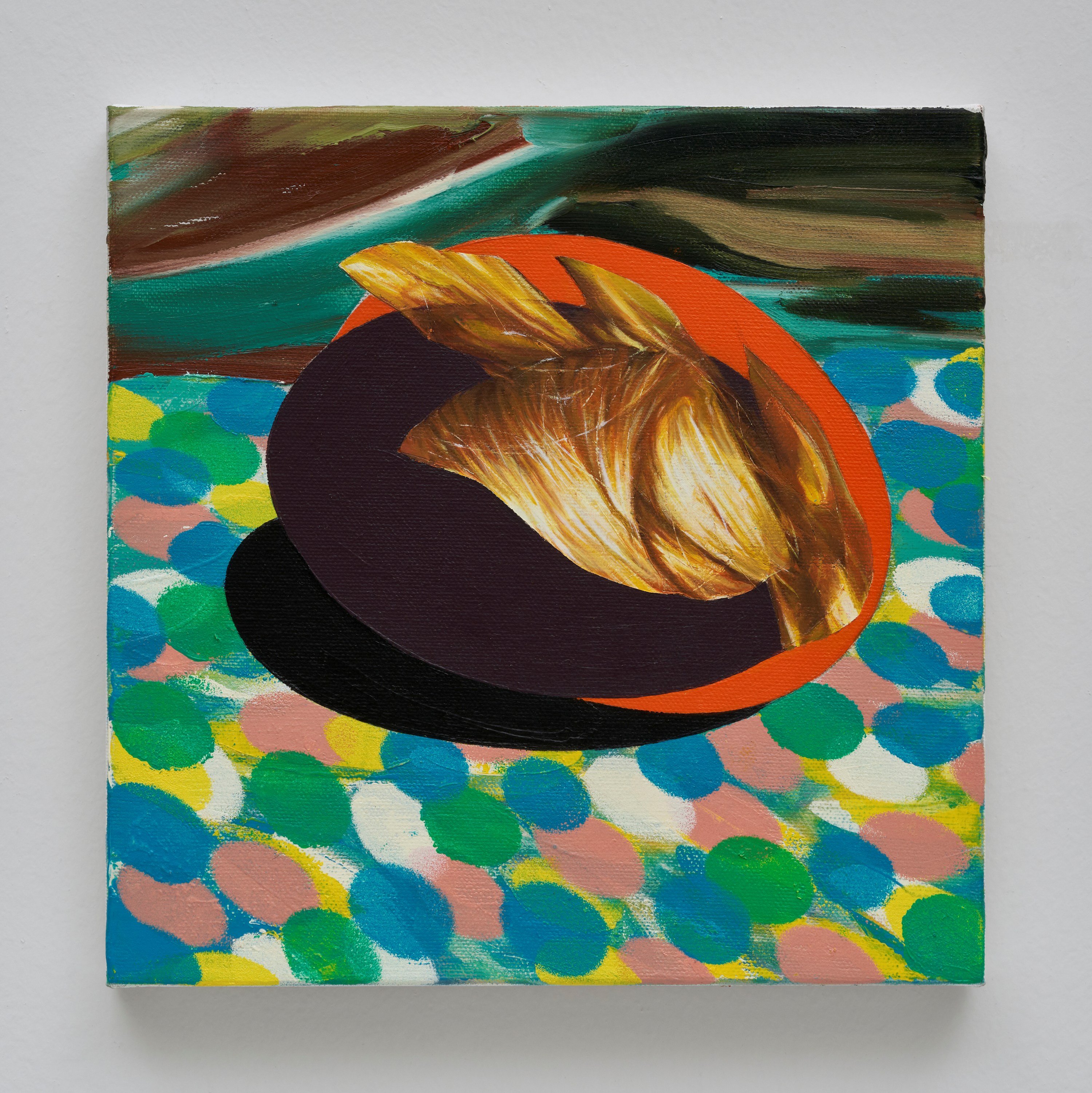
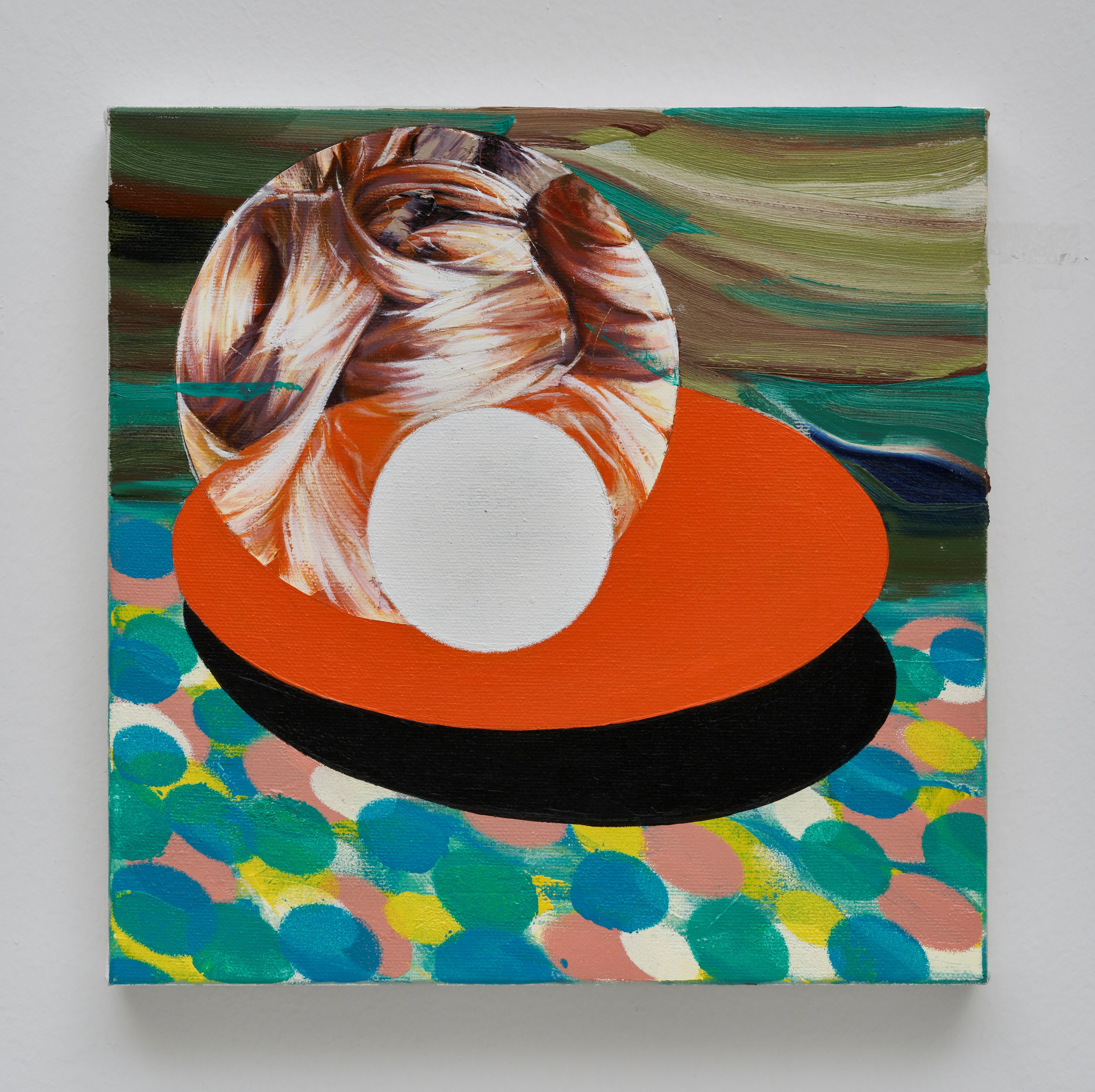
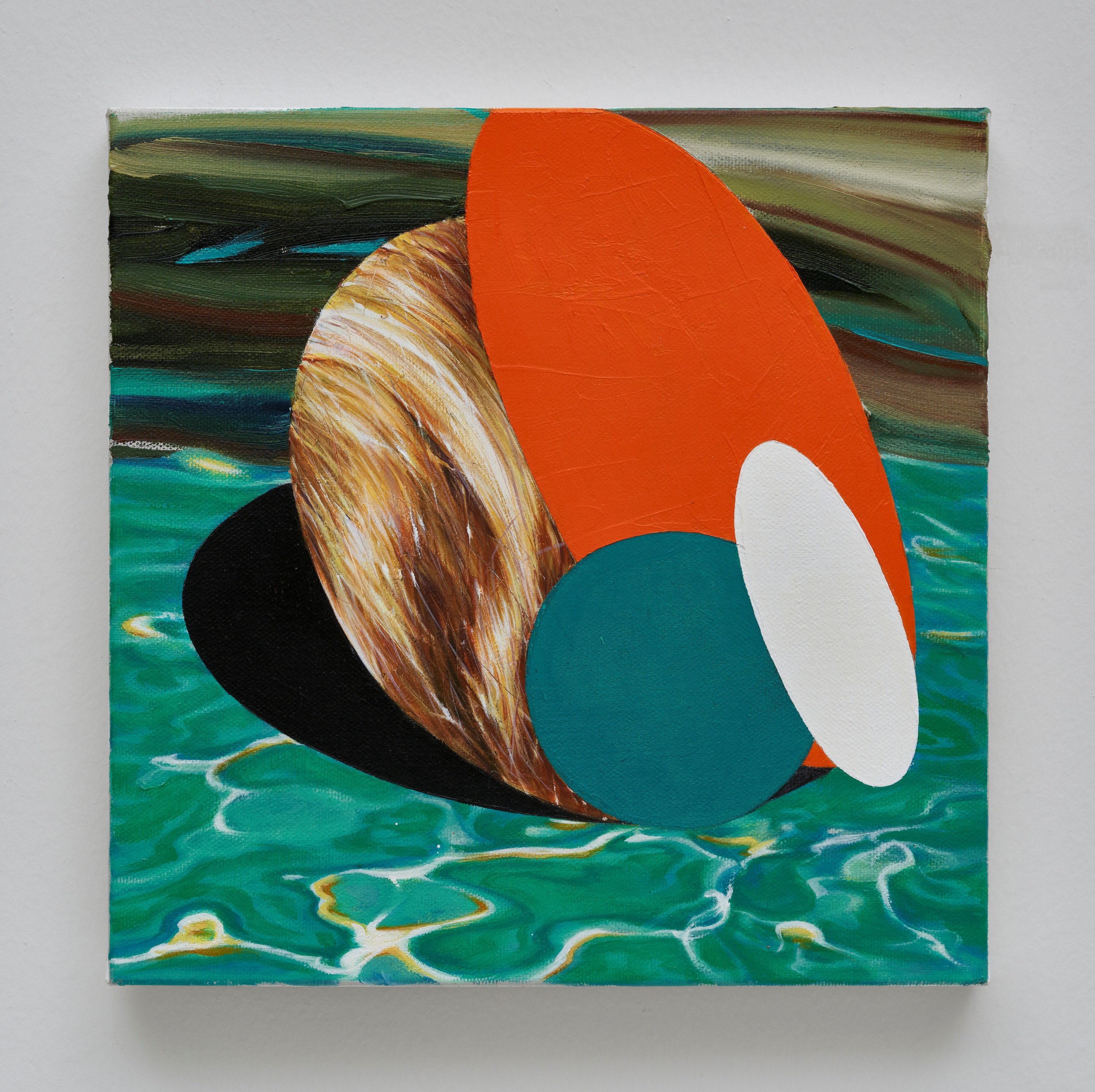
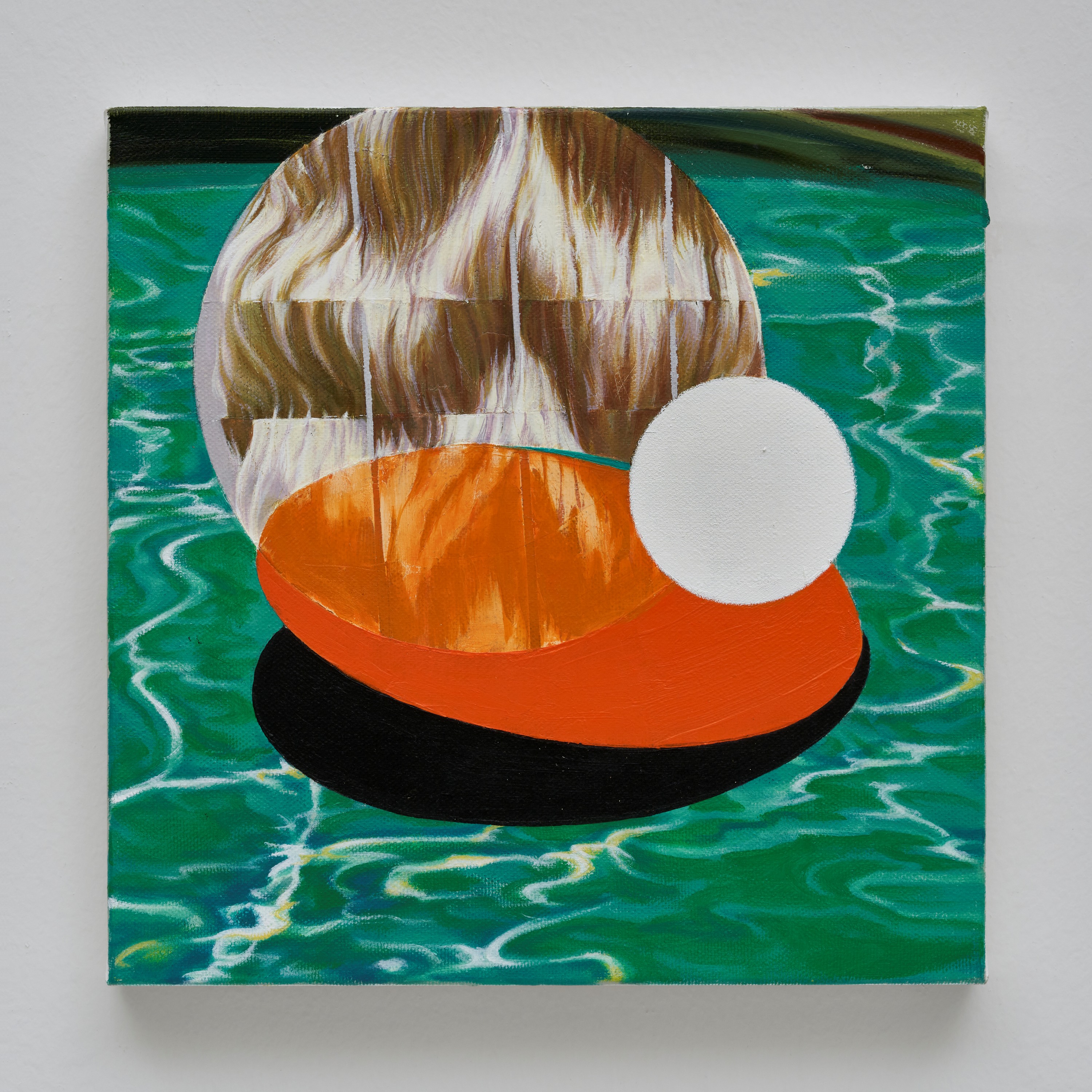
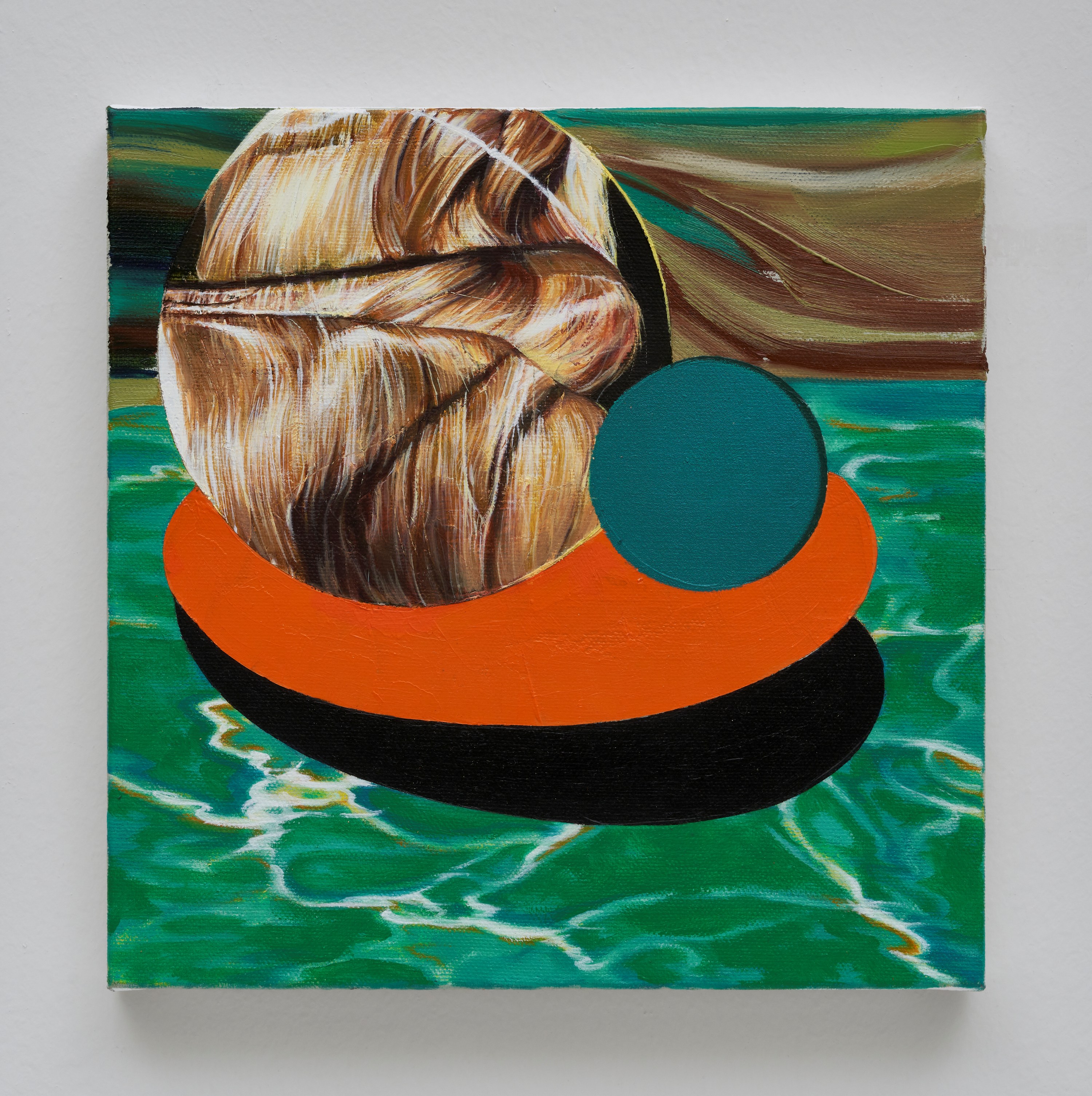
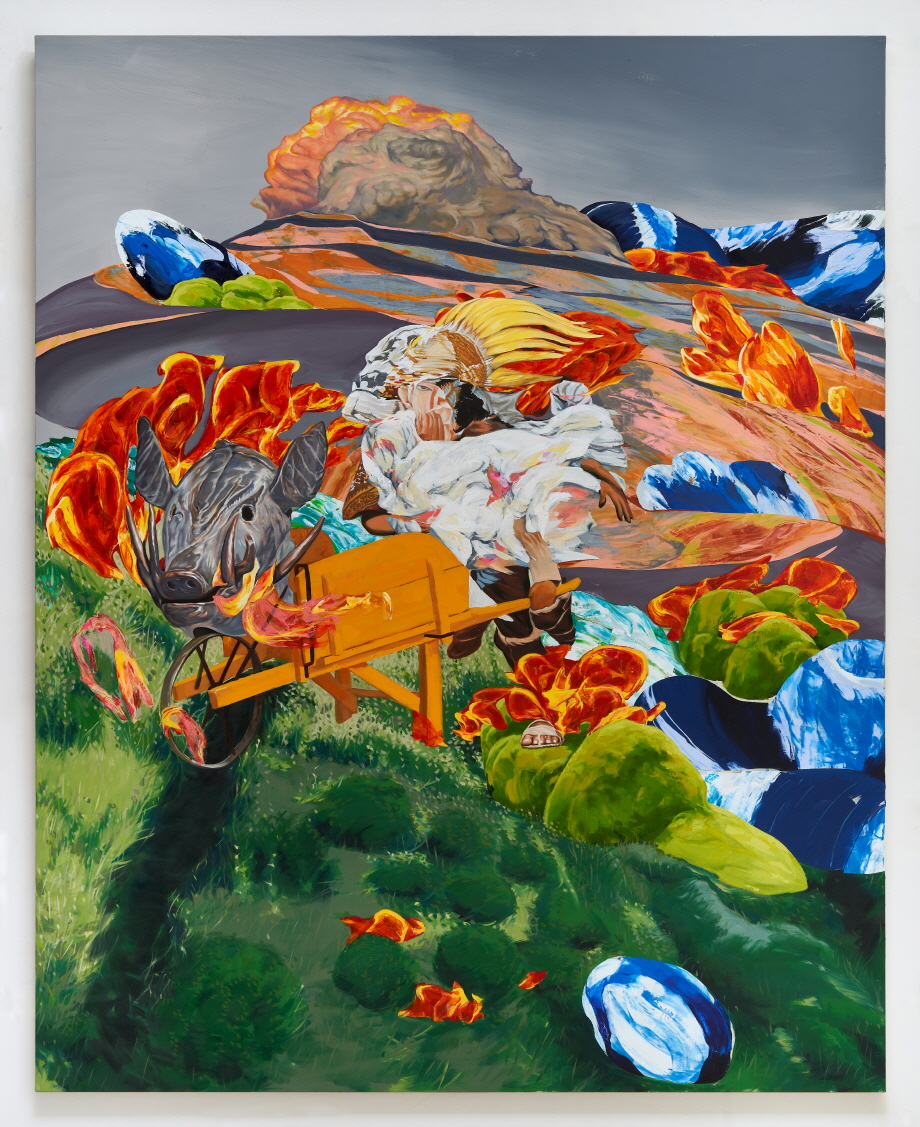
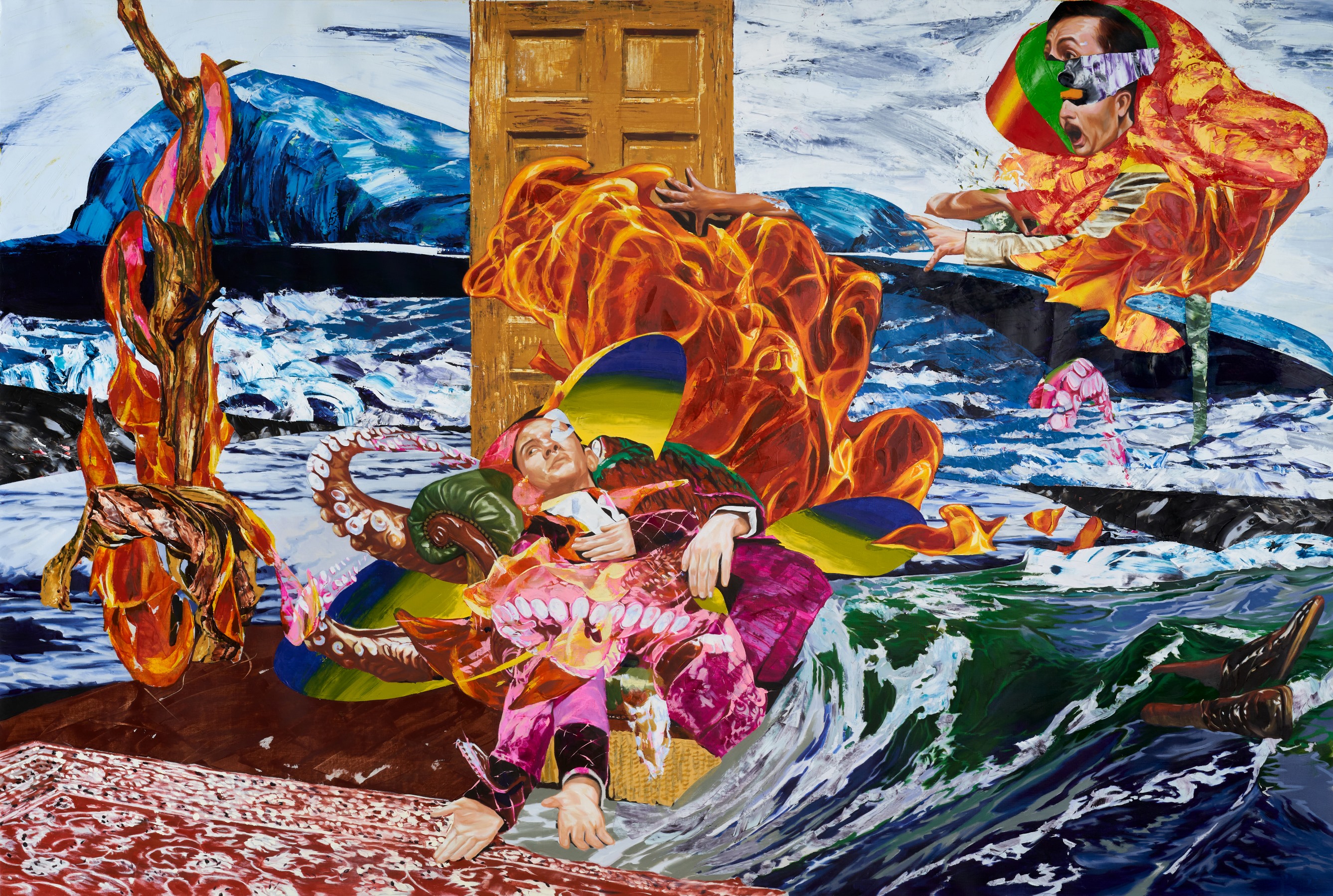
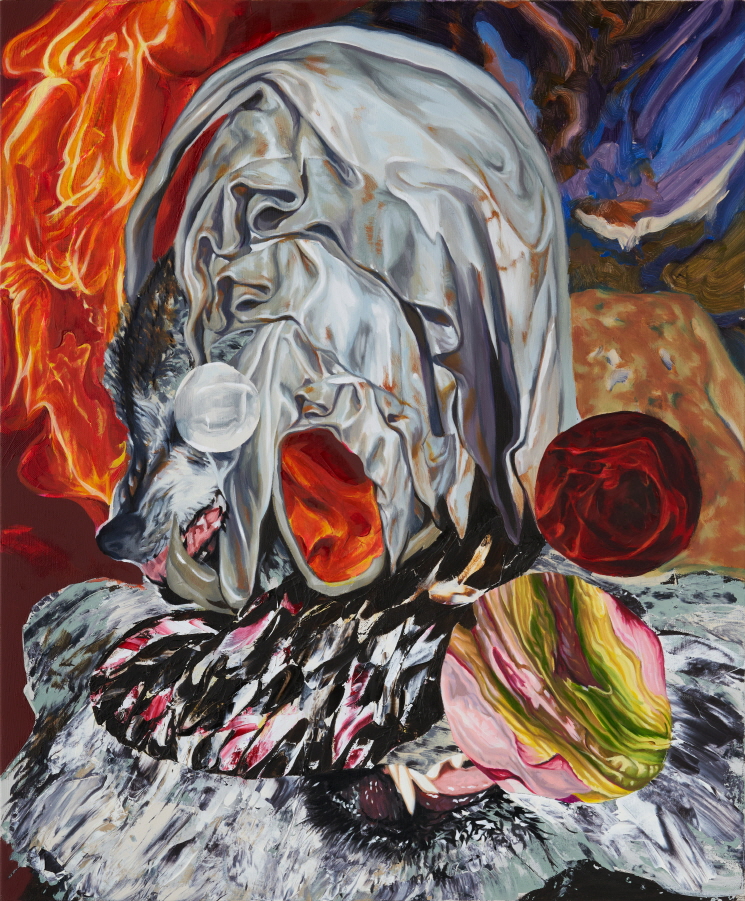
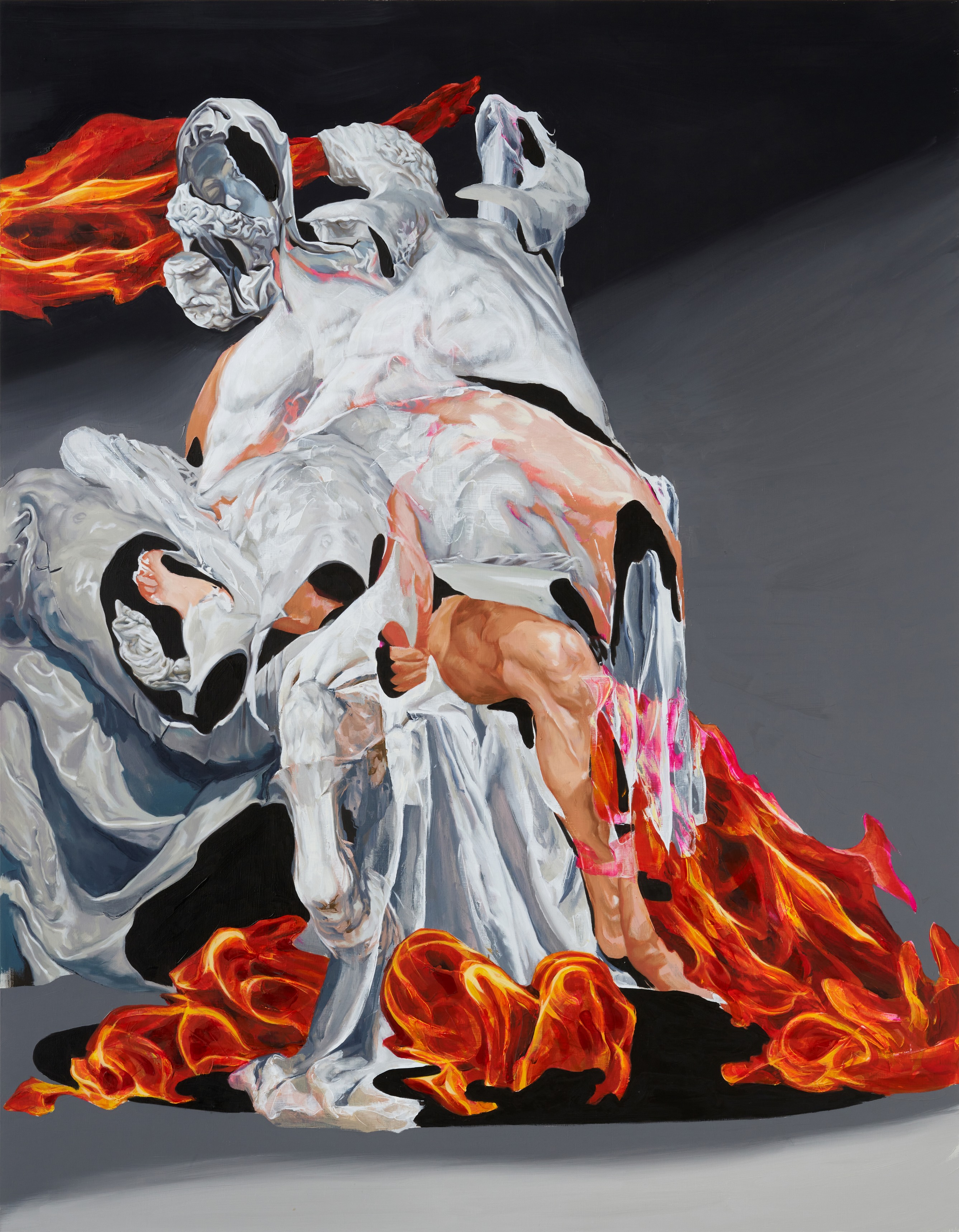
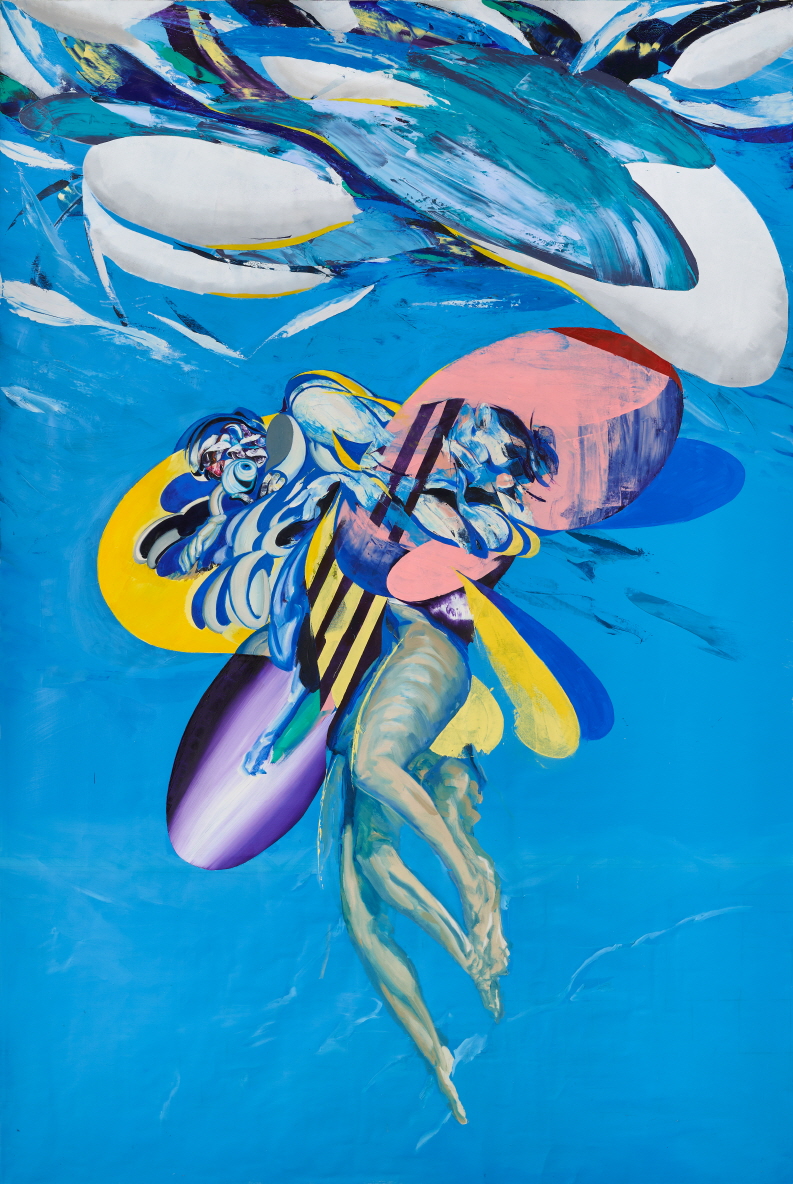
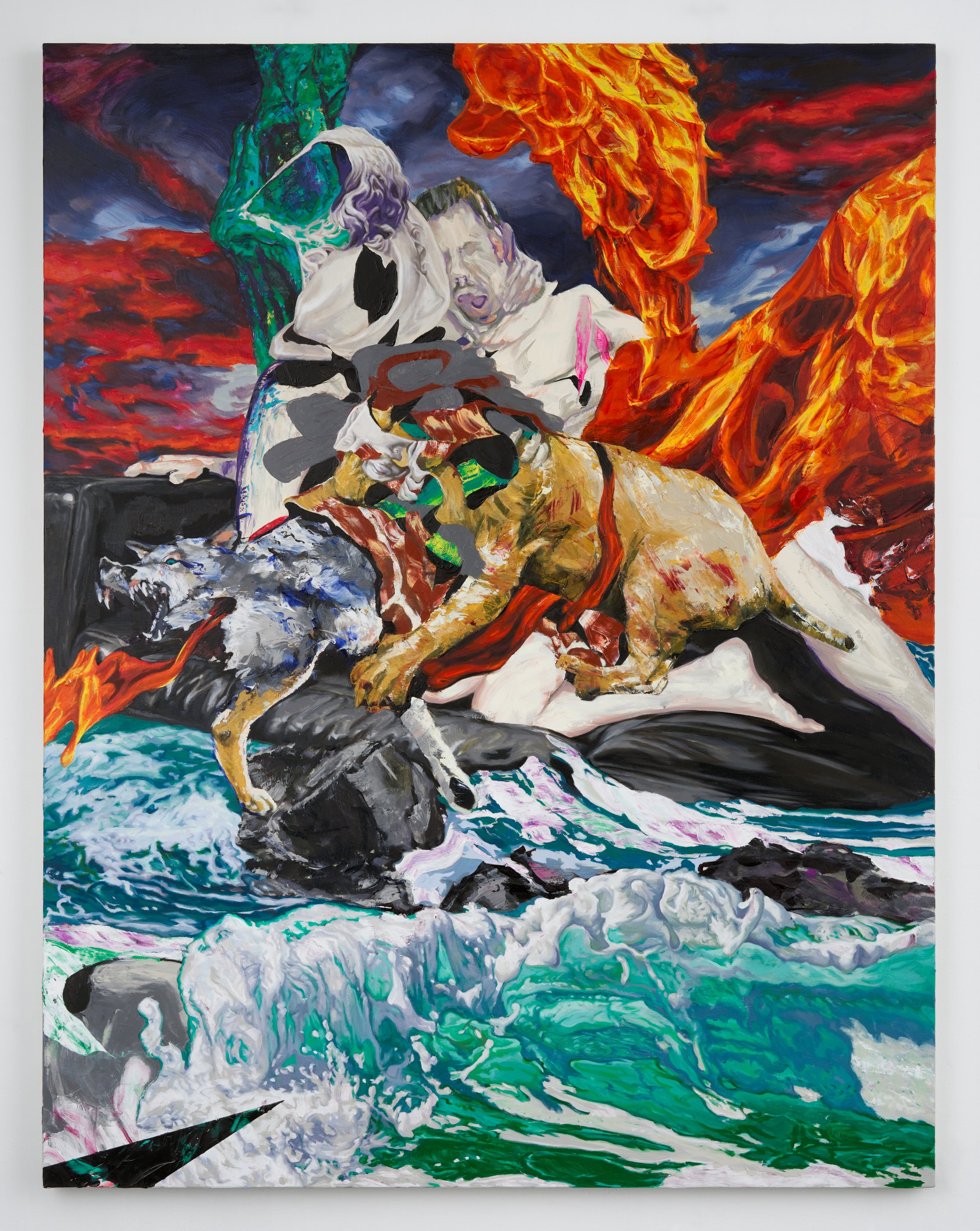
Park's Land 23-1-Limited Conditions
2022 Oil on canvas 193.3 x 130.3 cm
Provenance
Artist Collection, 2026
Exhibitions
2025《Rebellious possibility》, Yeol Jeong Gallery, Seoul
2024《When Ero·Gro·Nonsense Combines Nonlinearly – Episode 1》, Museum1, Busan
2023《When Ero·Gro·Nonsense Combines Nonlinearly》, Arting Gallery, Seoul
About The Work
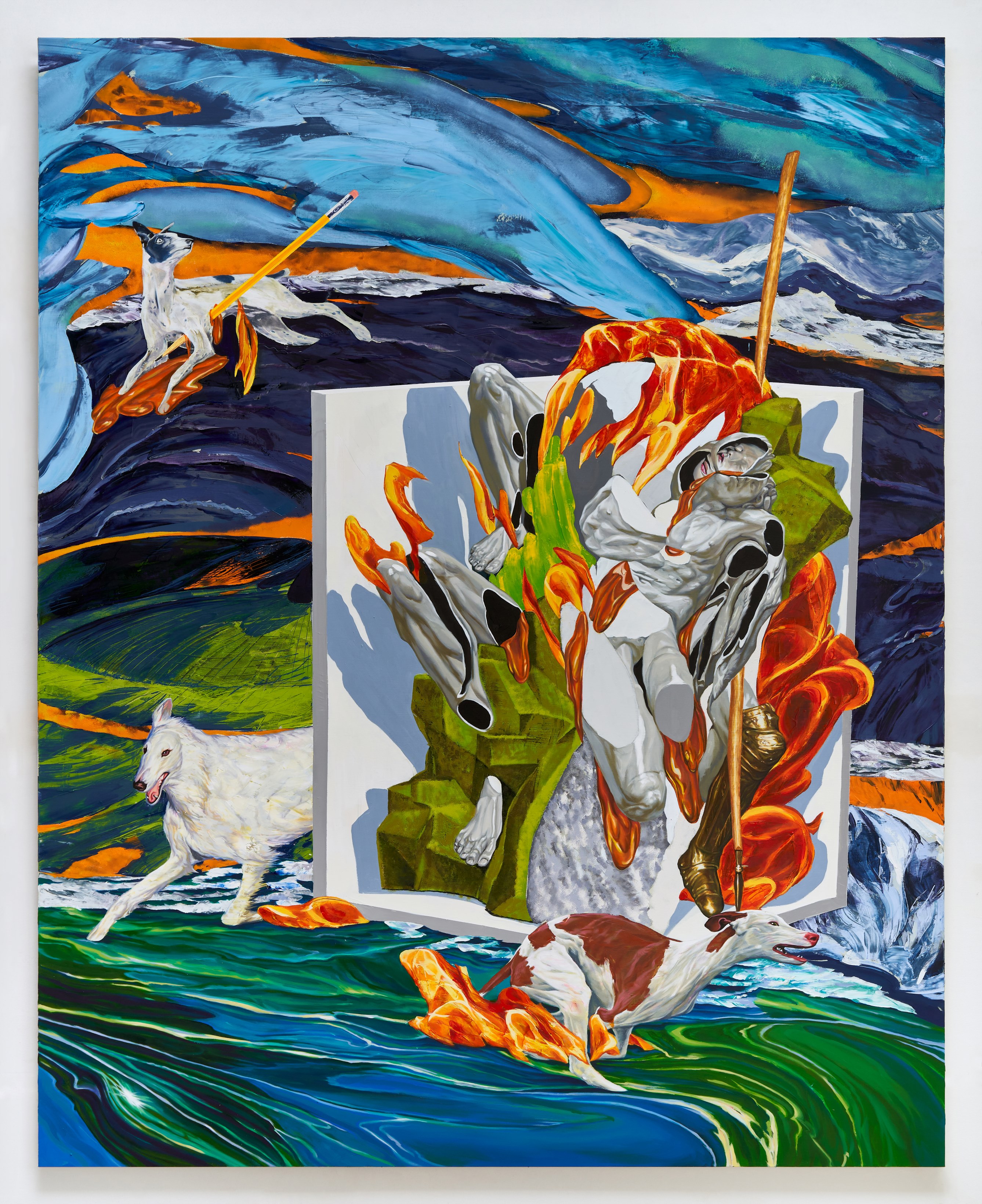
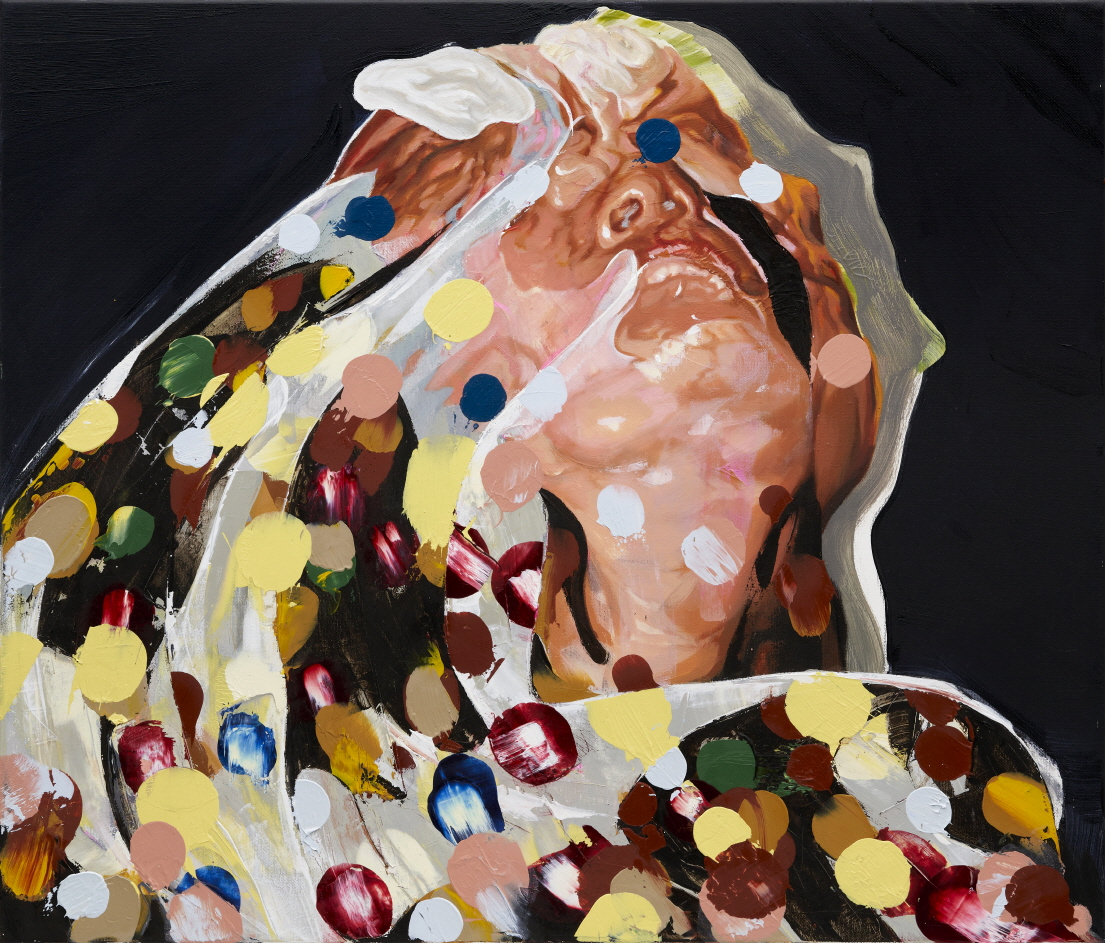
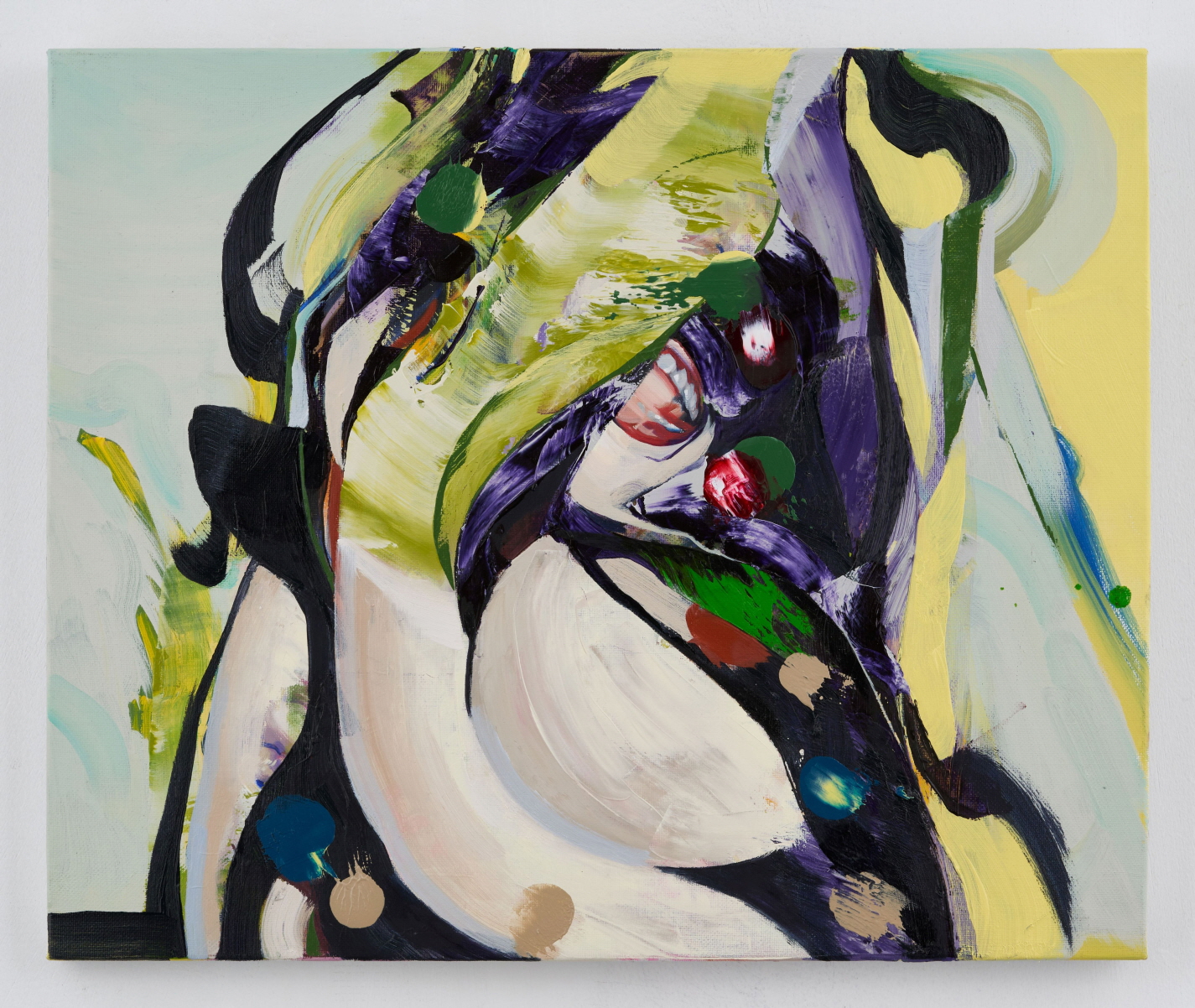
One day, I came across a photograph in a newspaper. It depicted an American synchronized swimmer losing consciousness during a competition and sinking underwater, while her coach followed her deep below the surface, holding her body and ascending upward toward the light. Although the situation captured in the photograph was an extreme reality of life-threatening danger and rescue, to me it appeared as a scene of entering ‘another dimension’.
I have long thought of ‘transformation’ not as a simple change from one form into another, but as a process of passing through a gap or a hole—an act of crossing into an entirely different state of being. In this sense, the scene extended beyond the specific location of water and emerged as a kind of rite of passage, traversing the boundary between crisis and survival, disappearance and regeneration.
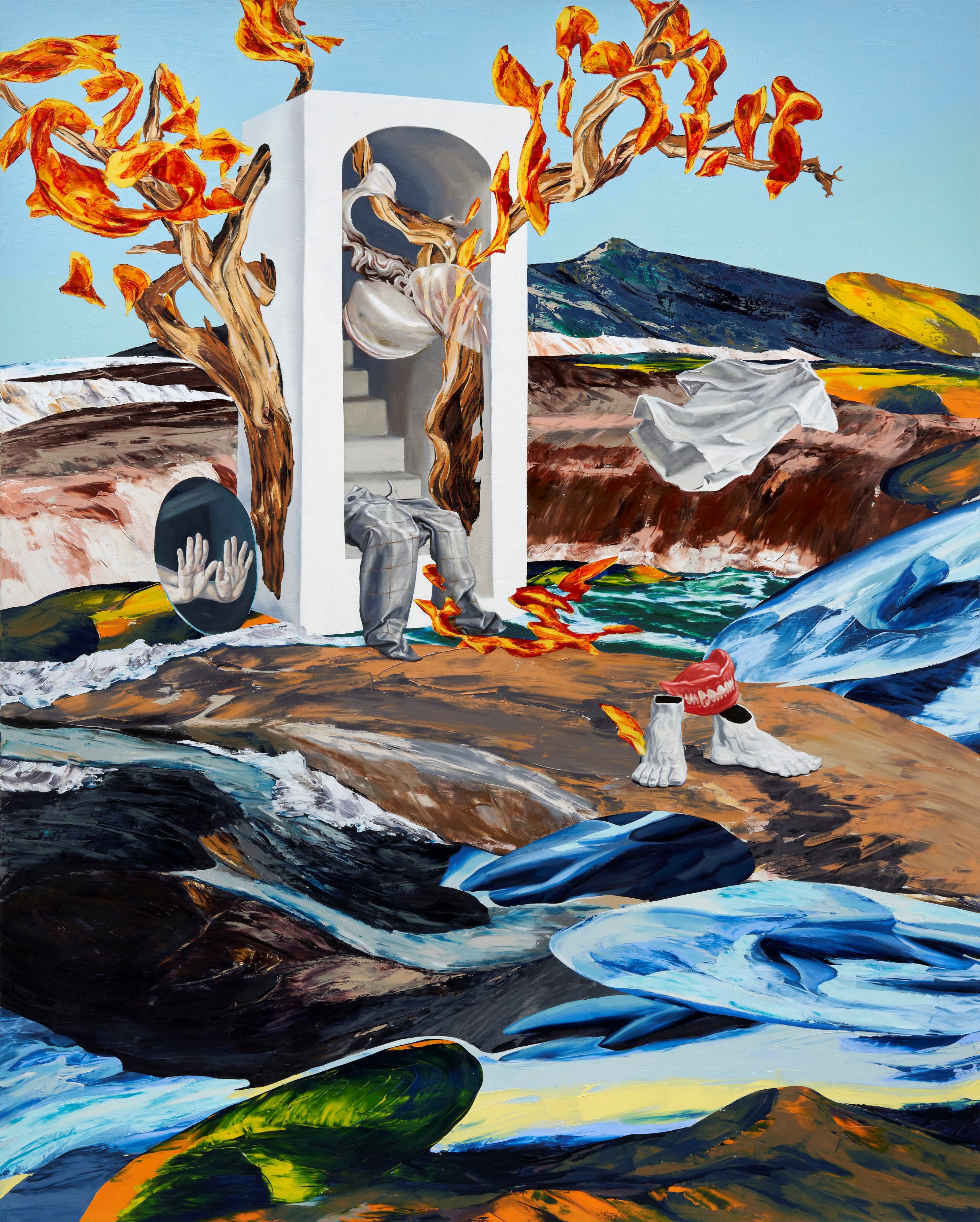
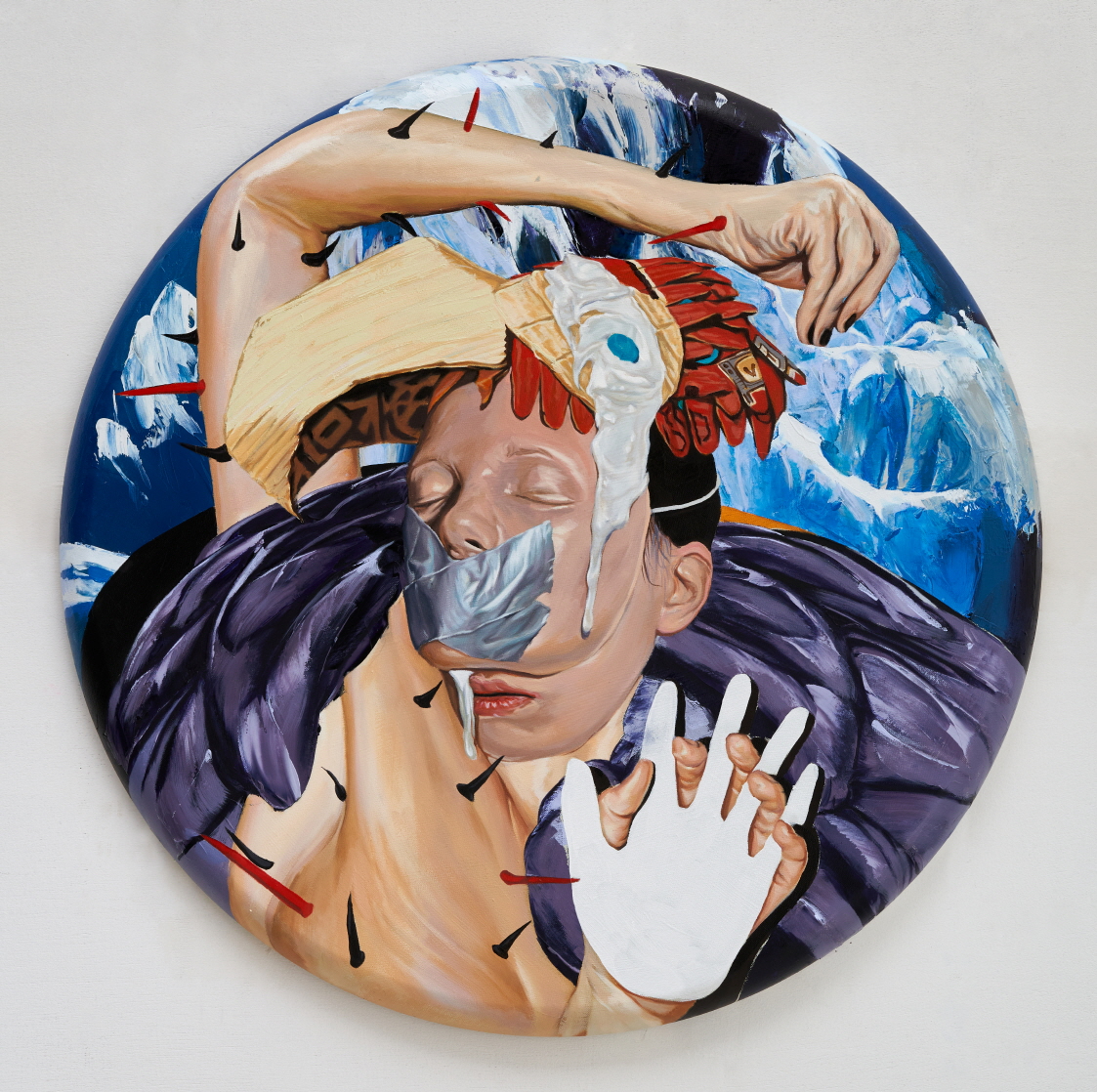
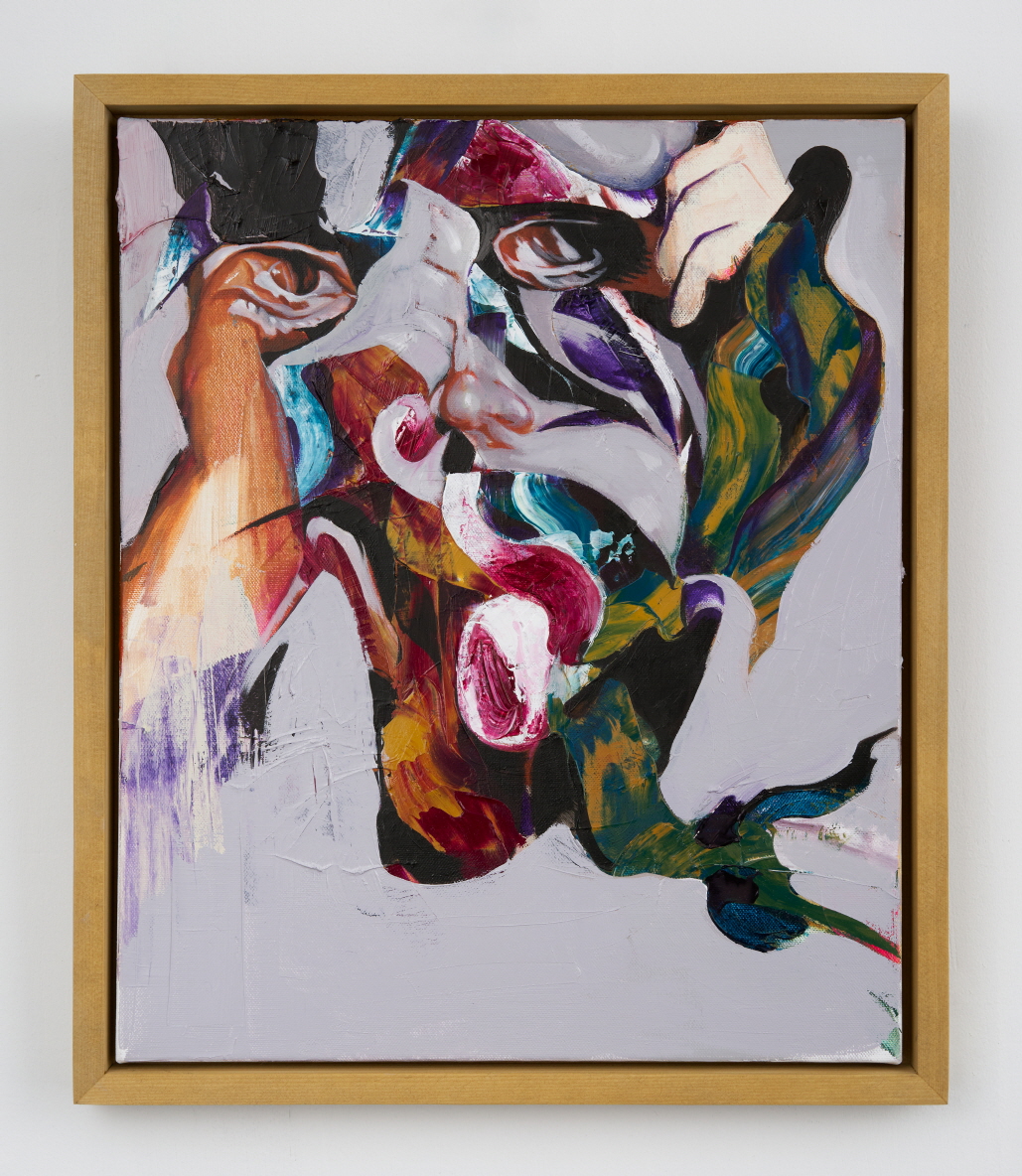
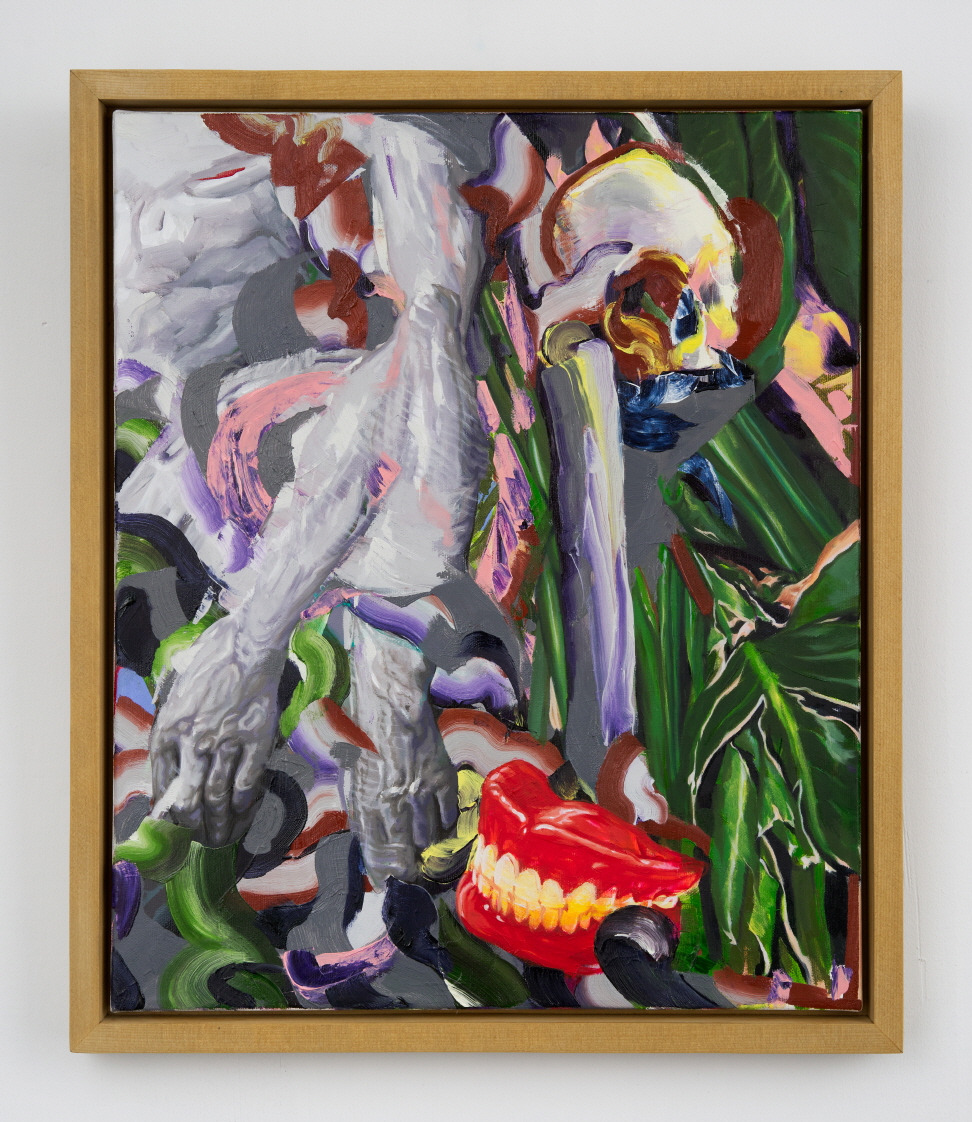
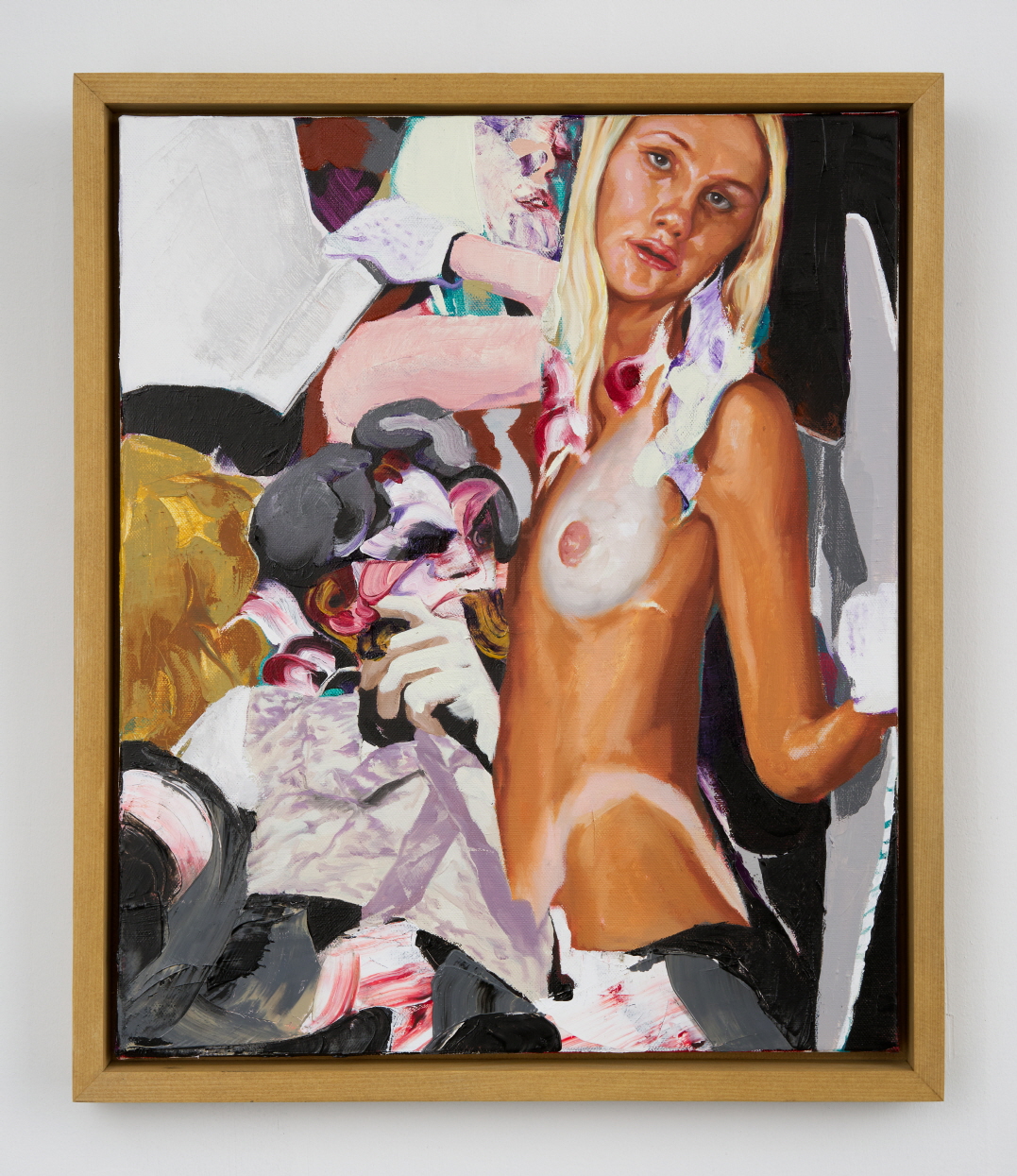
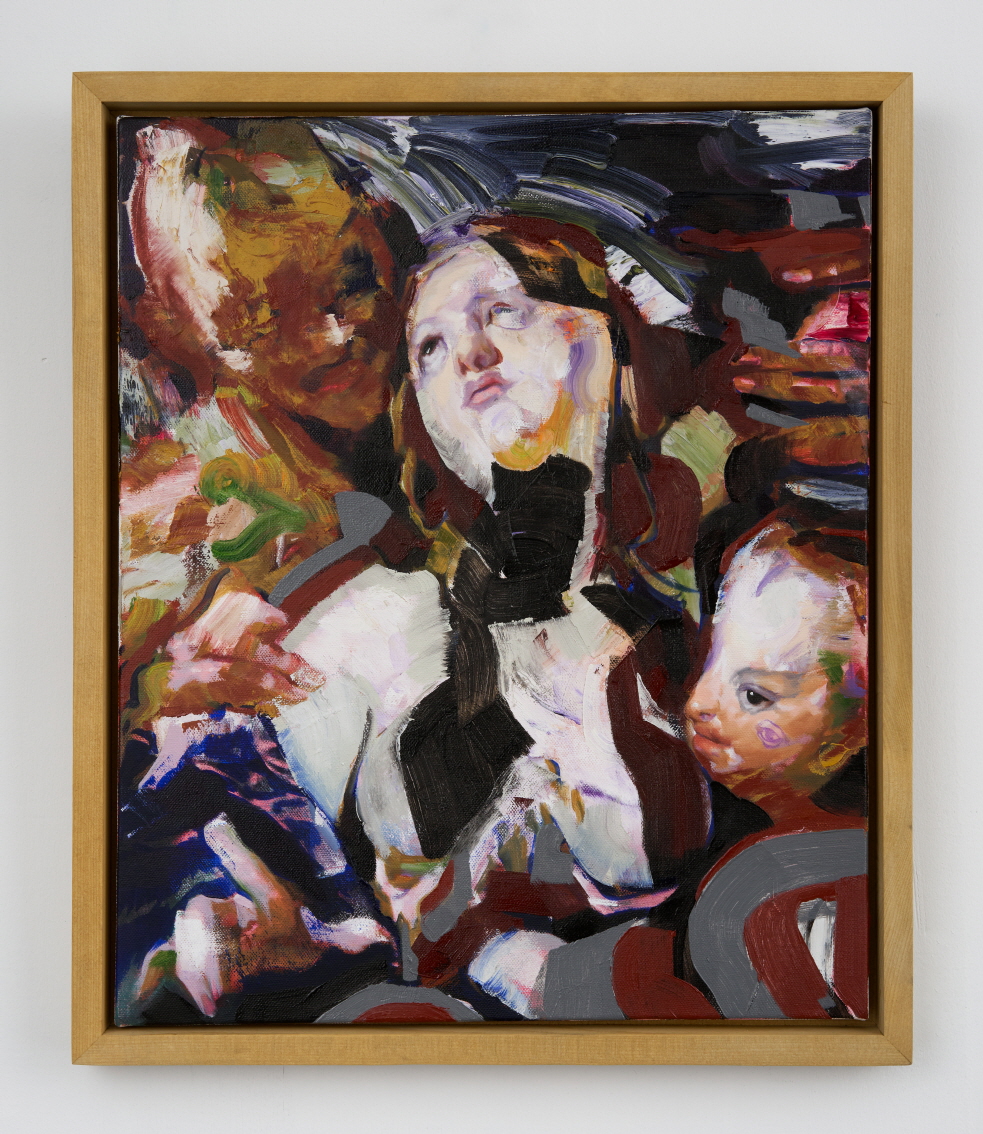
The bodies in the work do not possess a clearly fixed form. Through flowing planes of color and fragmented traces, they are continuously reconfigured, revealing the process by which human existence is dismantled and reassembled within a single moment of an event. This is not an attempt to reproduce reality, but rather an effort to visually capture a state in which existence temporarily slips into another dimension and returns—or remains suspended in between.
I believe that the human self is not a fixed entity, but a constantly shifting state of ‘becoming’. This work marks the moment when that belief unexpectedly surfaced within an everyday scene, and it attempts to render that moment as a ‘door’ that connects to another dimension.
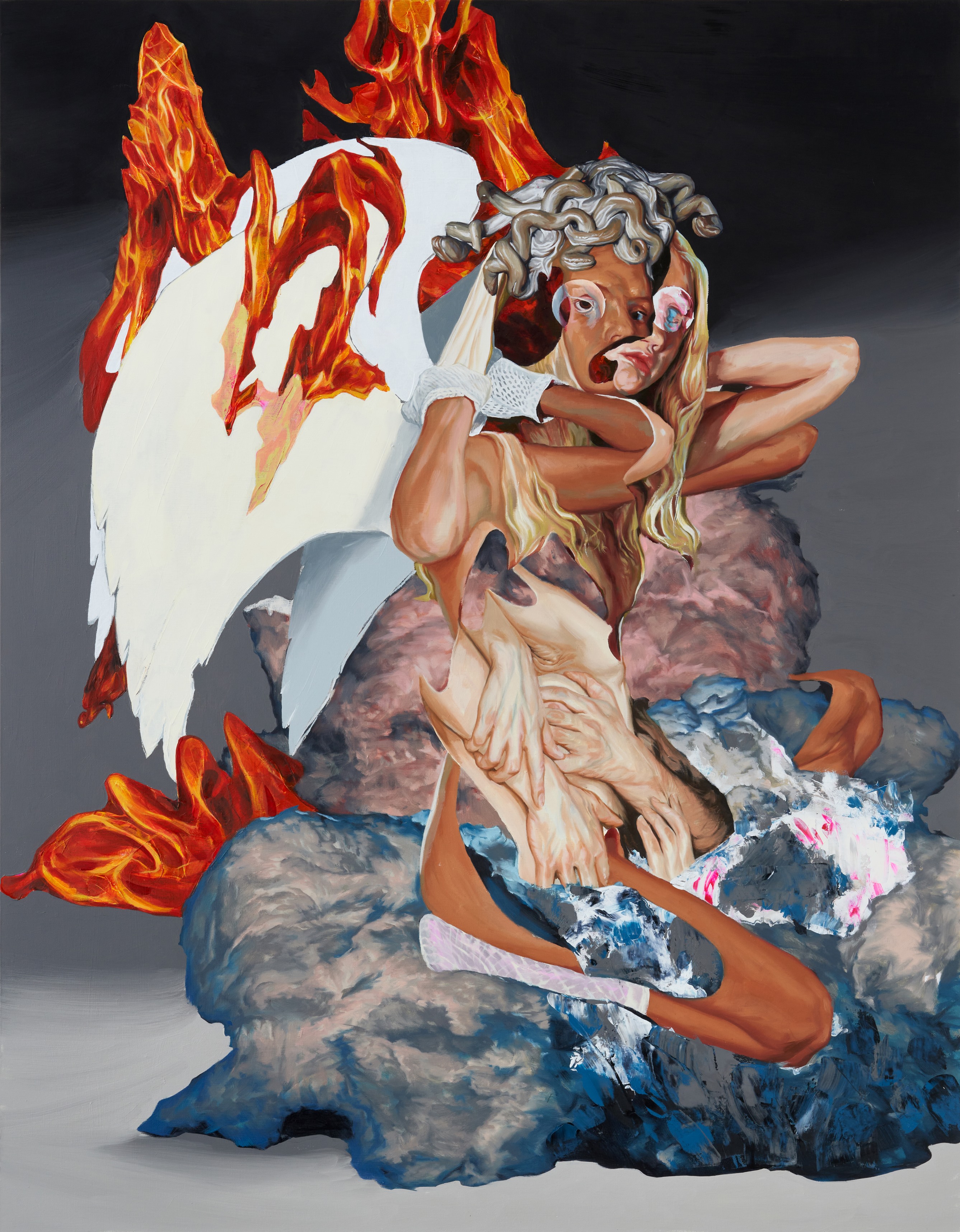
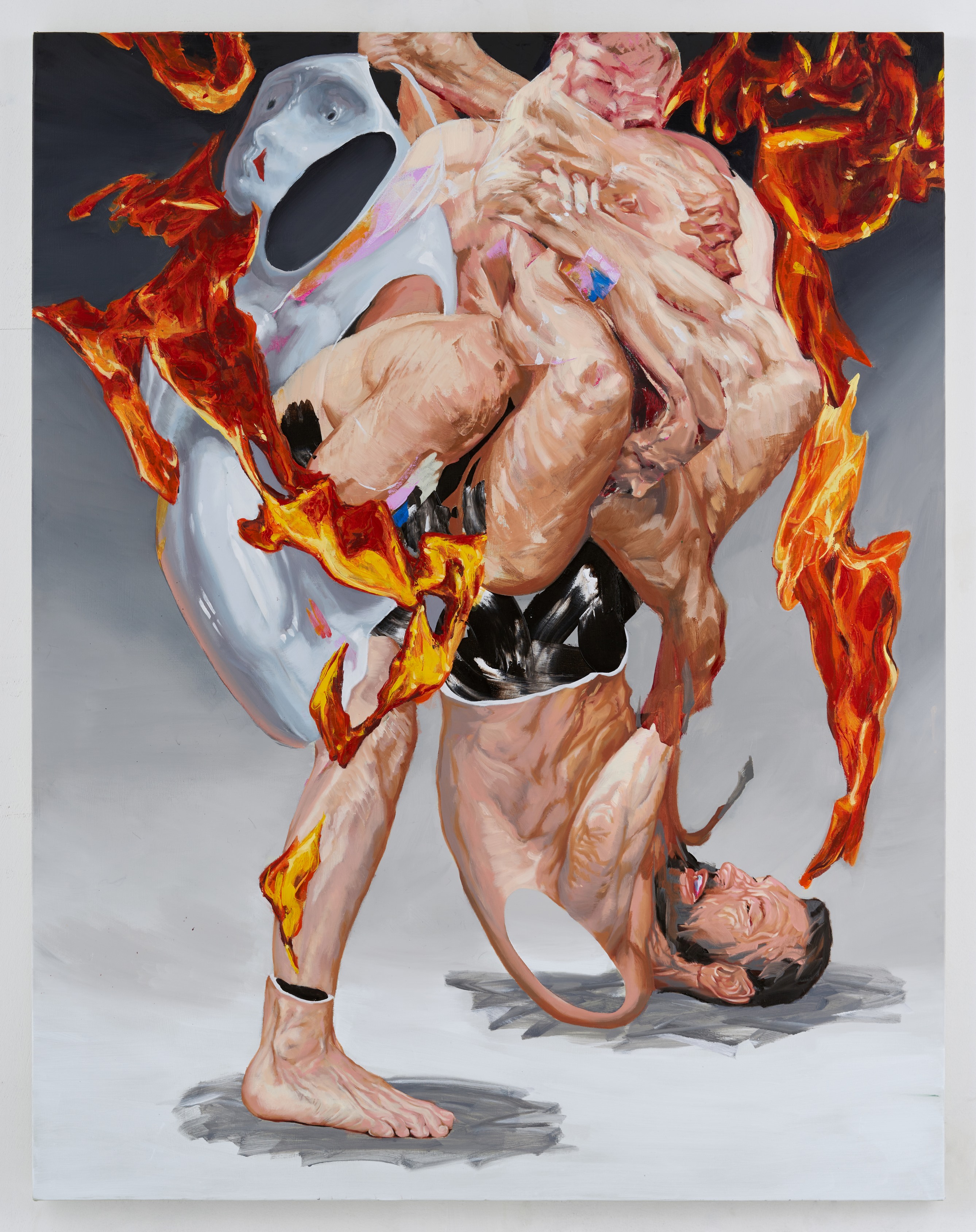
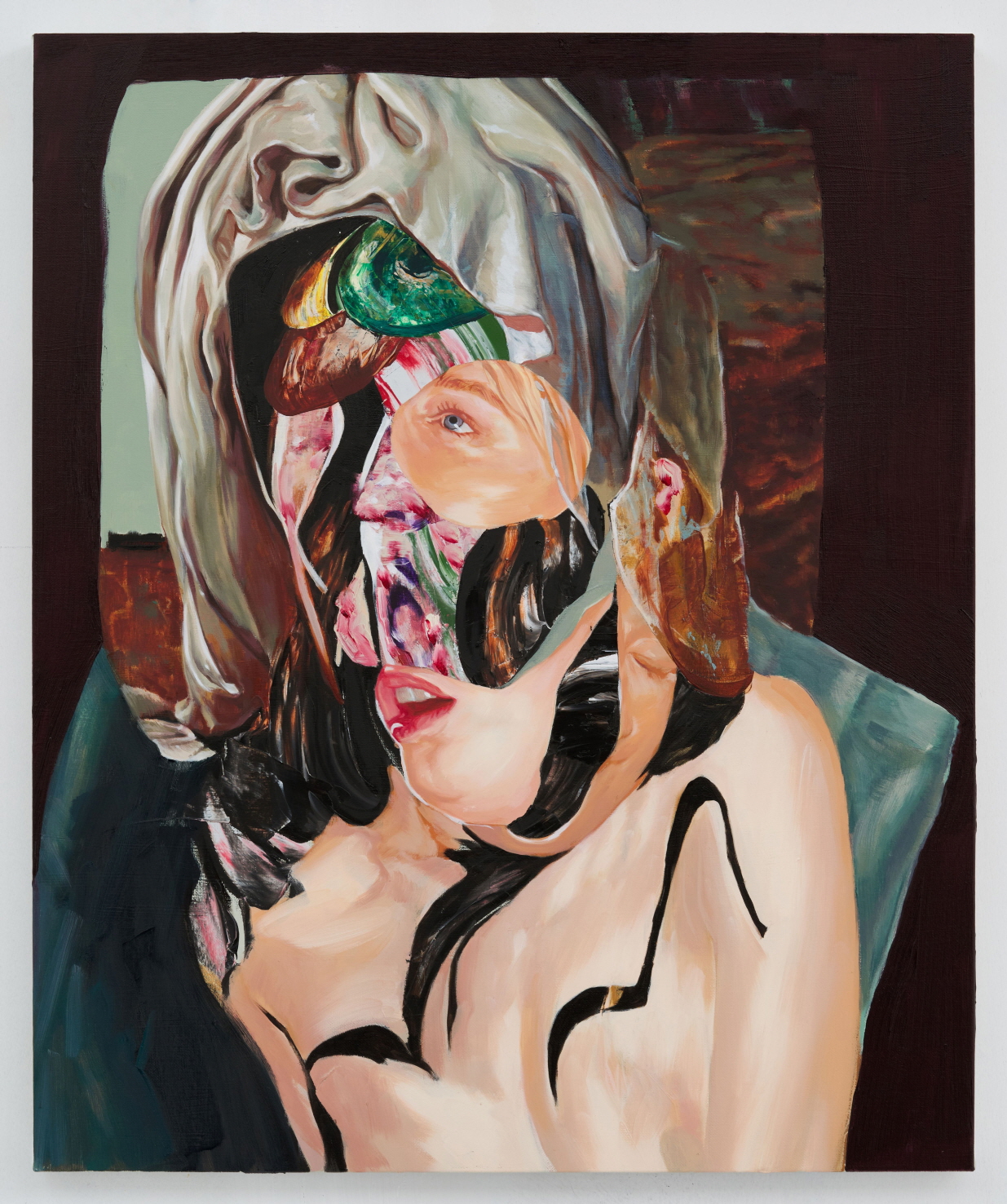
Park Jung Hyuk’s third painting series, ‘Park’s Land’, unfolds around the idea of “transformation.” When beginning this body of work, the artist was interested in exploring a sense of possibility, and transformation became the theme through which that notion could be articulated. Here, transformation does not refer to a simple shift from A to B, as in familiar mythic or cinematic narratives.
Instead, it encompasses a broader spectrum of states—what something could become, how roles shift according to circumstance, and the latent conditions inherent within a subject.
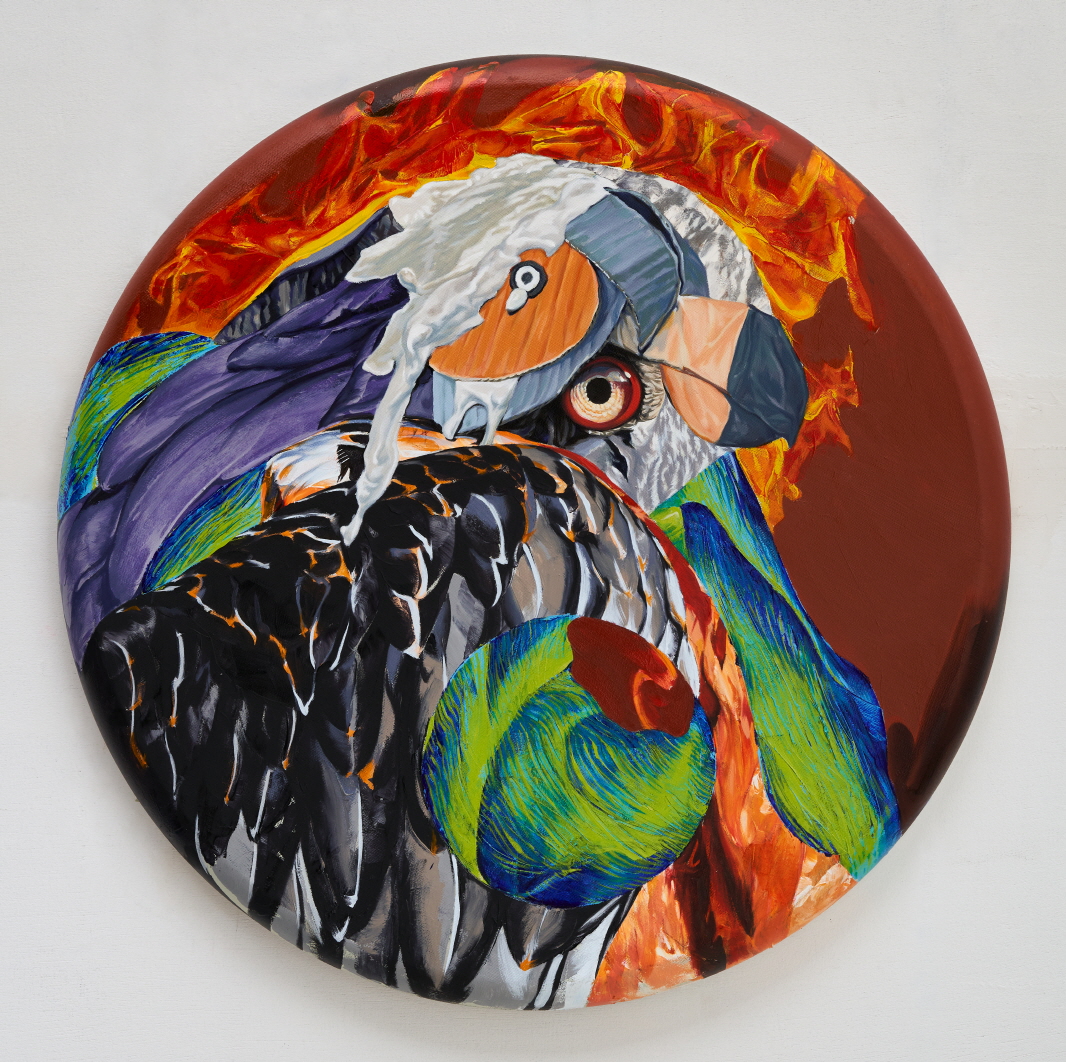
Figures and forms in the paintings appear structurally dismantled, blurred, or distorted through layered brushwork. These visual disruptions are less about depicting physical change and more about revealing multiple potential states at once.
Ultimately, ‘Park’s Land’ considers the conditions that allow transformation to occur rather than the moment of change itself. Through overlapping imagery and fluid gestures, the series presents a world defined not by what is changing, but by what can change—an expanded terrain for the artist’s ongoing exploration of painterly imagination.