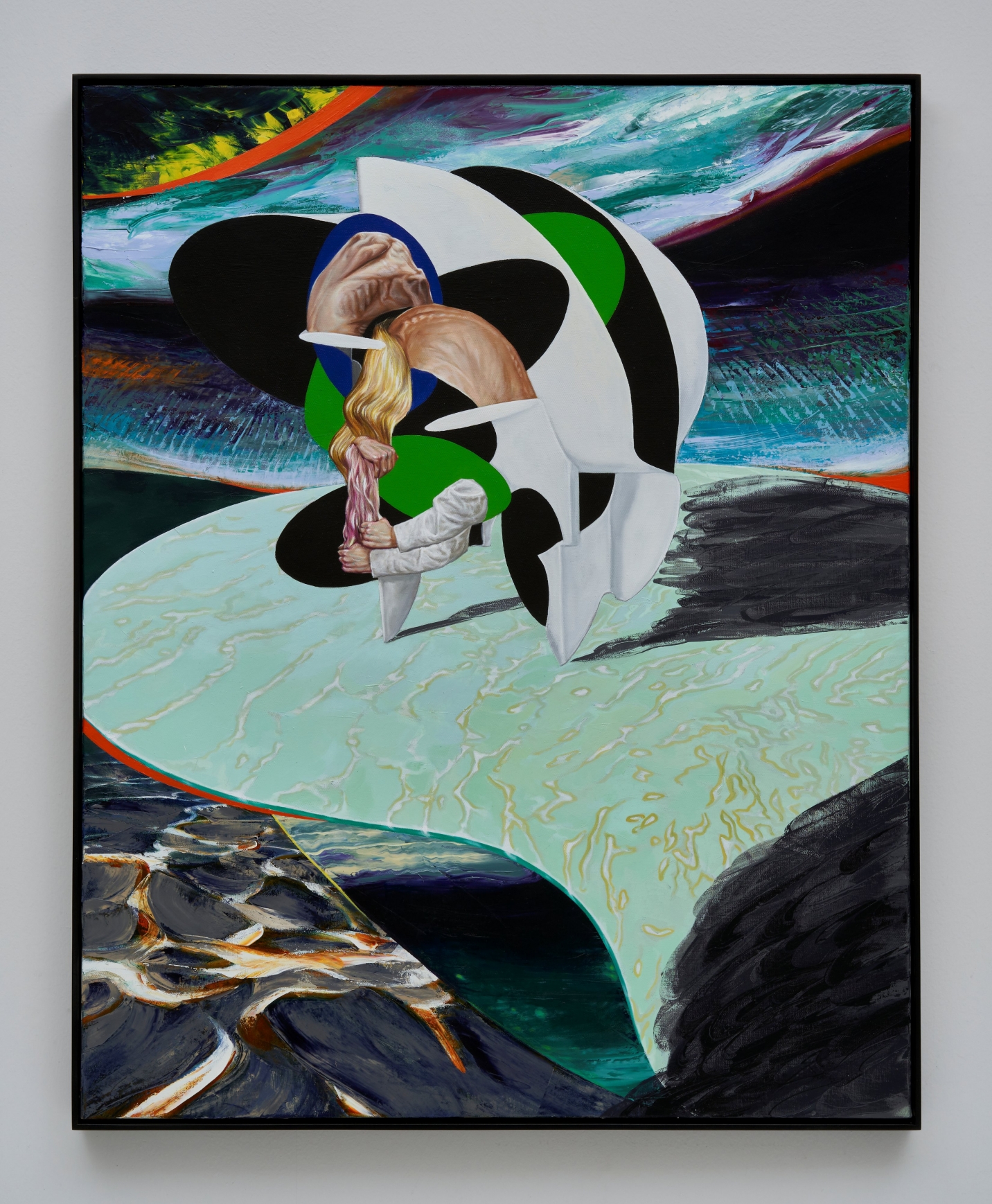
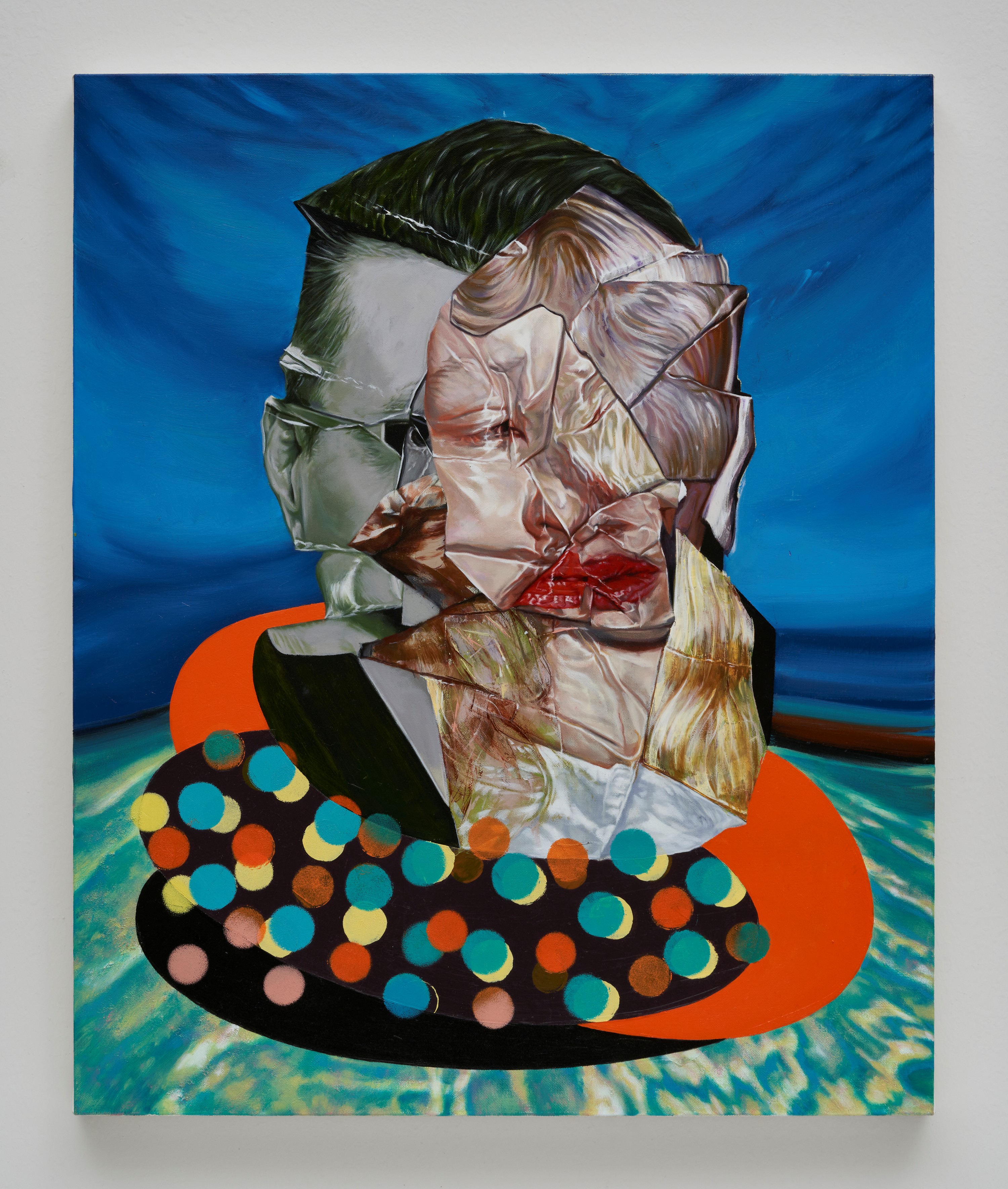
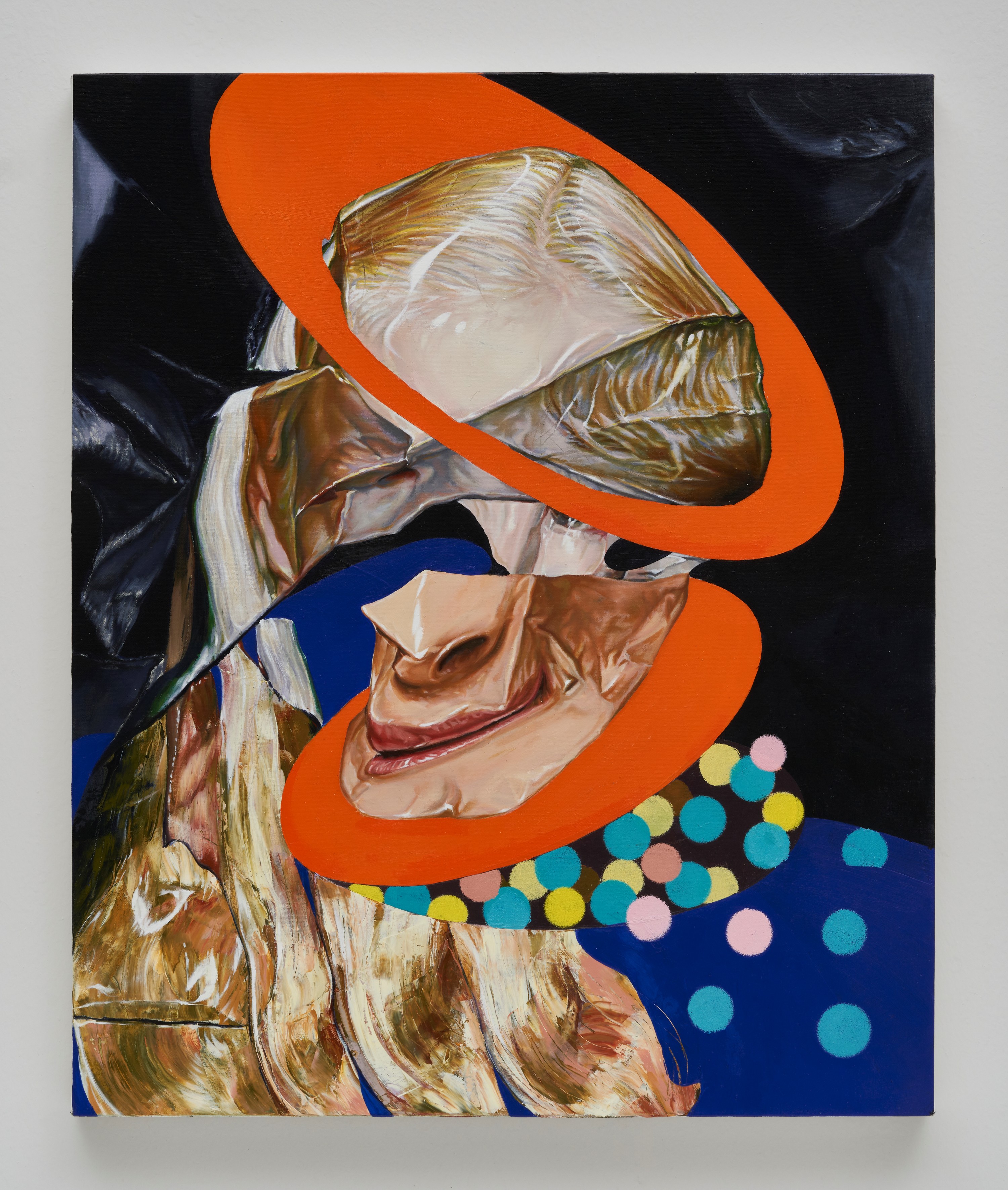
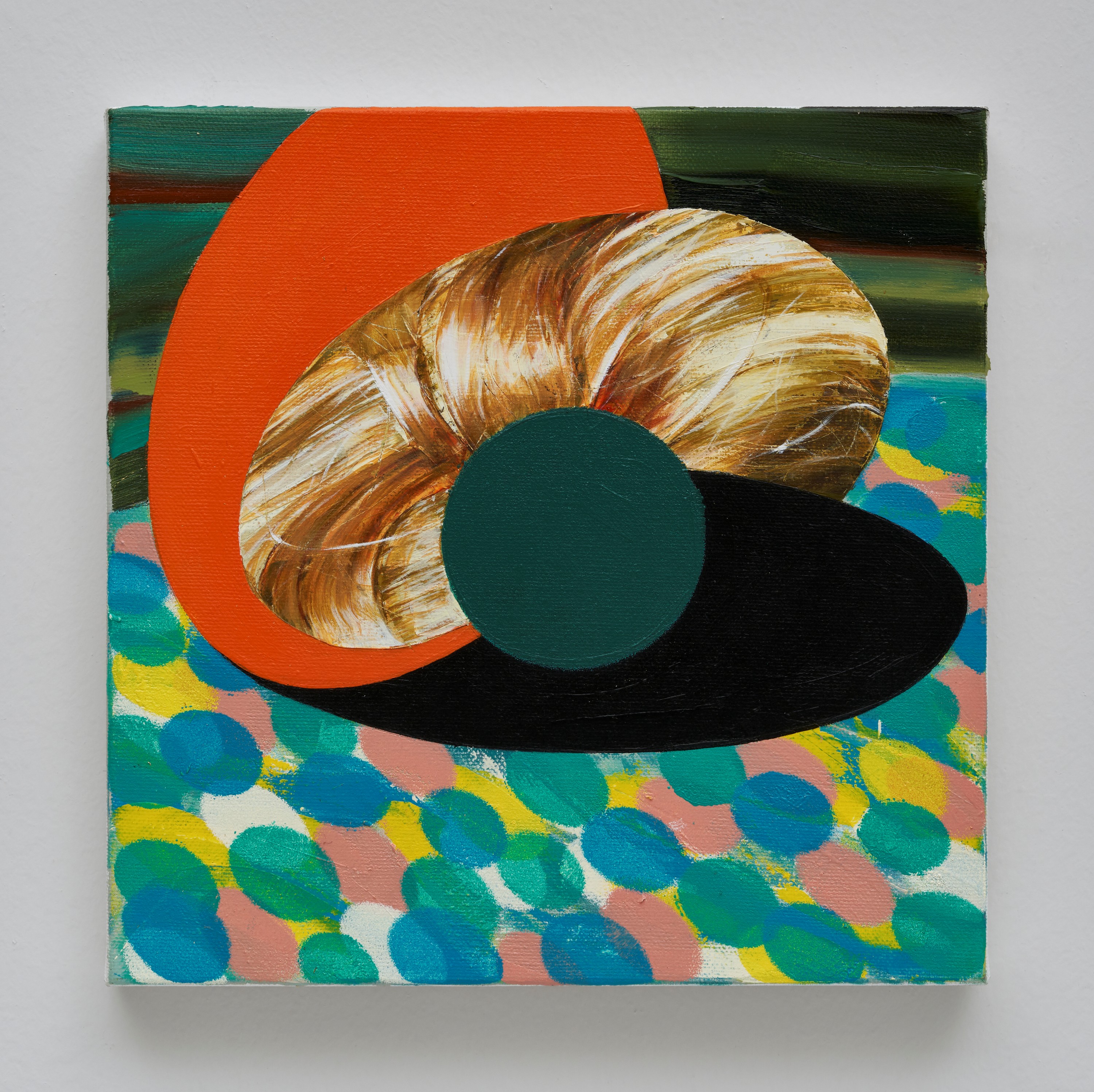
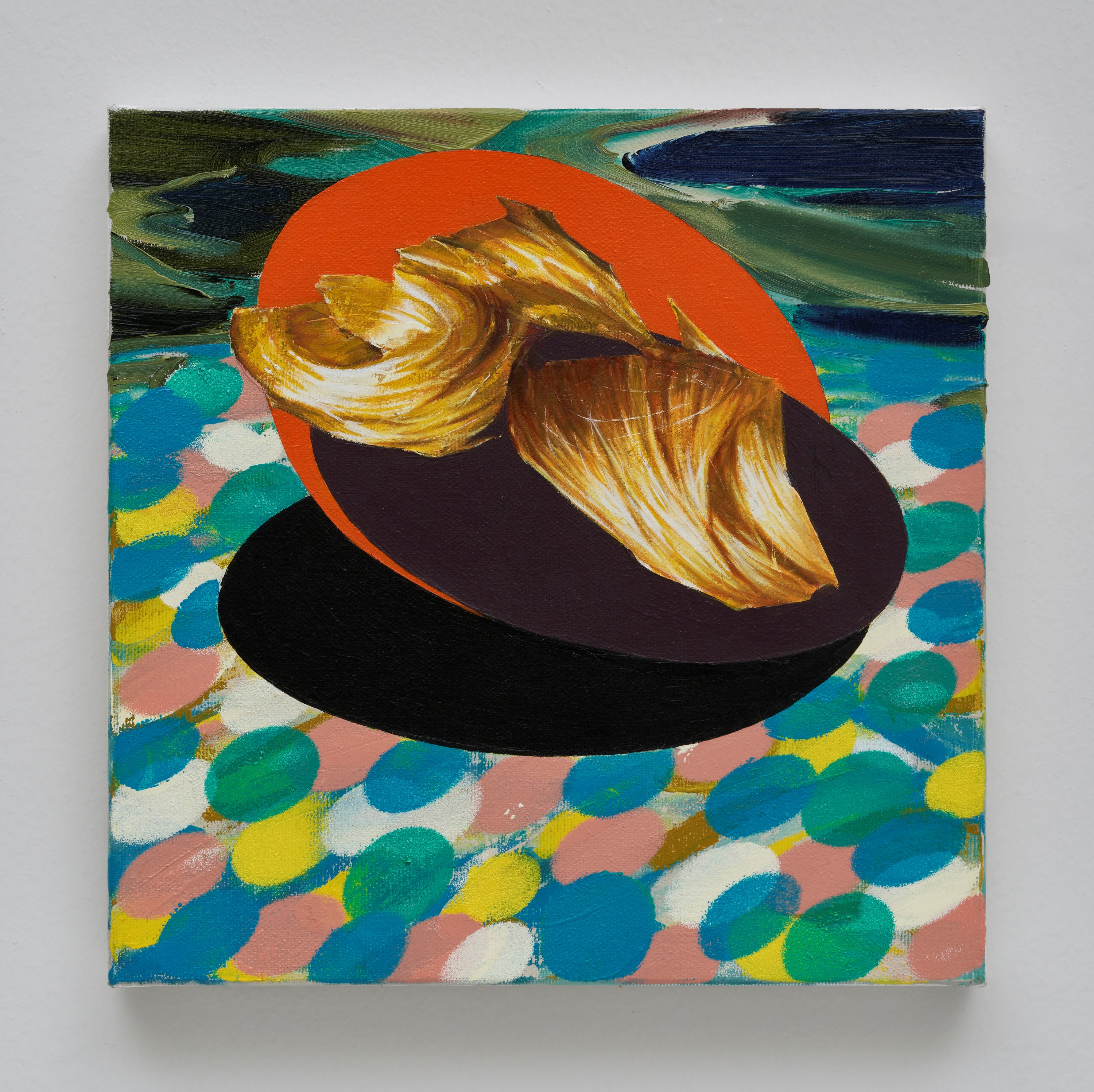
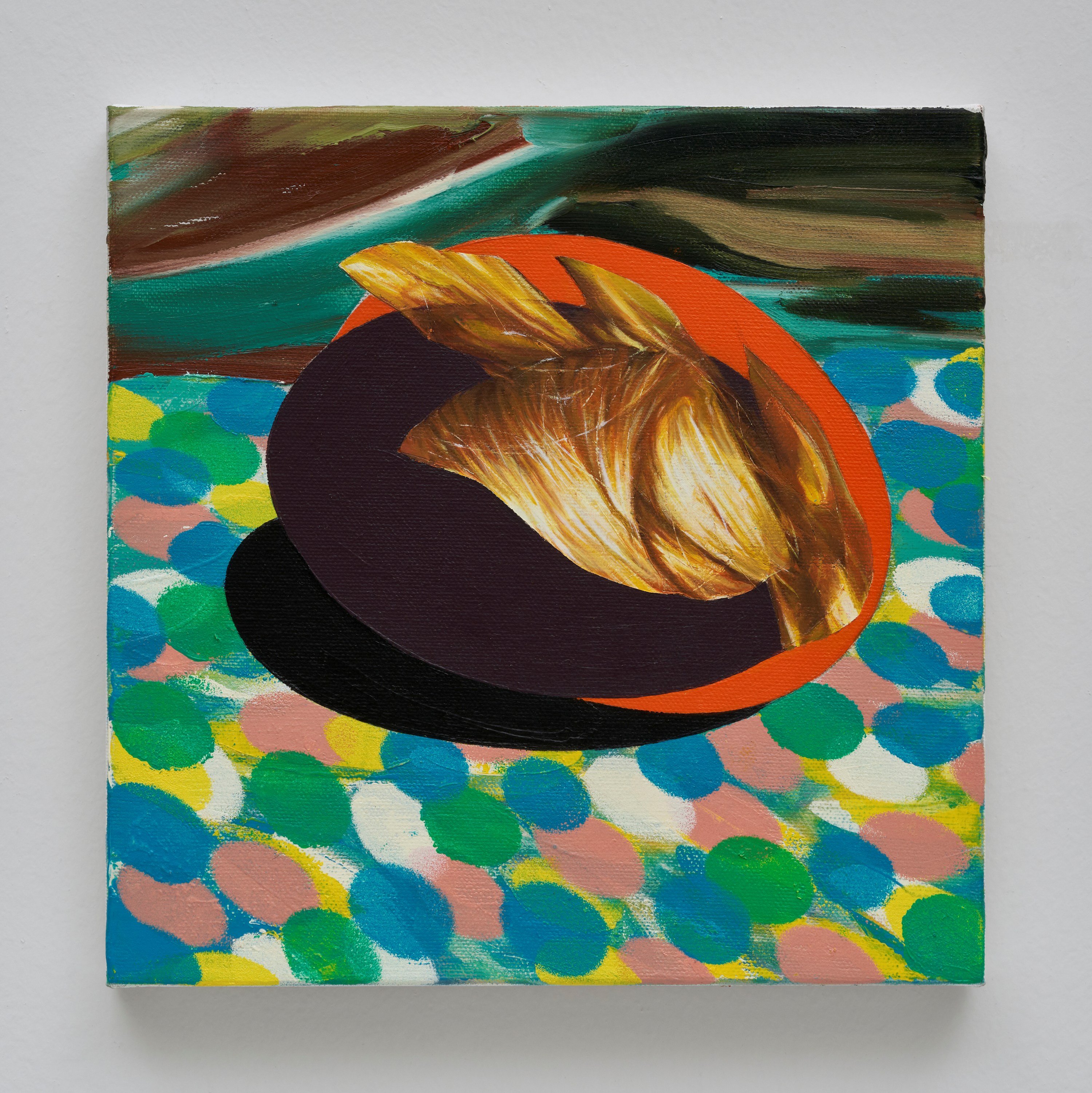
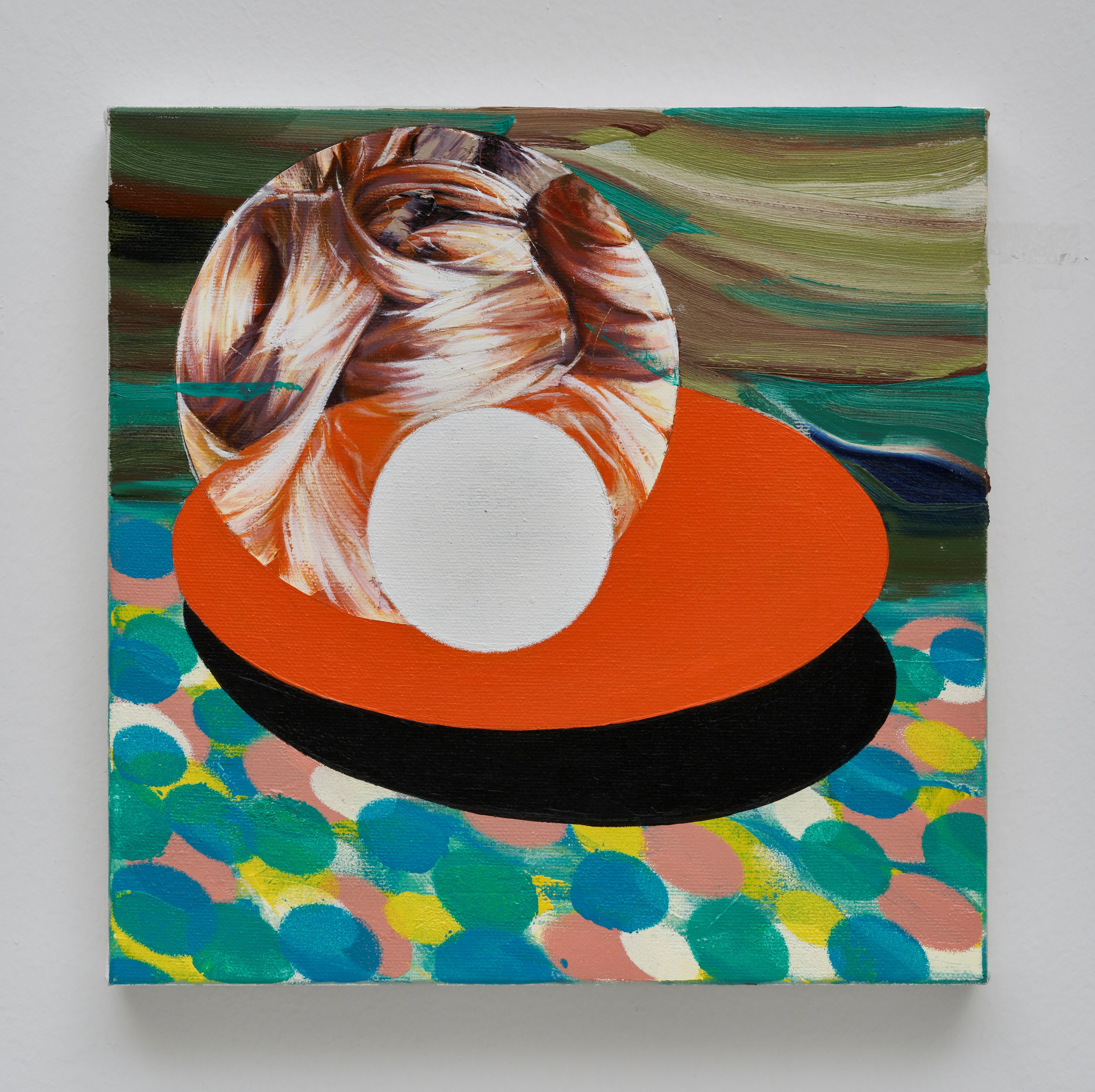
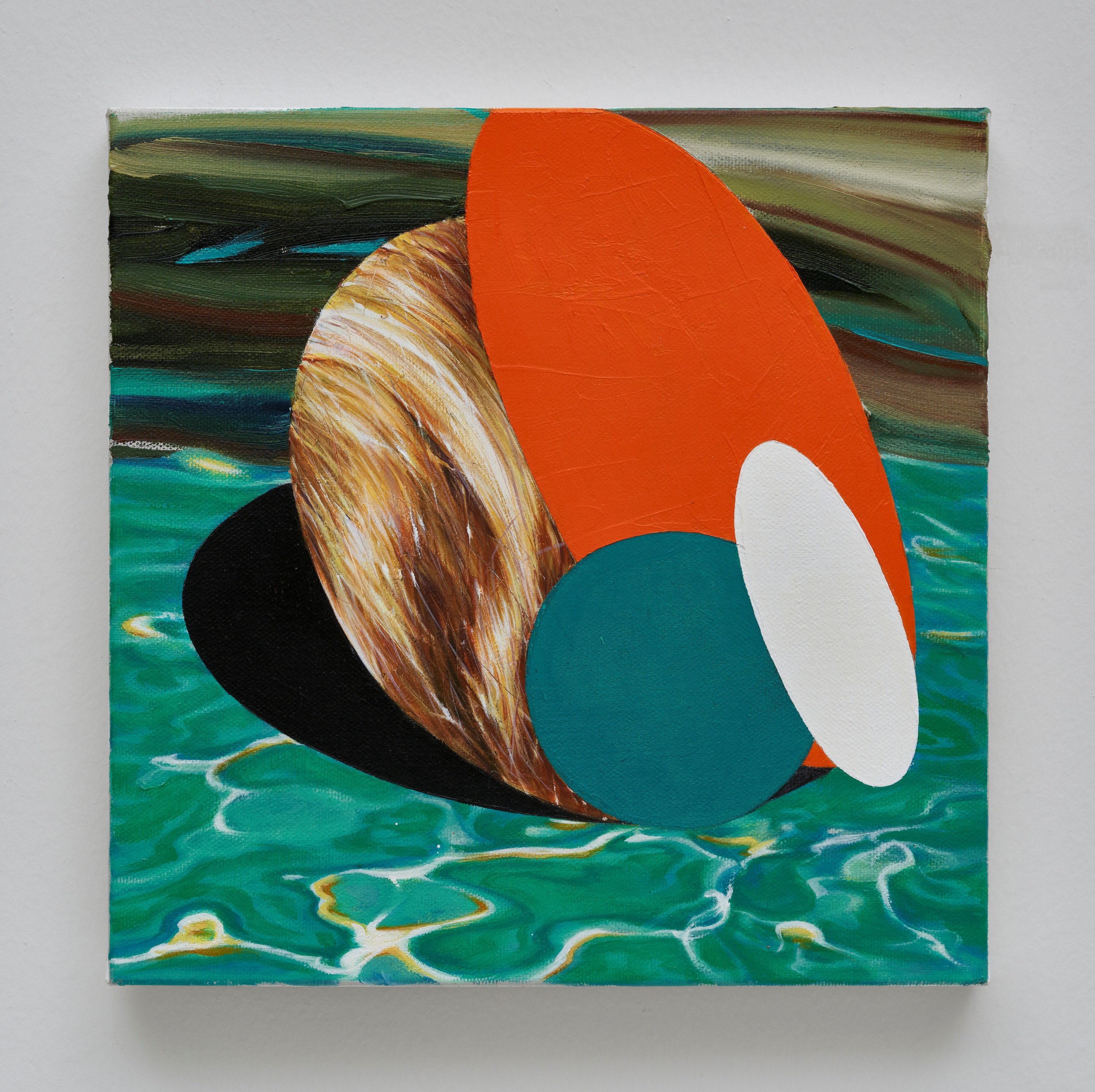
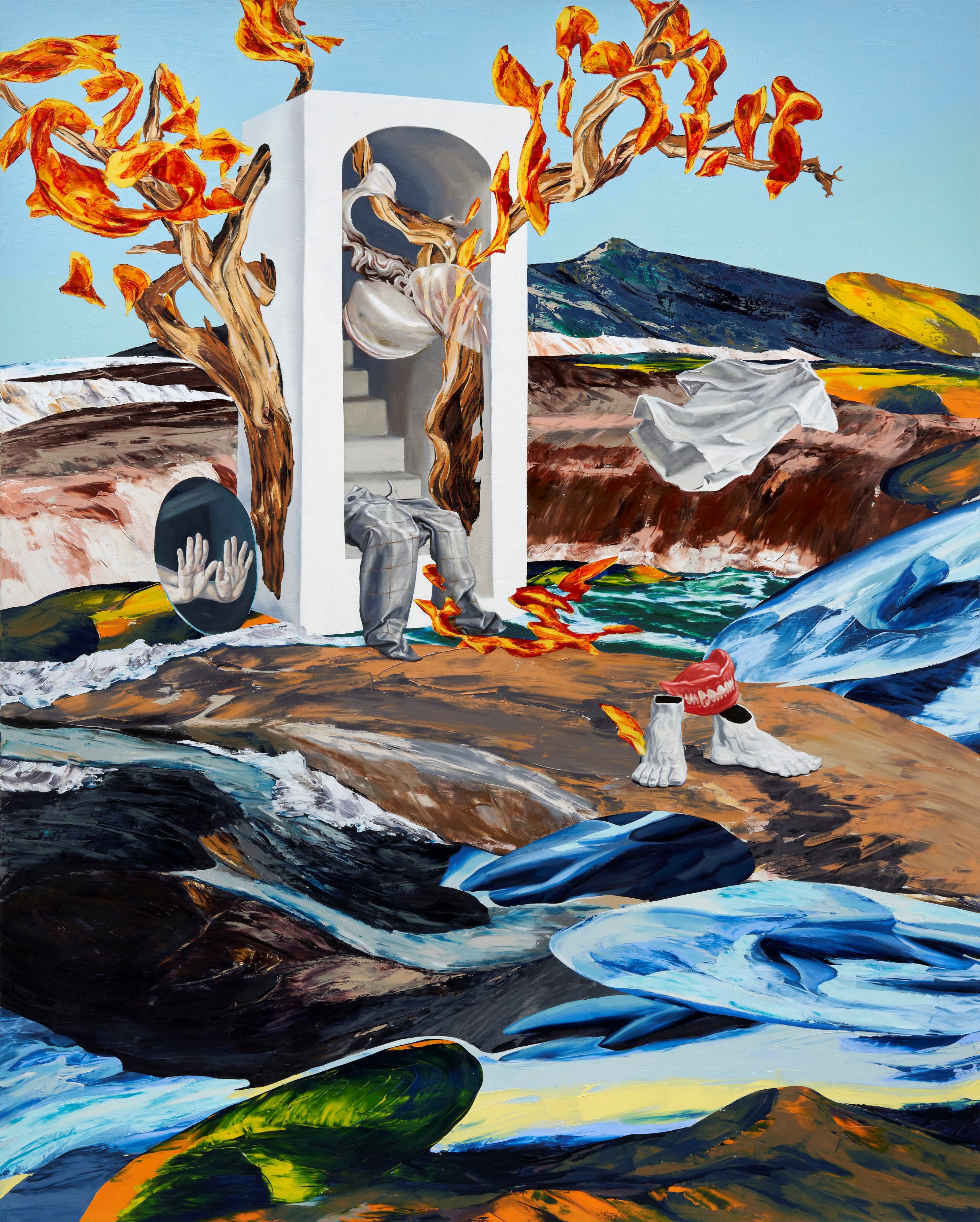
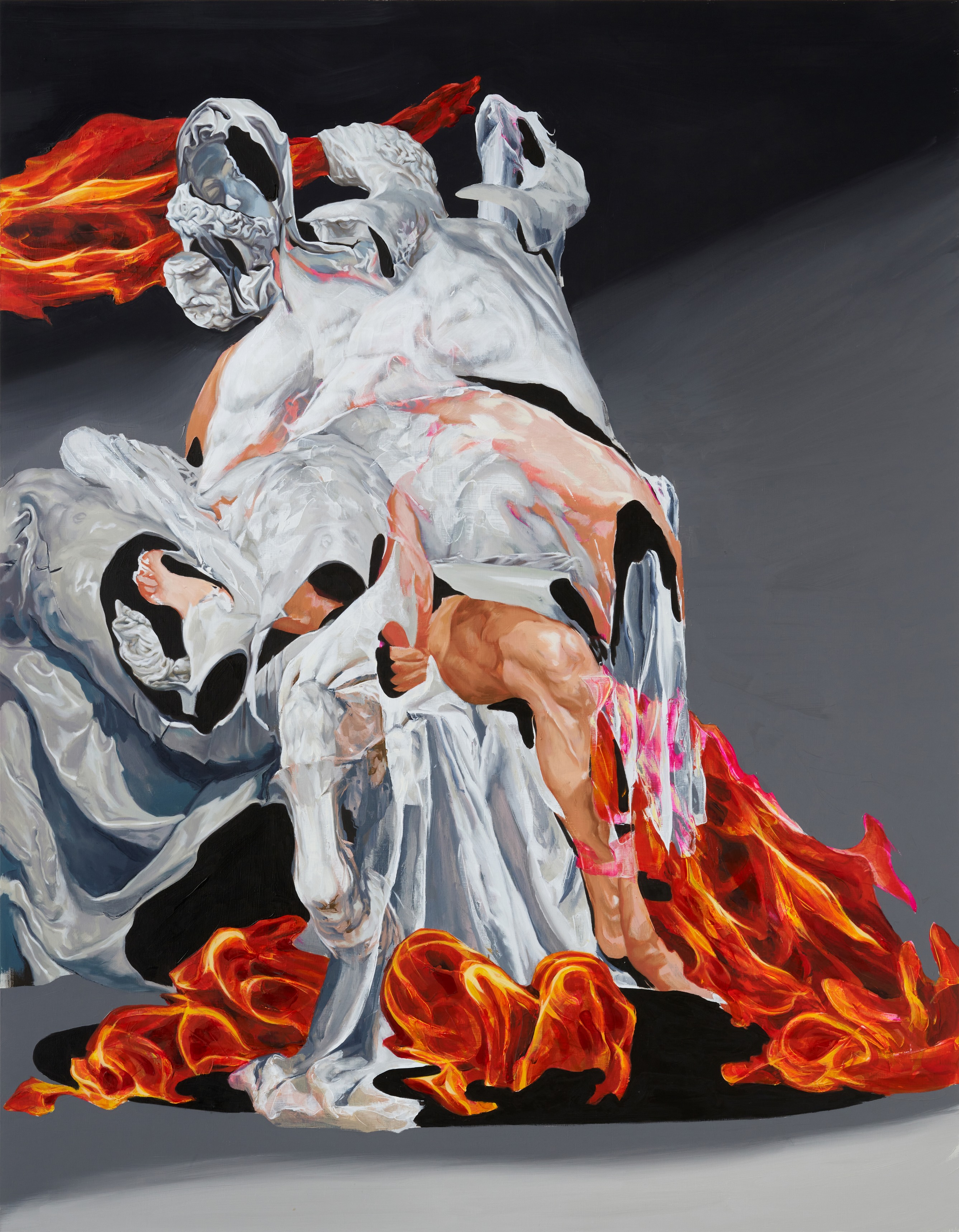
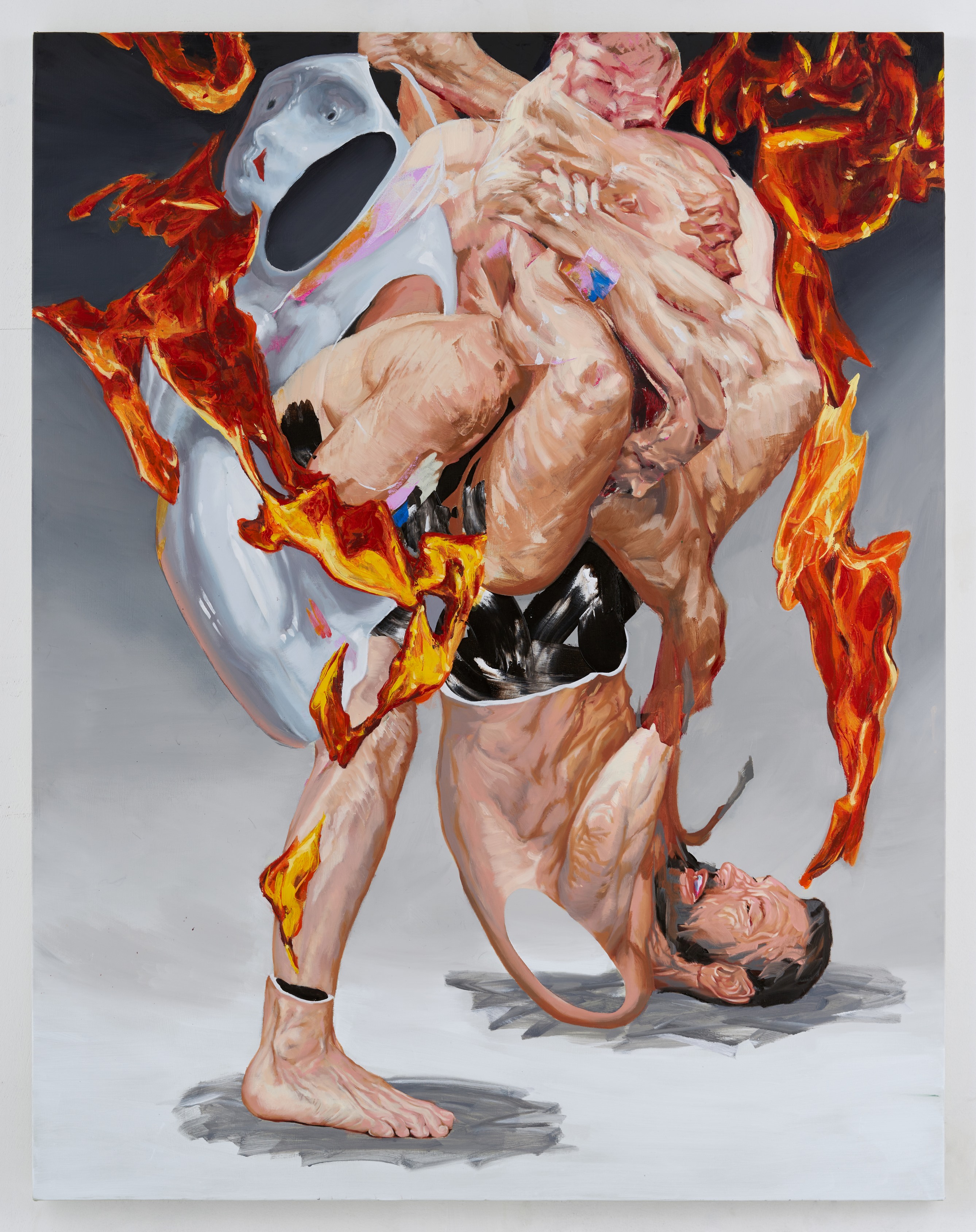
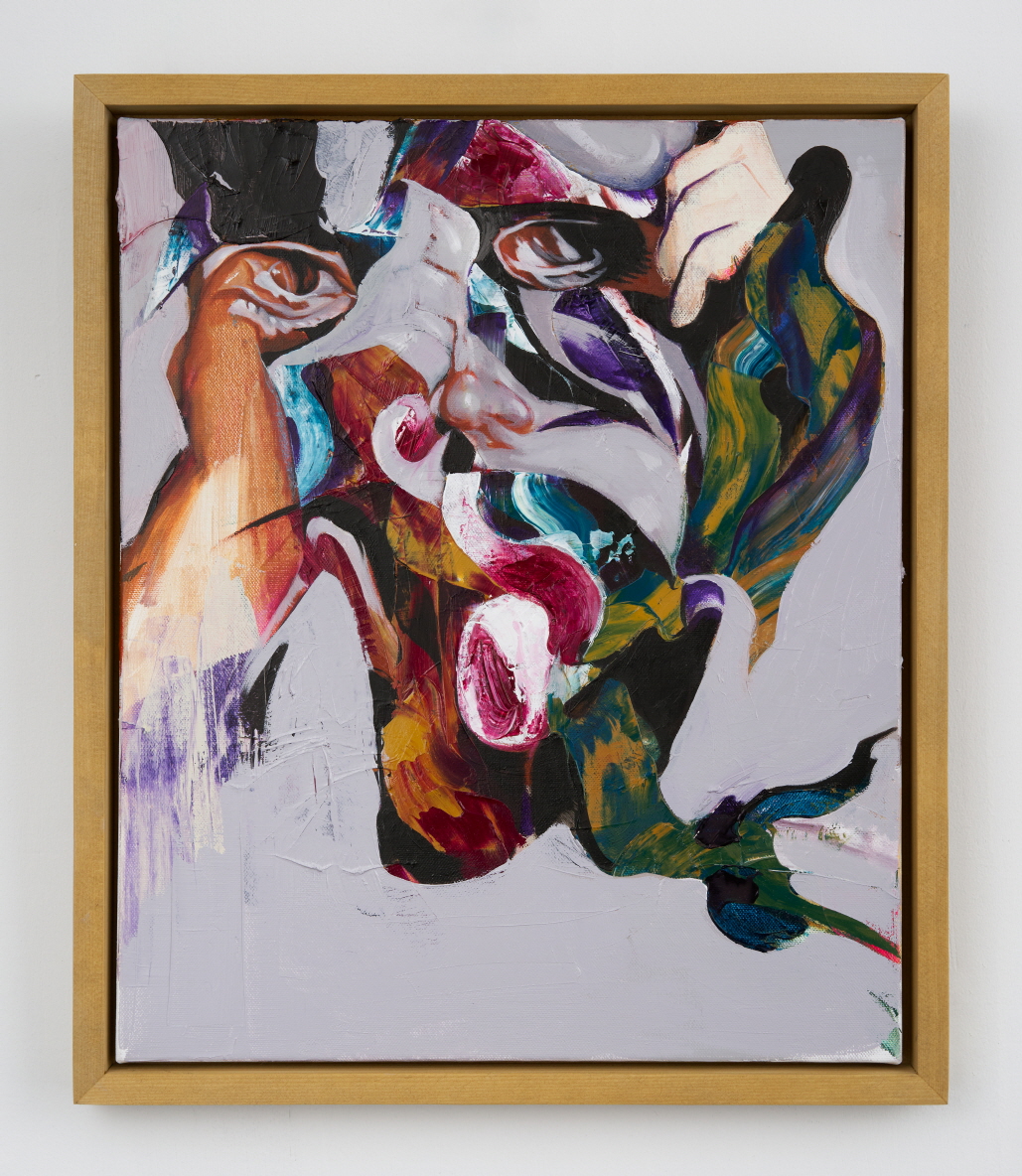
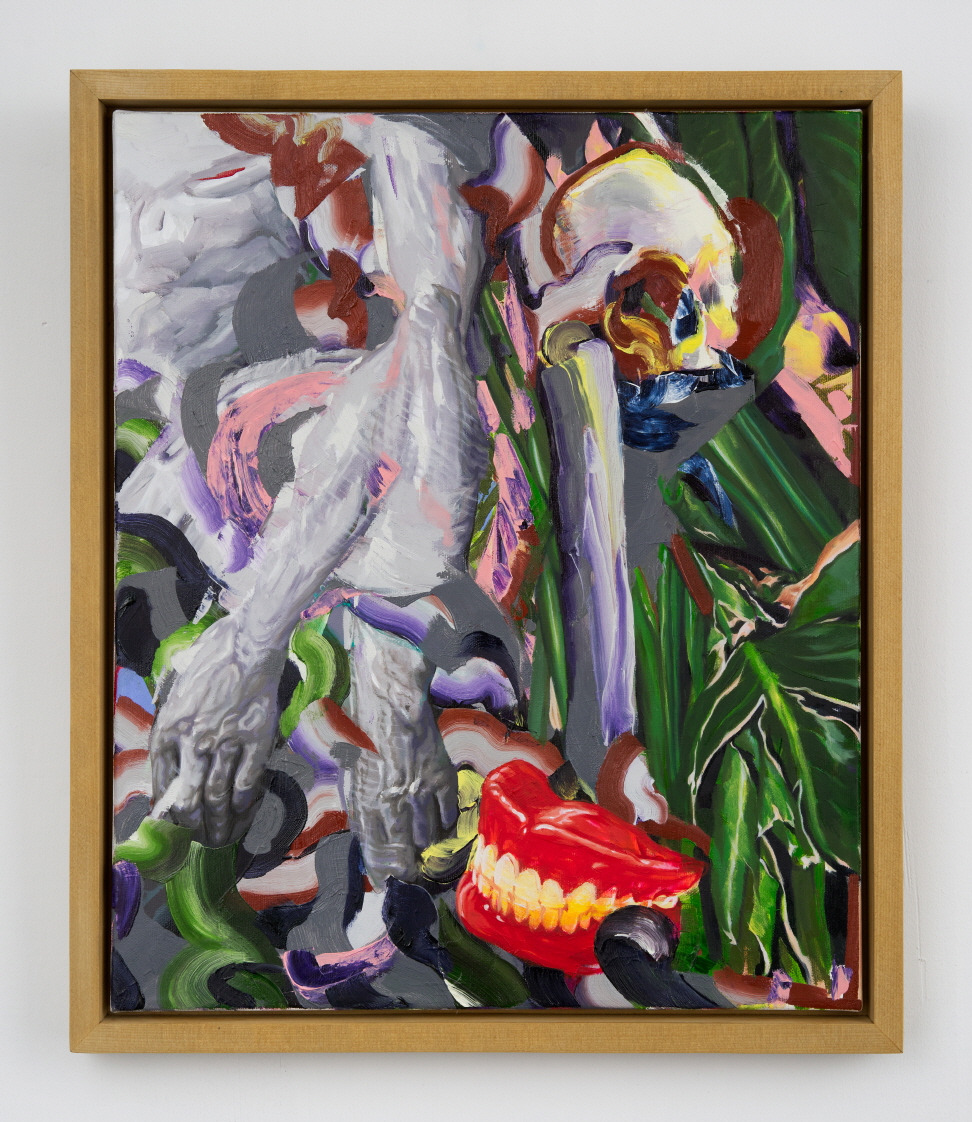
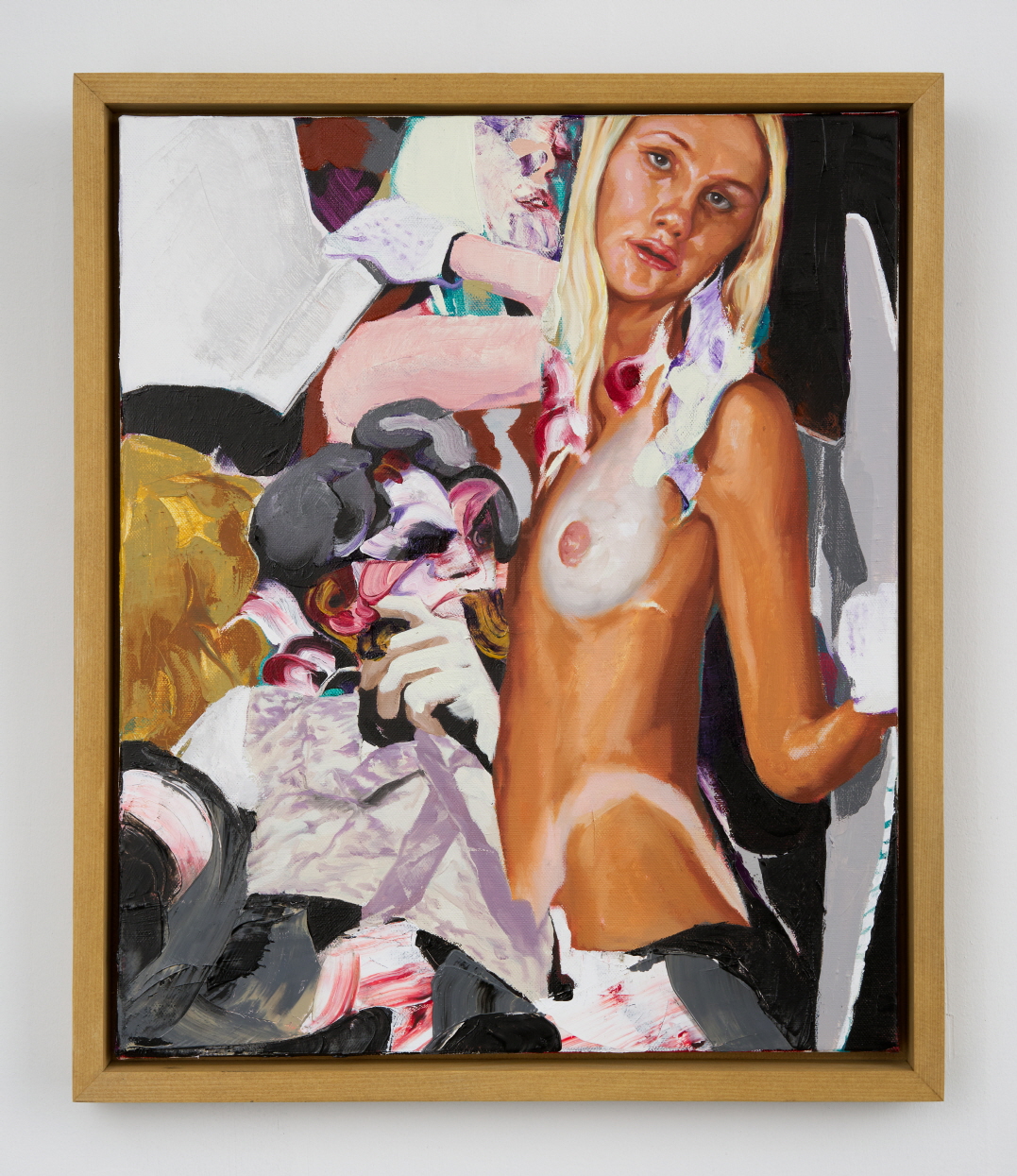
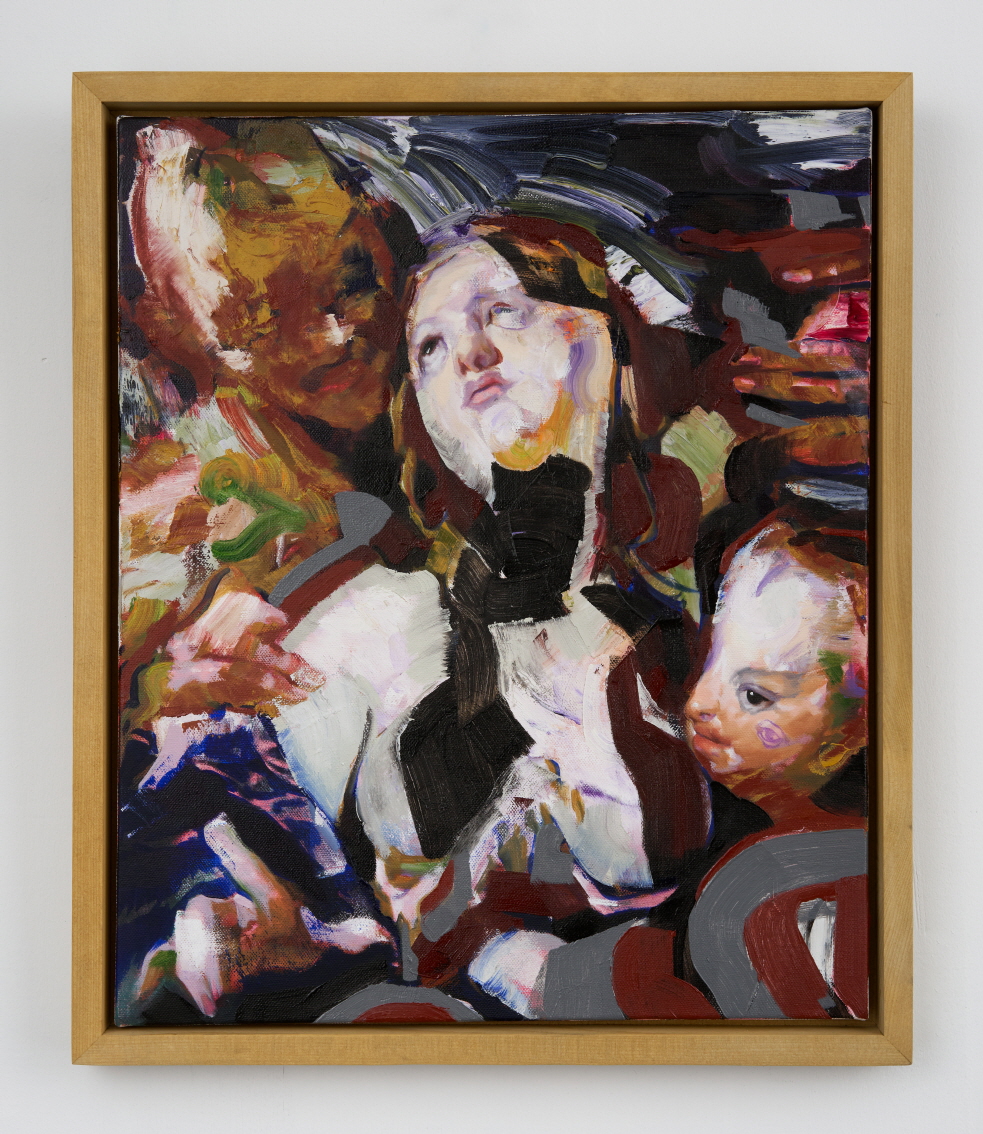
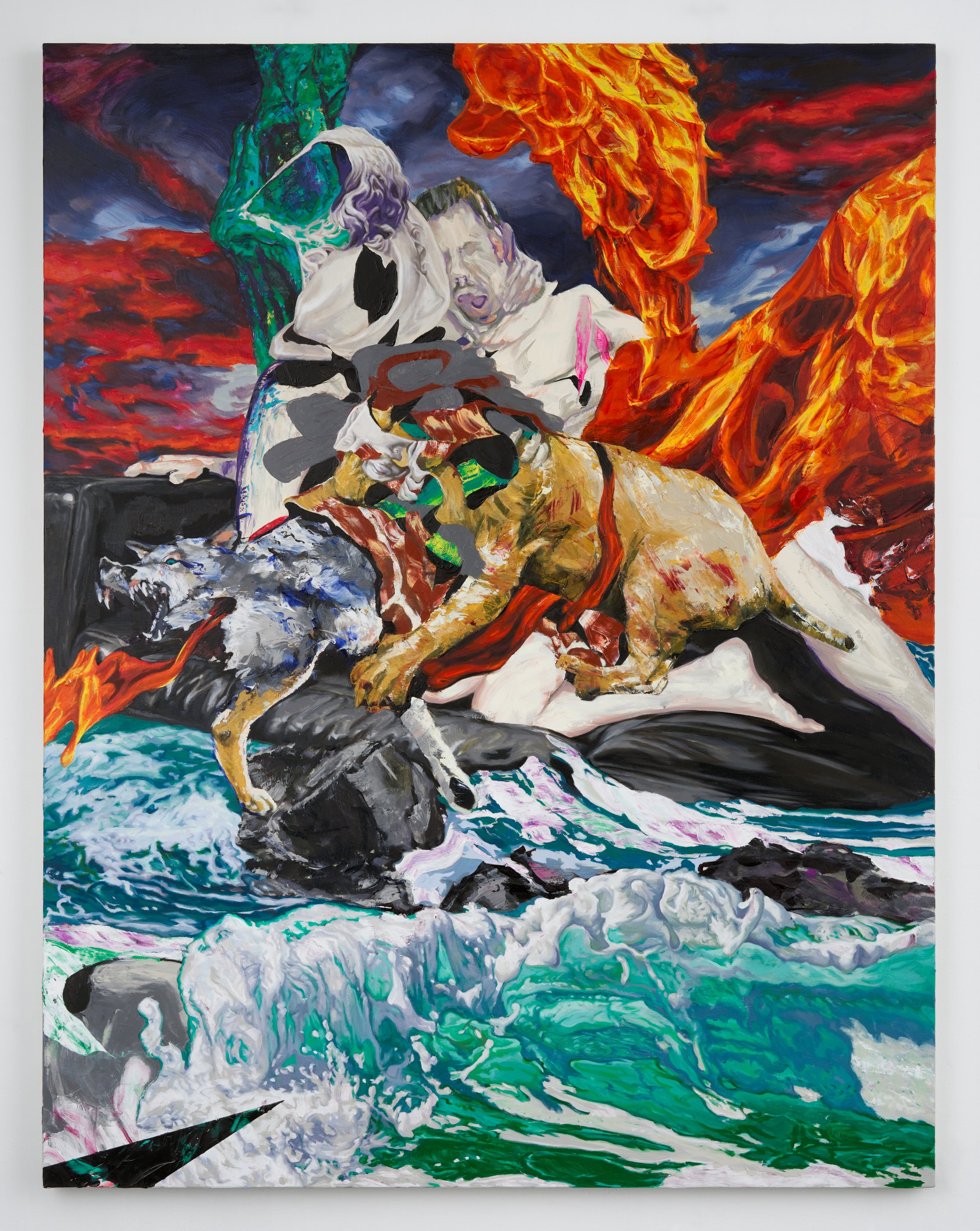
Park's Land 26-Pietà, Centaur
2023 Oil on canvas 116.8 x 91 cm
Provenance
Artist Collection, 2026
Exhibitions
2025《Rebellious possibility》, Yeol Jeong Gallery, Seoul
2024《When Ero·Gro·Nonsense Combines Nonlinearly – Episode 1》, Museum1, Busan
2023《When Ero·Gro·Nonsense Combines Nonlinearly》, Arting Gallery, Seoul
2023《ART Ground London》, Saatchi Gallery, London
About The Work
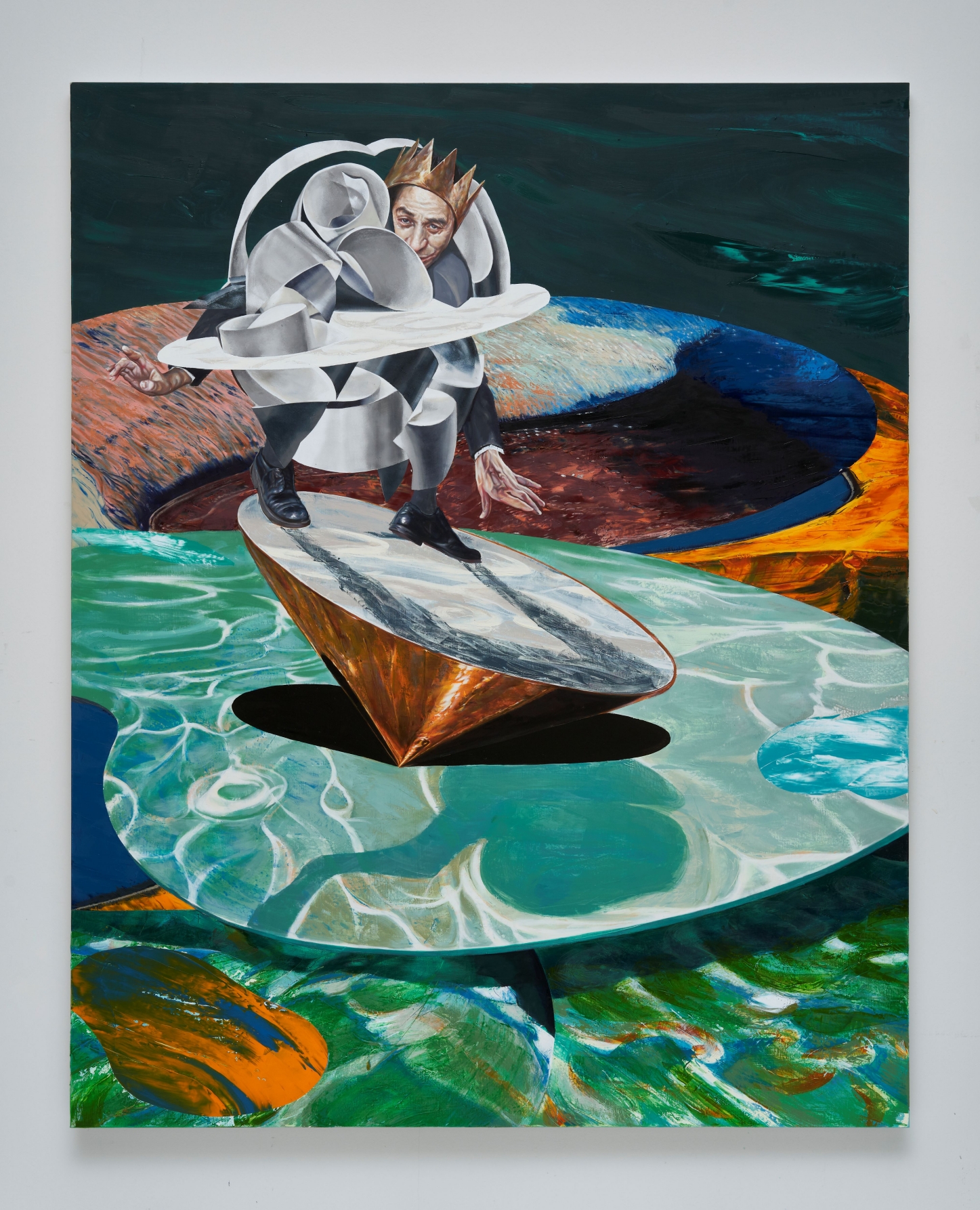
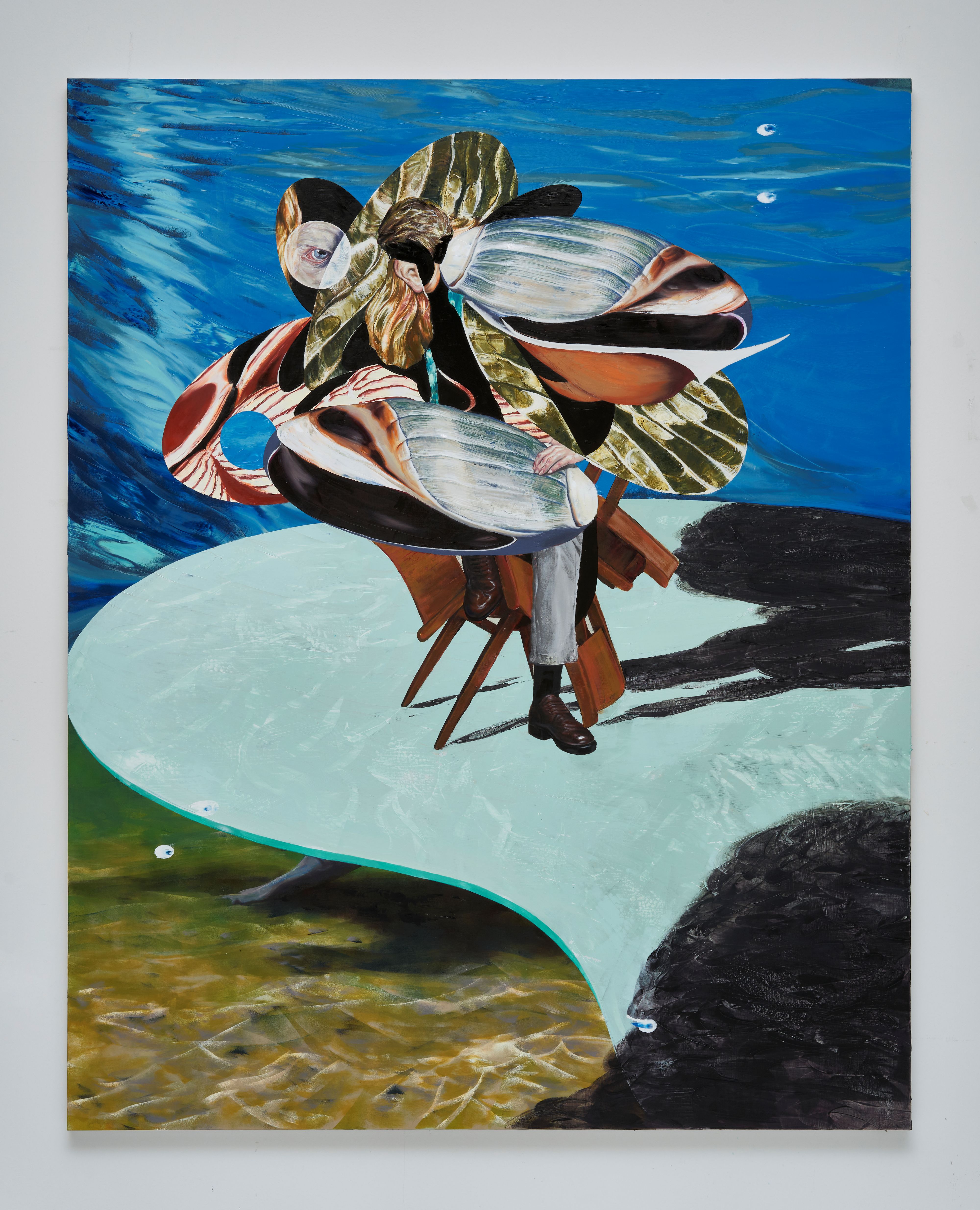
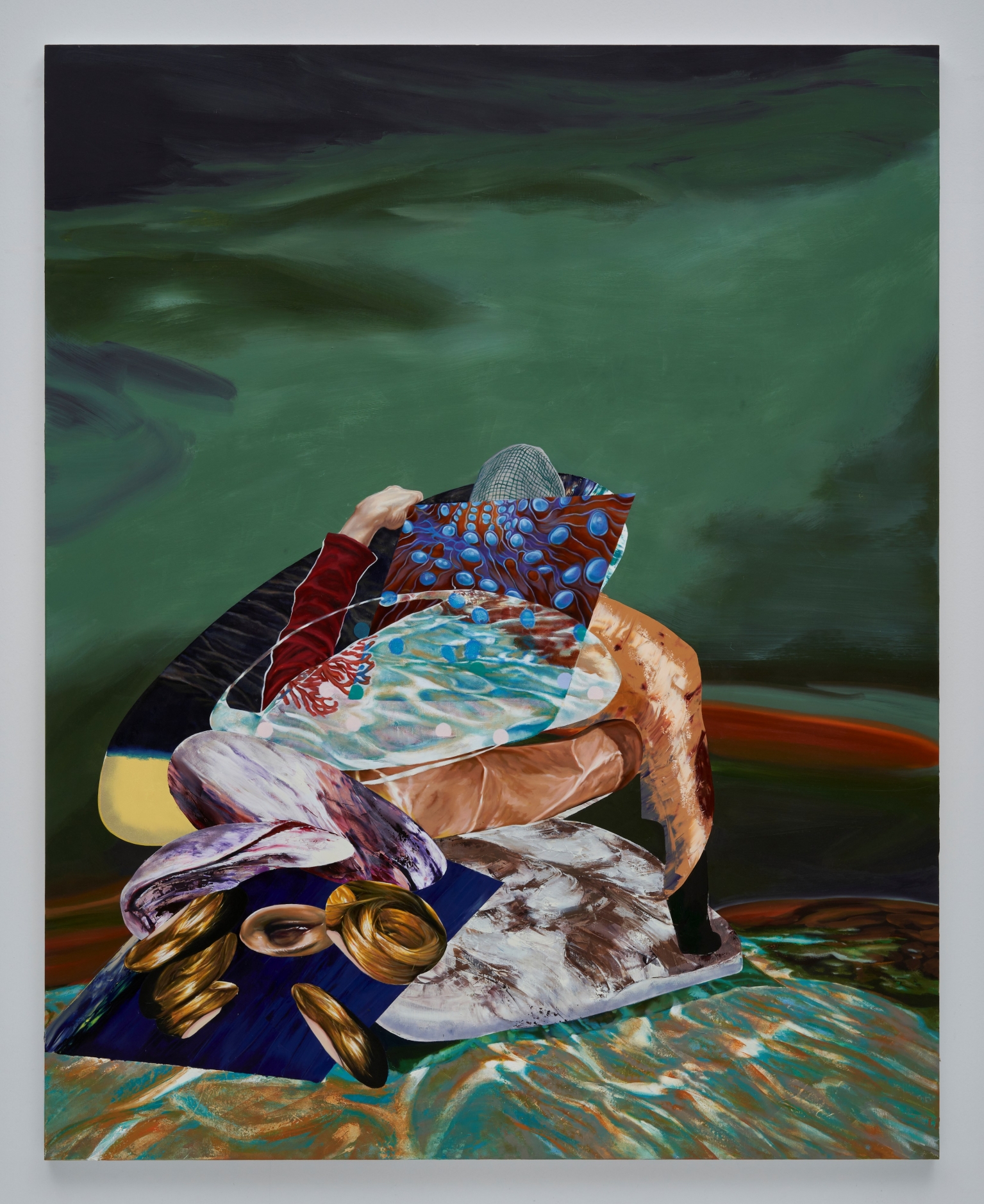
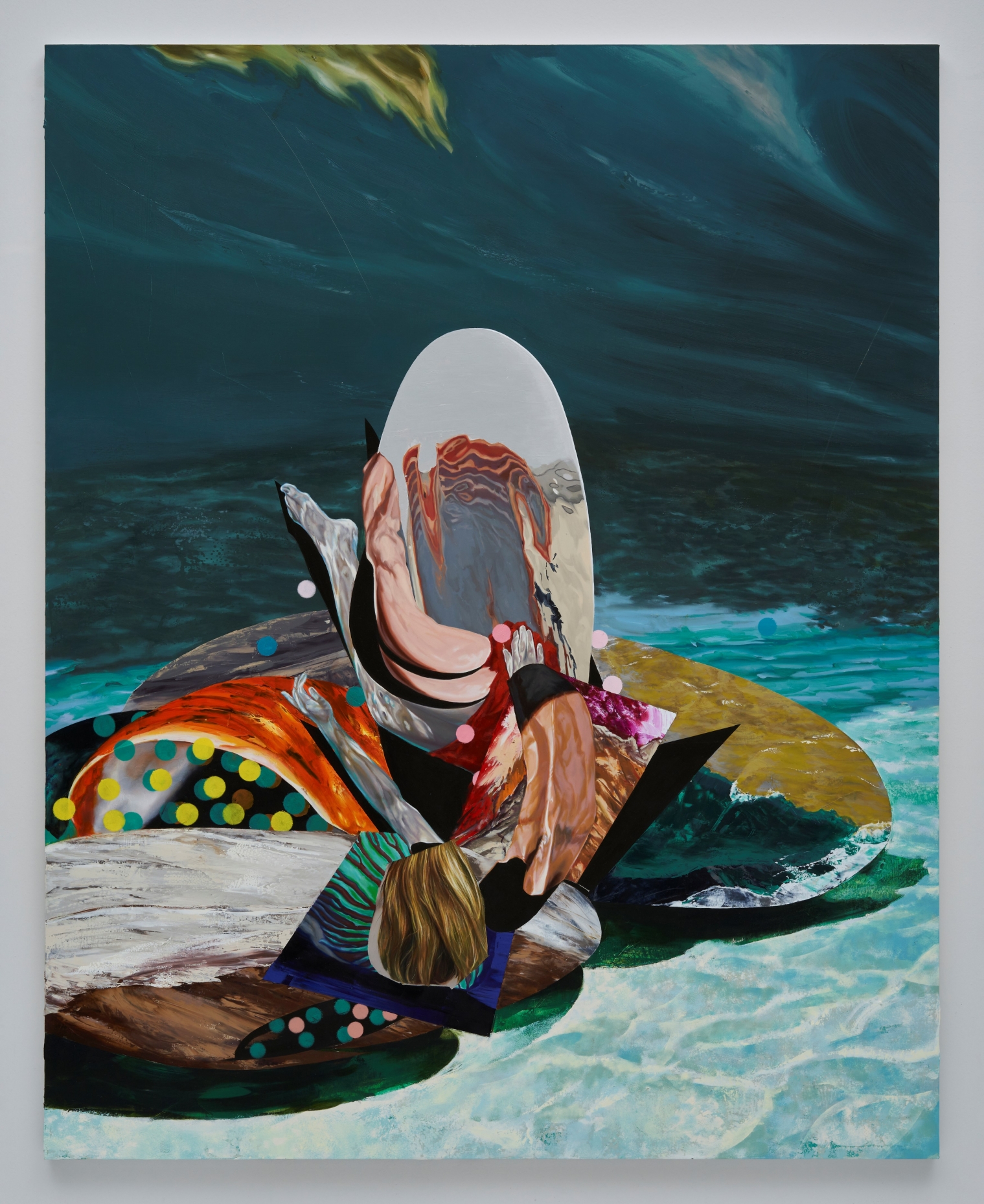
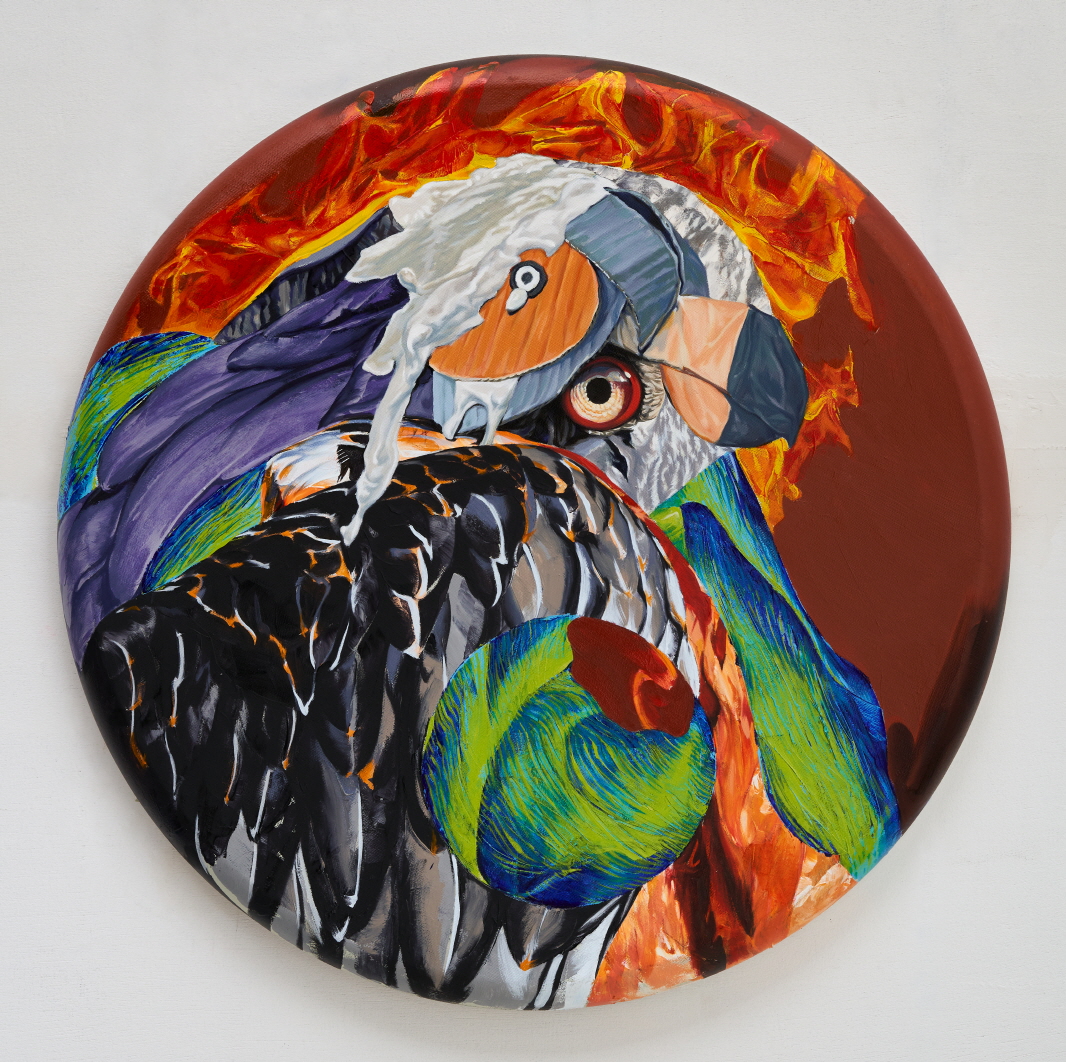
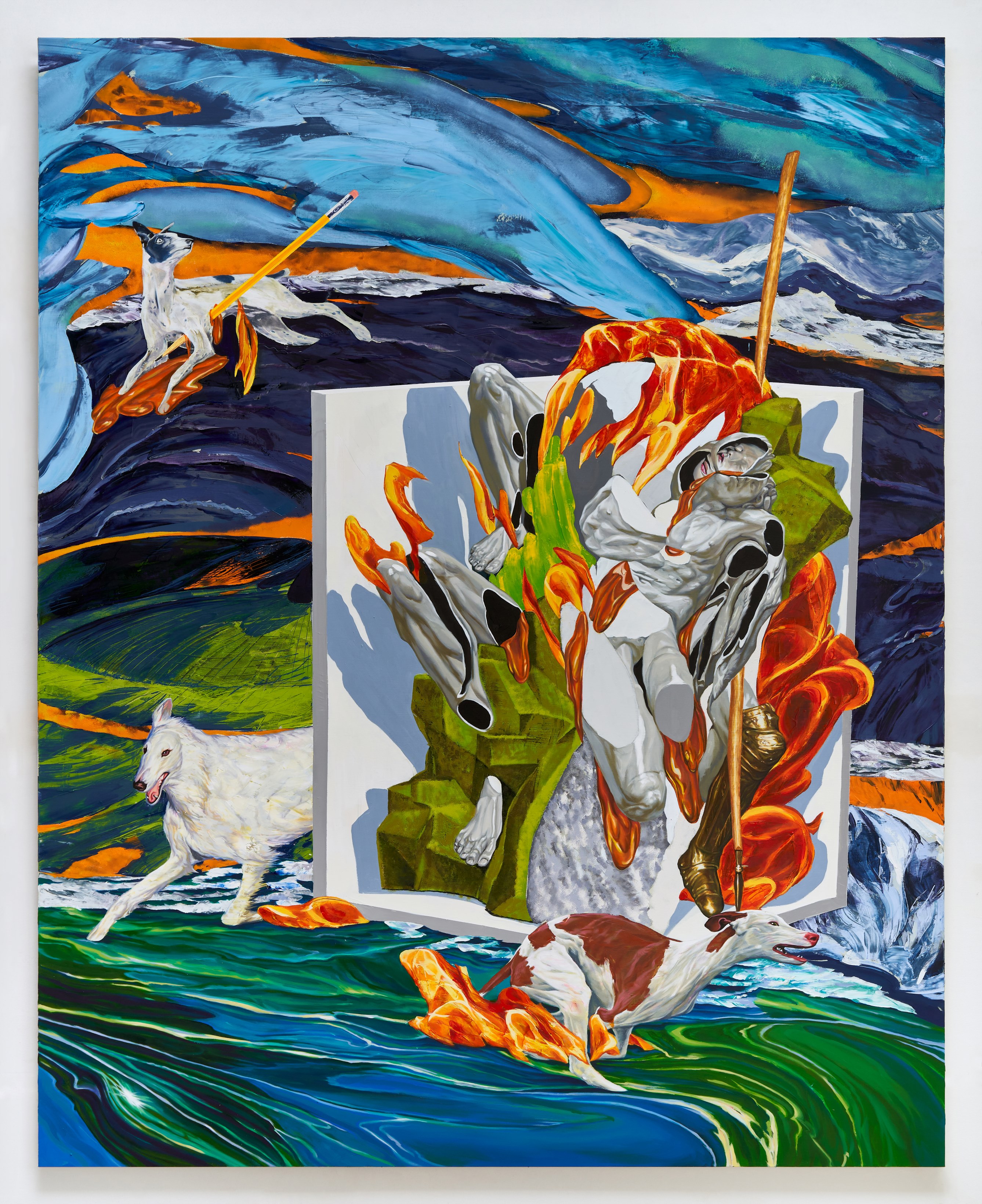
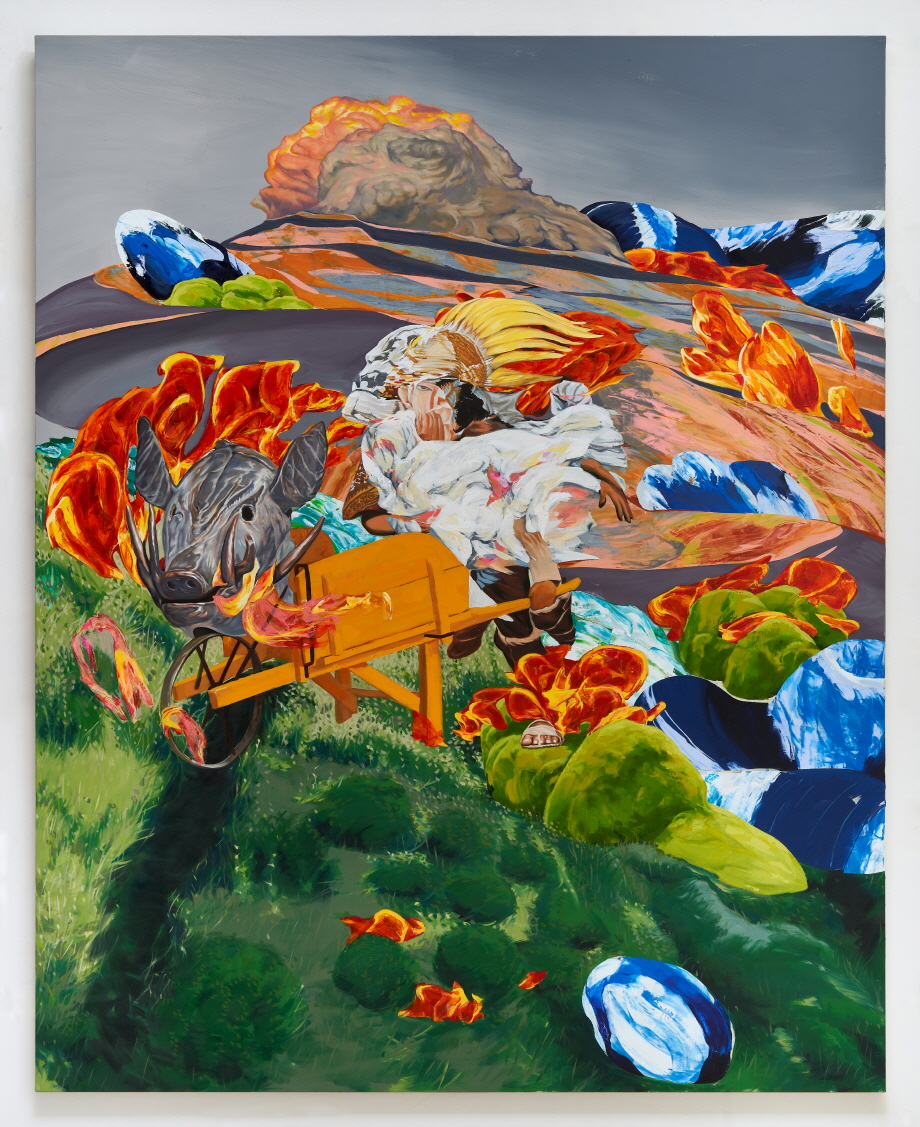
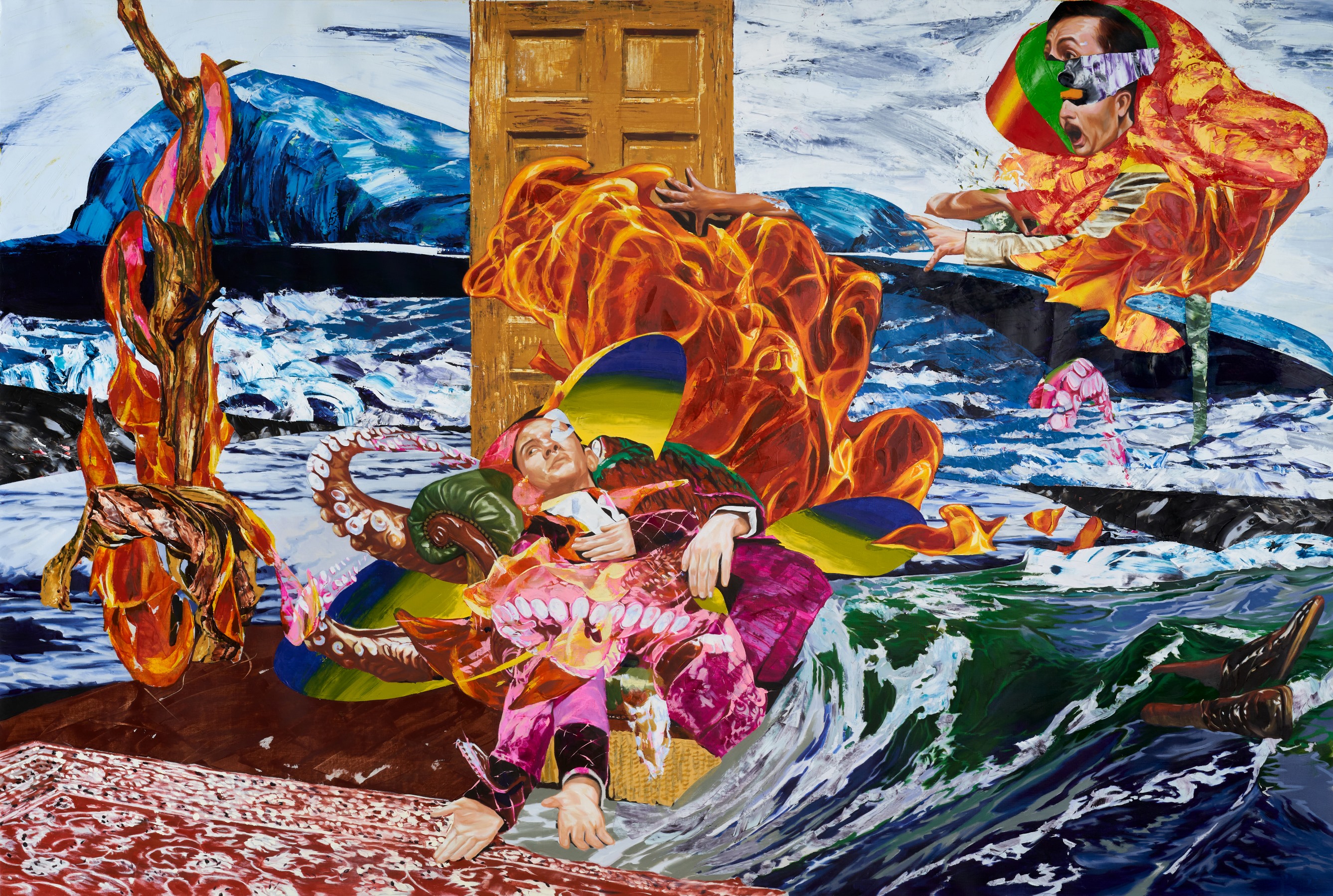
This work dismantles the scene of grief and acceptance traditionally embedded in the iconography of the Pietà, reconstructing it not as a fixed image but as a shifting state of the body. The embraced body is not a complete figure but a fragmented one—its parts consumed by fire or dissolving into other materials. Through this transformation, I seek to reveal that the image of a sacred figure is not a closed or perfected icon, but a process continually transitioning into other states.
The body acquires a centaur-like hybridity, where human and non-human, organism and material, and the energy of fire are interwoven. Identity no longer resides within a single species or stable form; instead, it expands into a new body through a process of becoming, in which multiple beings overlap and coexist.
In this work, fire functions not merely as a force of destruction but as a catalyst for transformation. Even the scene of death becomes a point of departure—an initiation of energy that propels the body toward another condition. Through this hybrid form, I aim to visually articulate that existence is not anchored to any fixed essence, but continuously moves toward other possibilities through dismantling and reconfiguration.
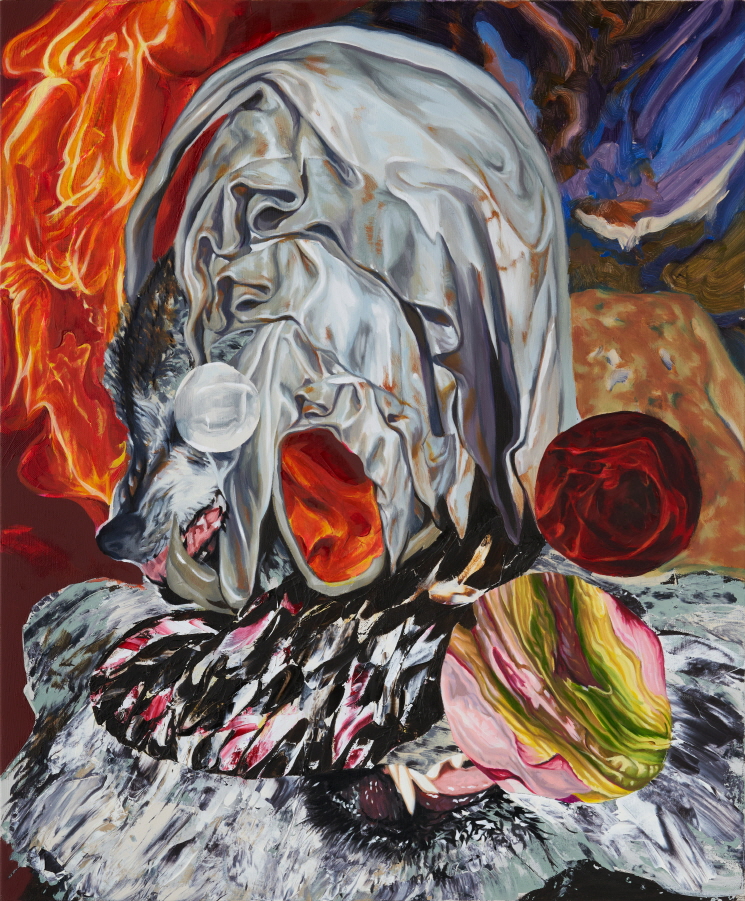
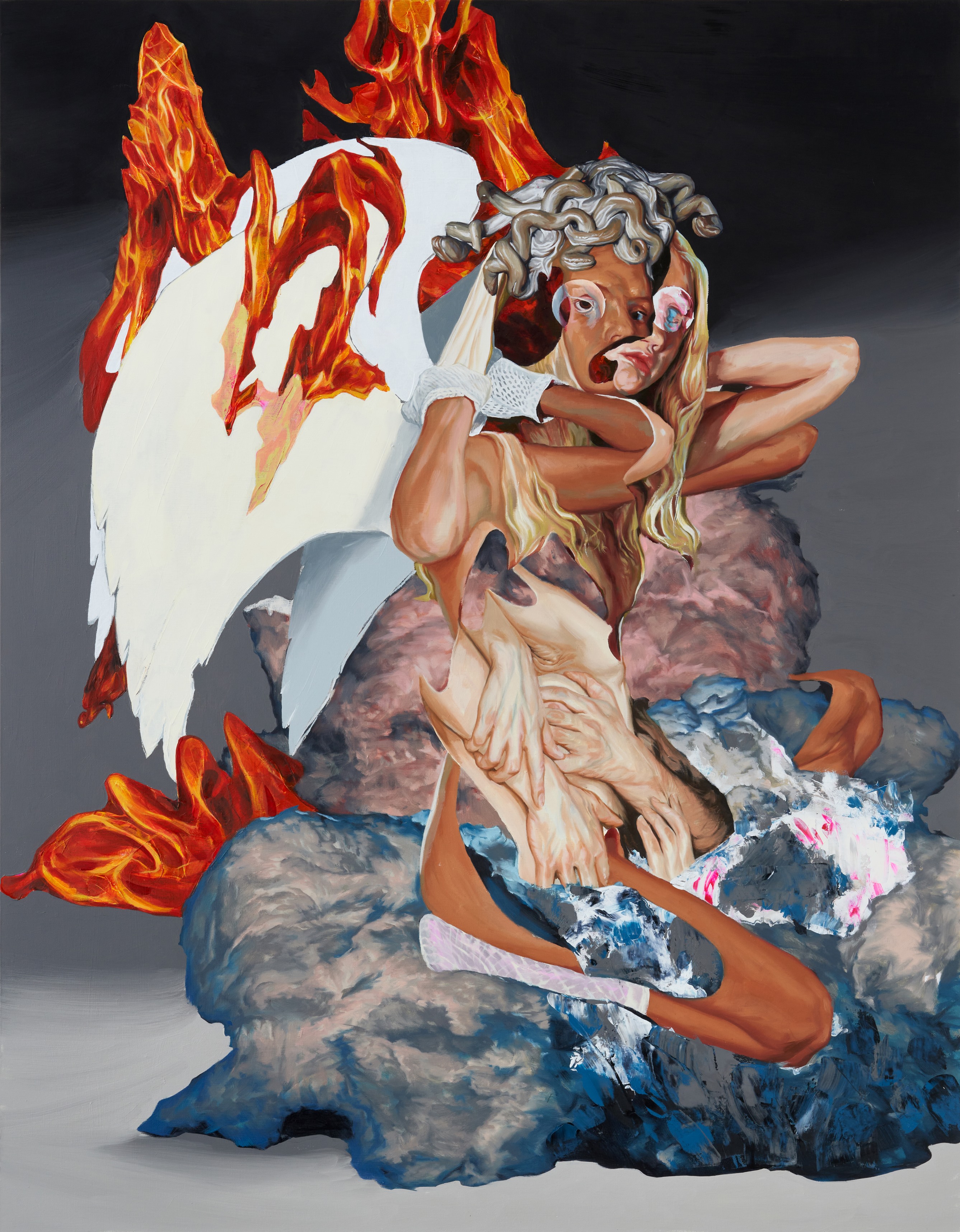
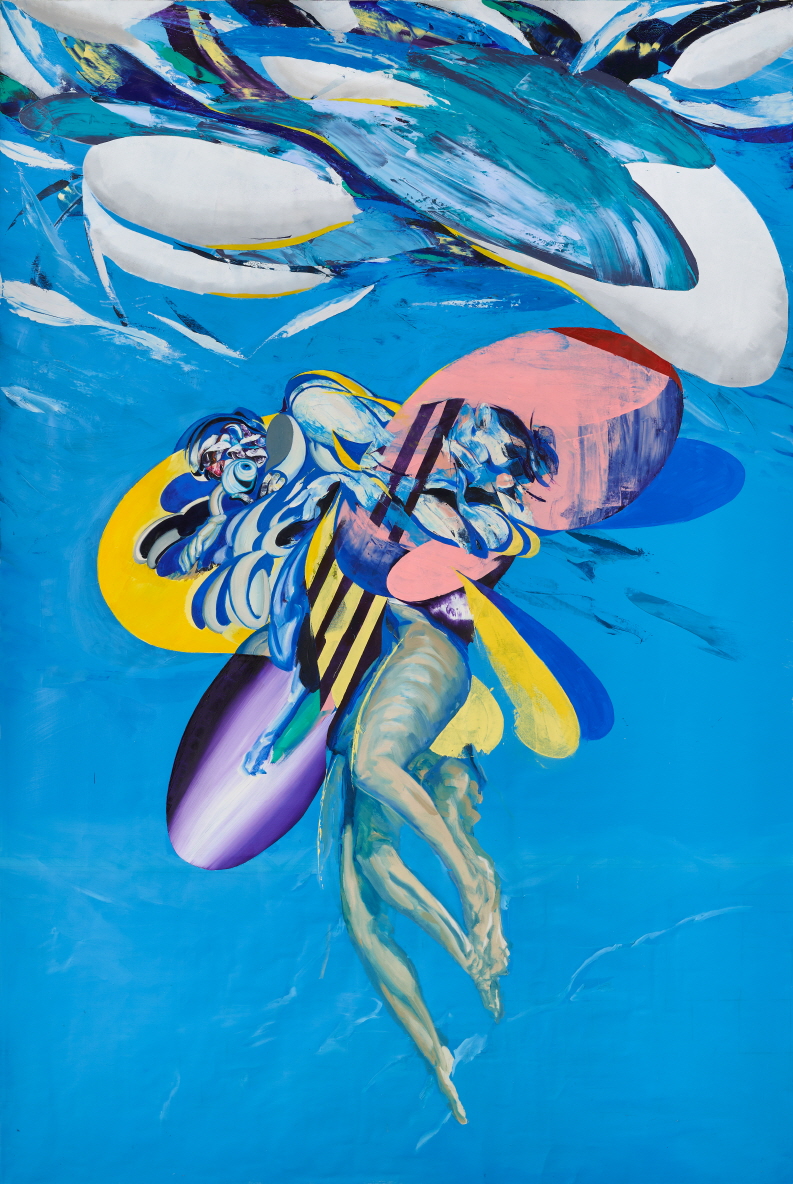
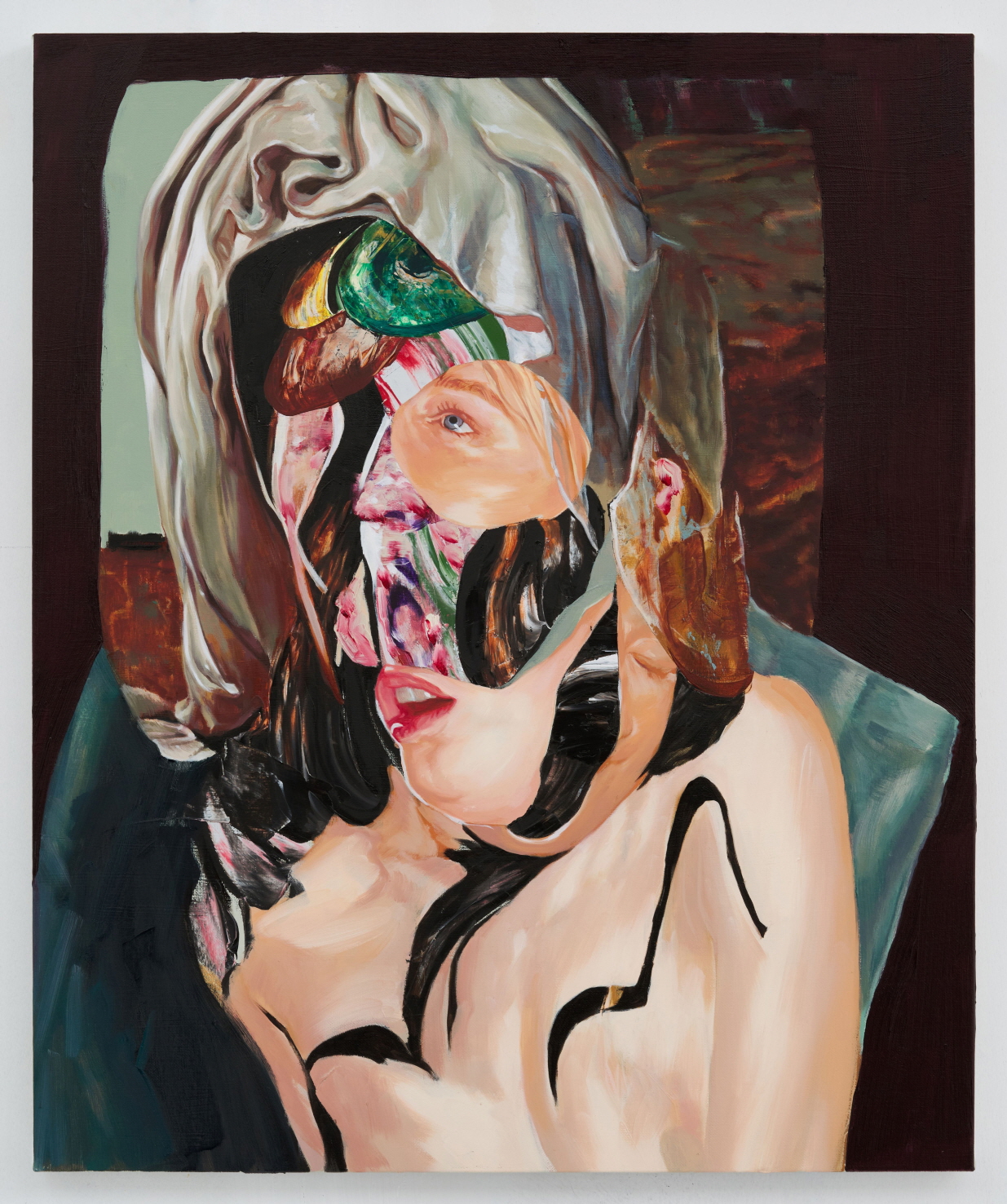
Park Jung Hyuk’s third painting series, ‘Park’s Land’, unfolds around the idea of “transformation.” When beginning this body of work, the artist was interested in exploring a sense of possibility, and transformation became the theme through which that notion could be articulated. Here, transformation does not refer to a simple shift from A to B, as in familiar mythic or cinematic narratives.
Instead, it encompasses a broader spectrum of states—what something could become, how roles shift according to circumstance, and the latent conditions inherent within a subject.
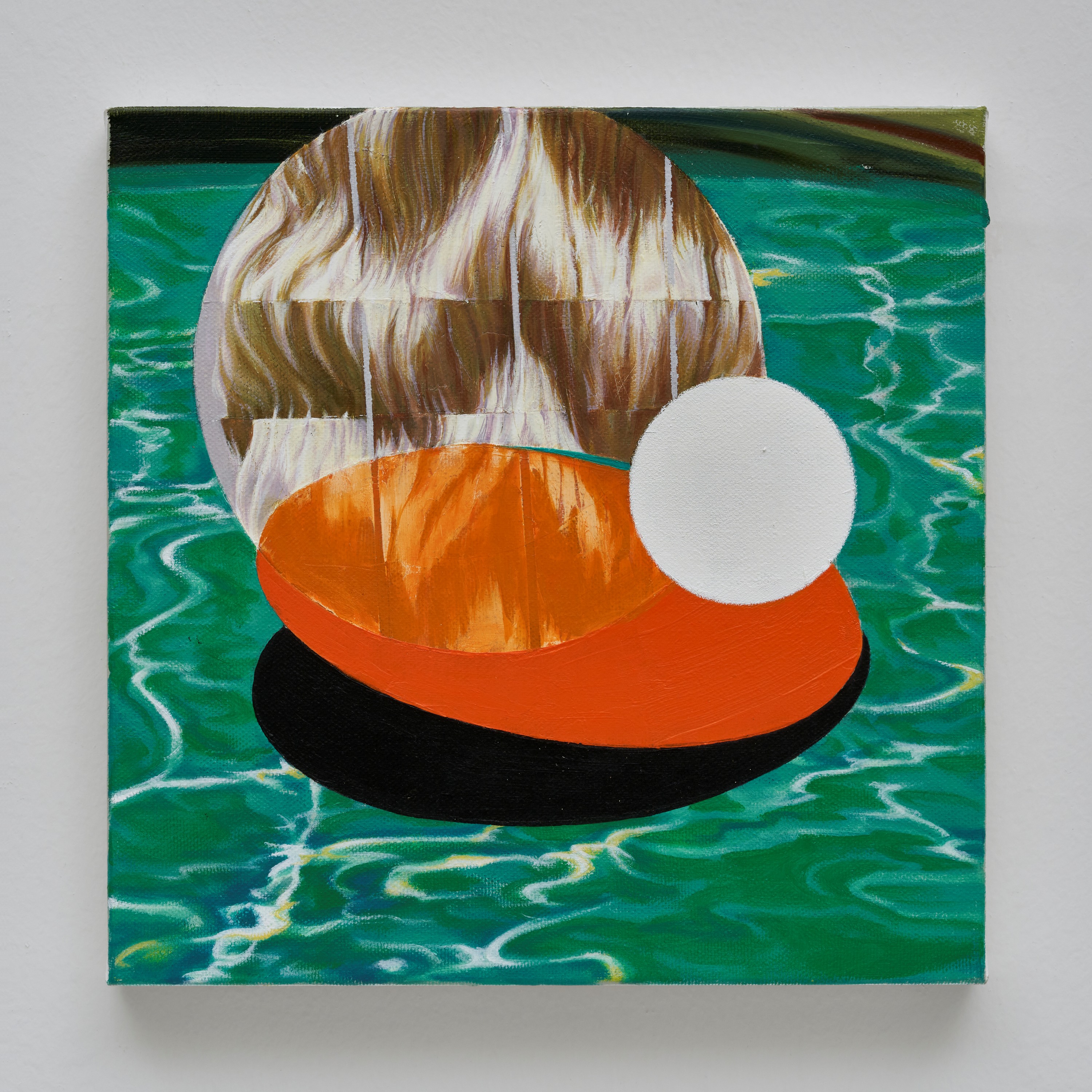
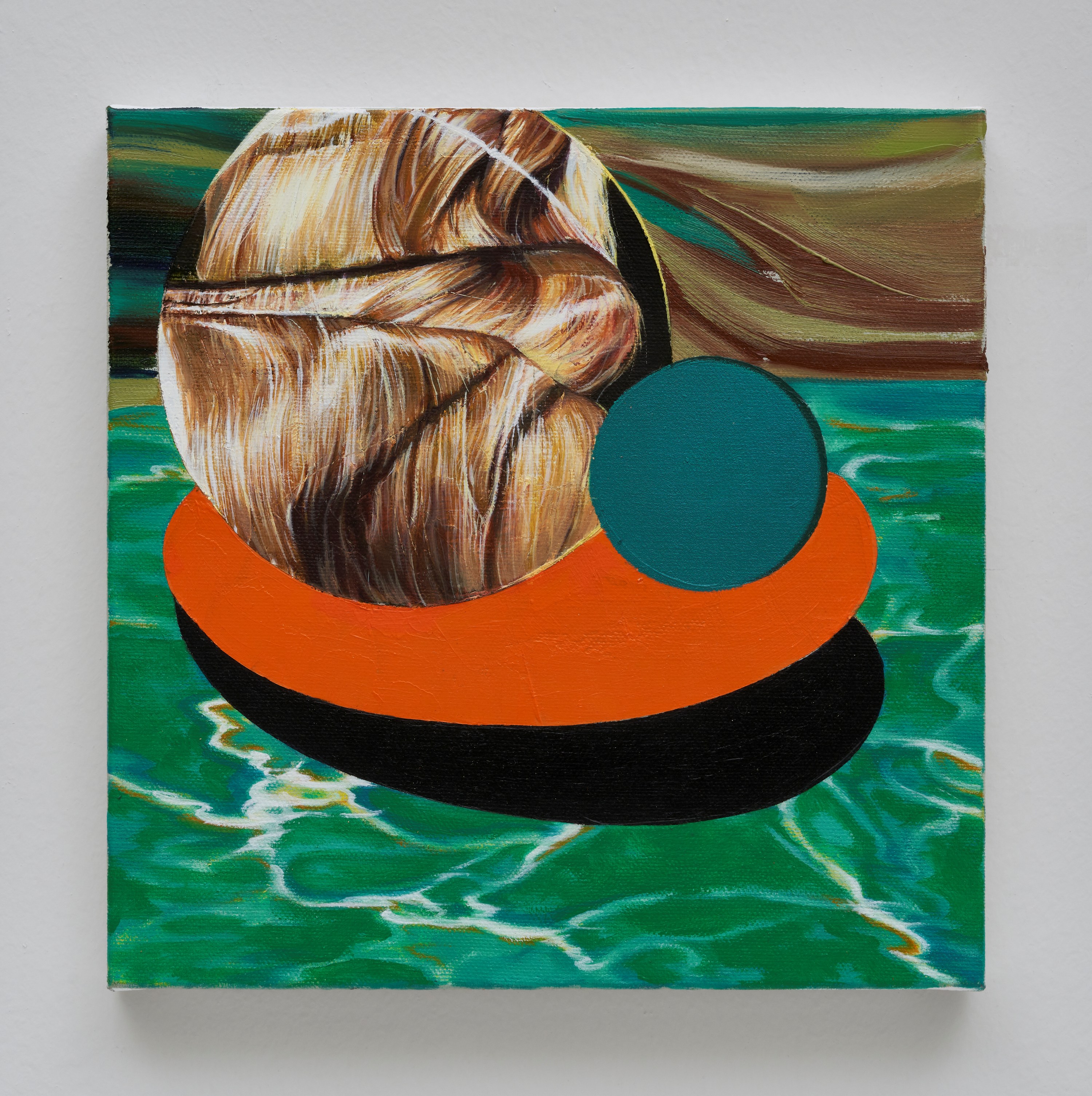
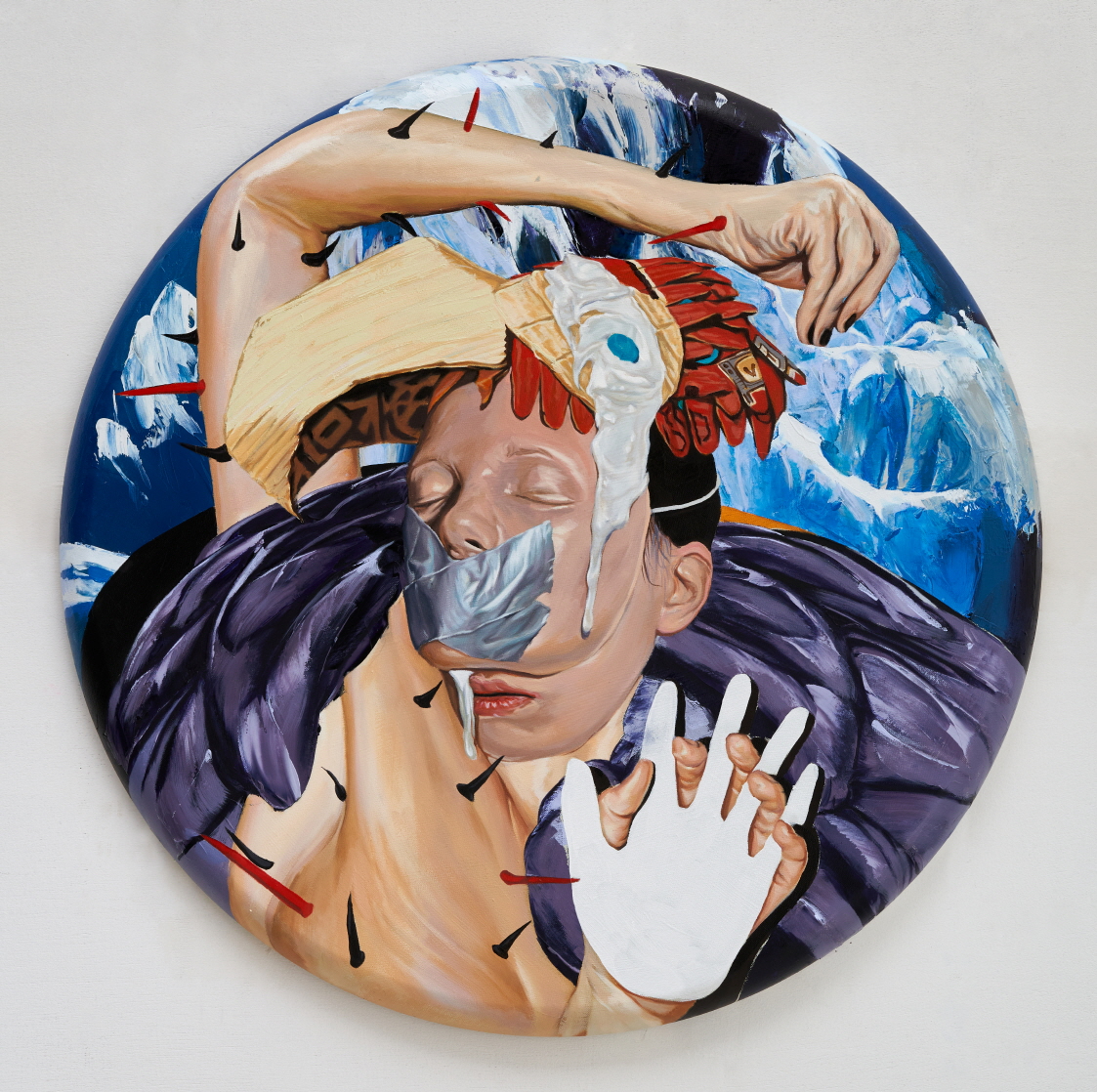
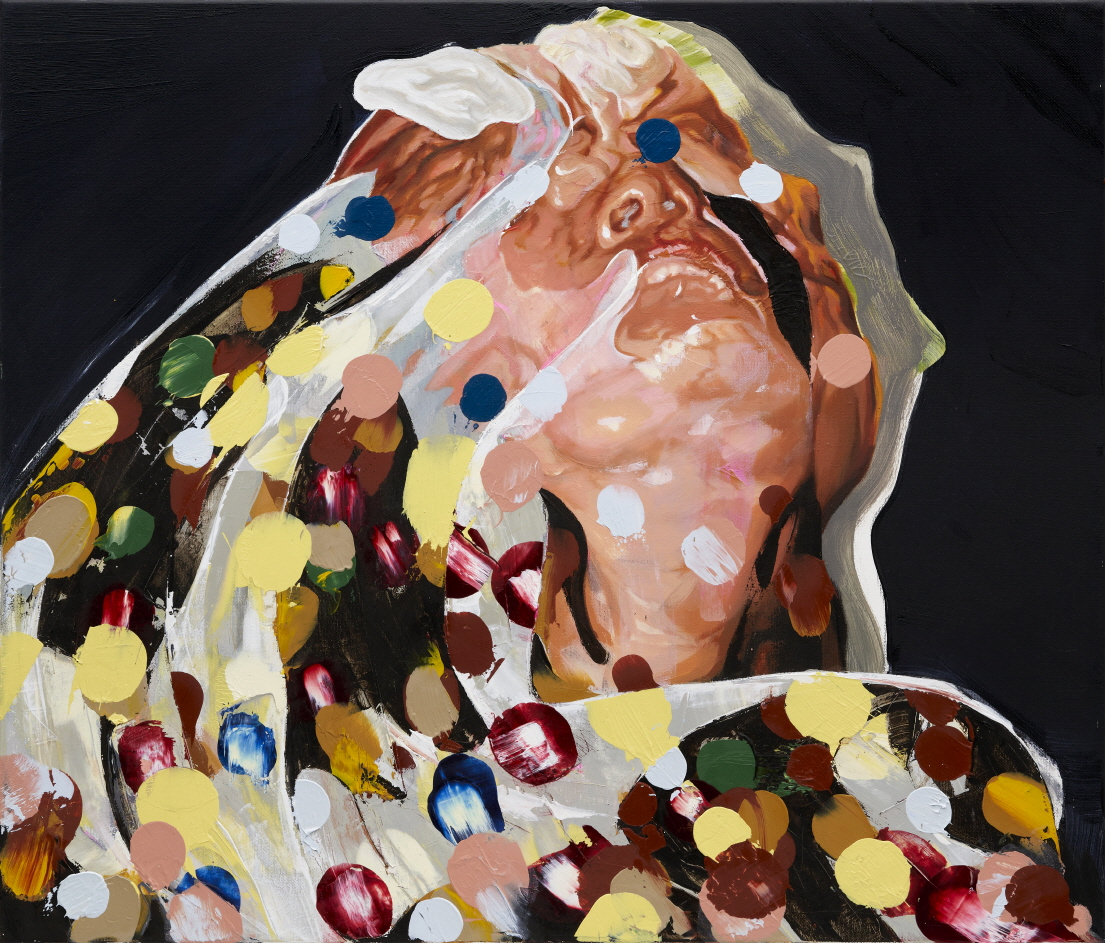
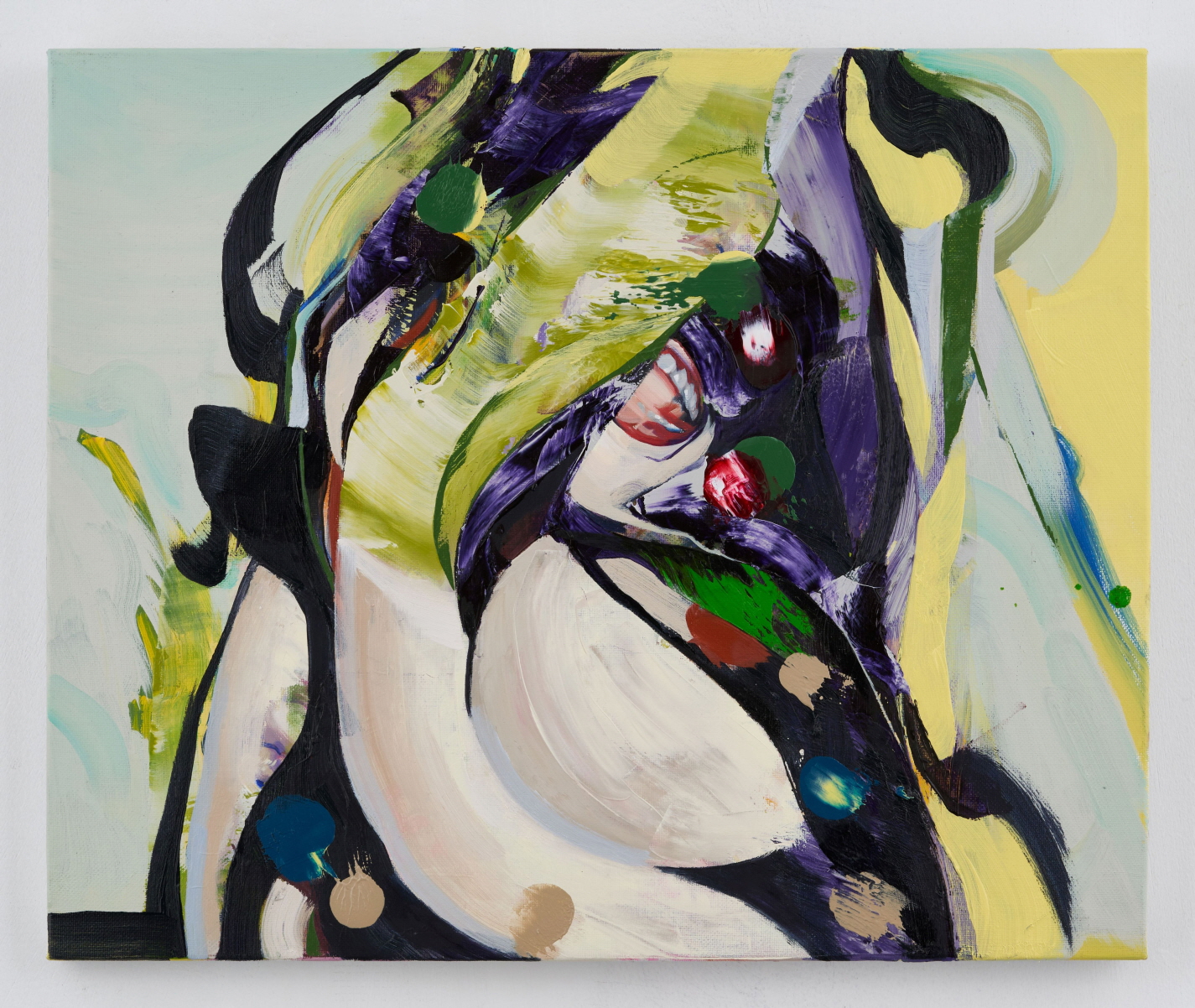
Figures and forms in the paintings appear structurally dismantled, blurred, or distorted through layered brushwork. These visual disruptions are less about depicting physical change and more about revealing multiple potential states at once.
Ultimately, ‘Park’s Land’ considers the conditions that allow transformation to occur rather than the moment of change itself. Through overlapping imagery and fluid gestures, the series presents a world defined not by what is changing, but by what can change—an expanded terrain for the artist’s ongoing exploration of painterly imagination.