Park's Land 20
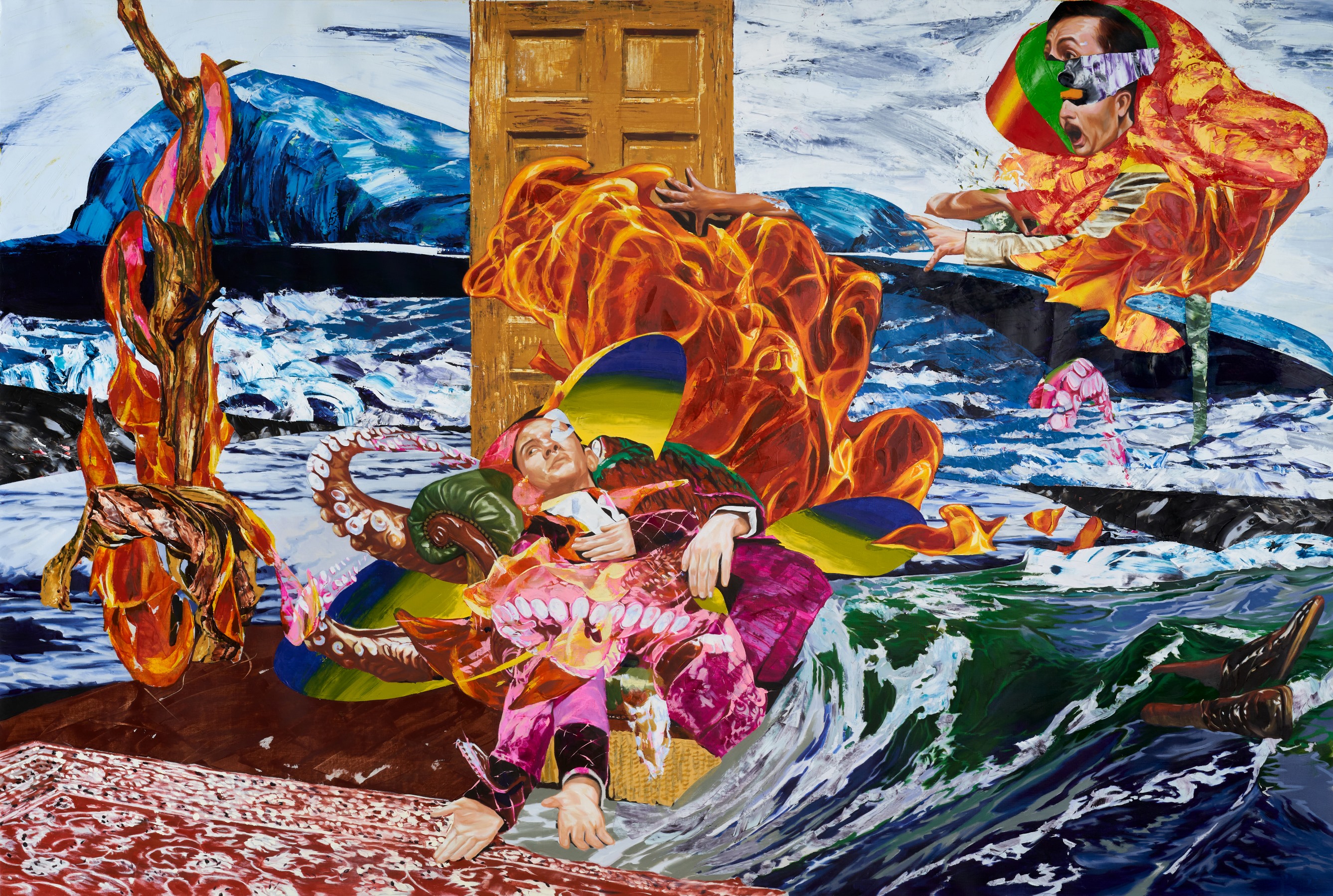
2022 Oil on canvas 45.5 x 37.9 cm
Provenance
Private Collection, 2026
Exhibitions
2023《When Ero·Gro·Nonsense Combines Nonlinearly》, Arting Gallery, Seoul
2022《ART BUY》, Hyundai Department Store (Mokdong), Seoul
About The Work
This work symbolizes that desire does not exist in a singular form by dismantling a single face and overlaying two identities. As different expressions and emotions are superimposed within one frame, the process through which memory, experience, and unspoken emotions flow onto the surface of the face through the medium of tears is revealed.
The surrounding flames operate as both destruction and transformative energy, appearing as a force that simultaneously dissolves the face and propels it toward another state of being. Tears, severed surfaces, and black lines that seem to be pulled in from the outside inscribe traces of emotions and events onto the body, visualizing the impossibility of identity ever reaching completion.
Through this work, I seek to understand the face not as evidence of identity, but as an incomplete surface through which different emotions and events pass within a single body. Existence does not fix itself in a single moment; it continues to move toward other states through fragmentation and transformation.
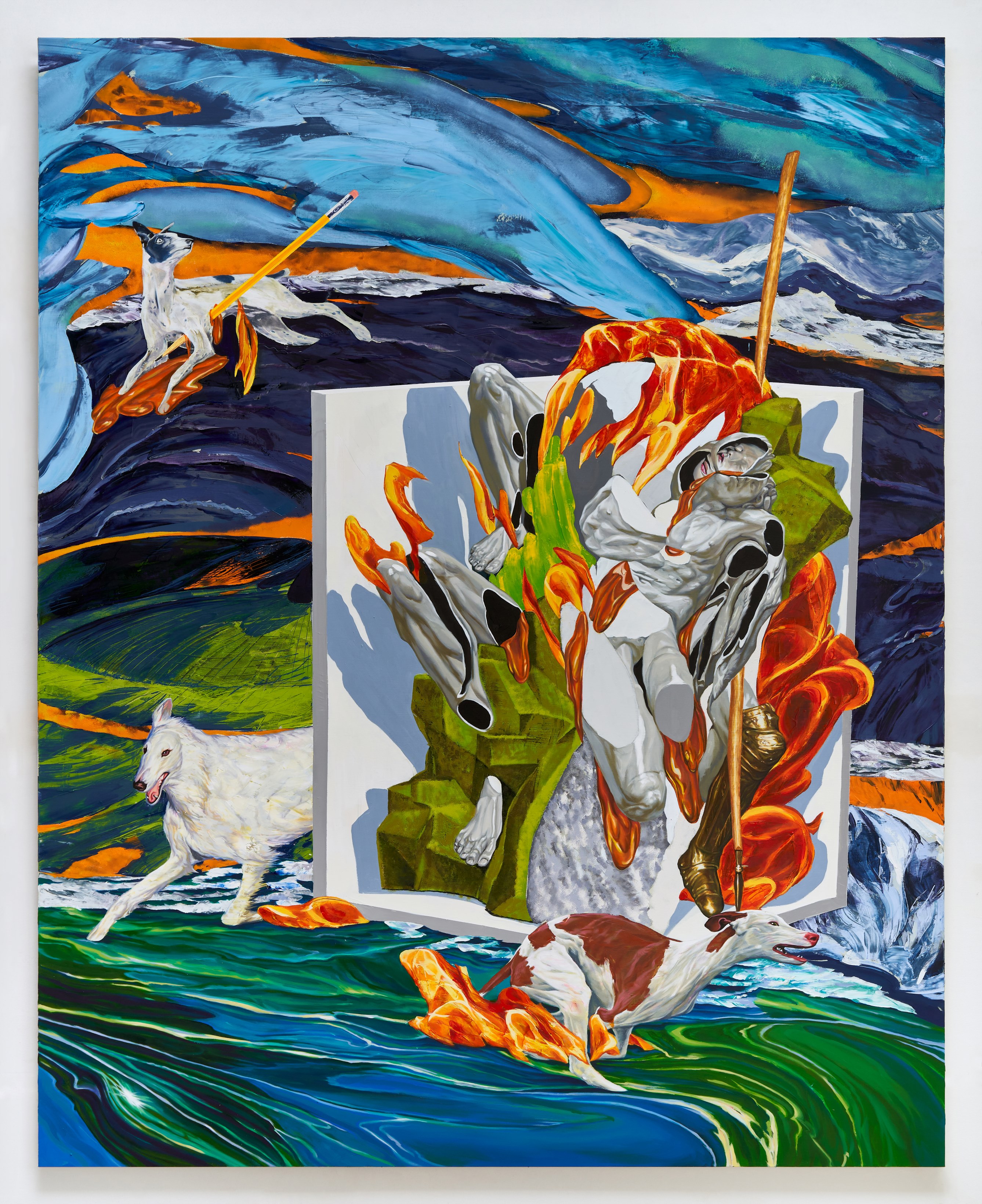
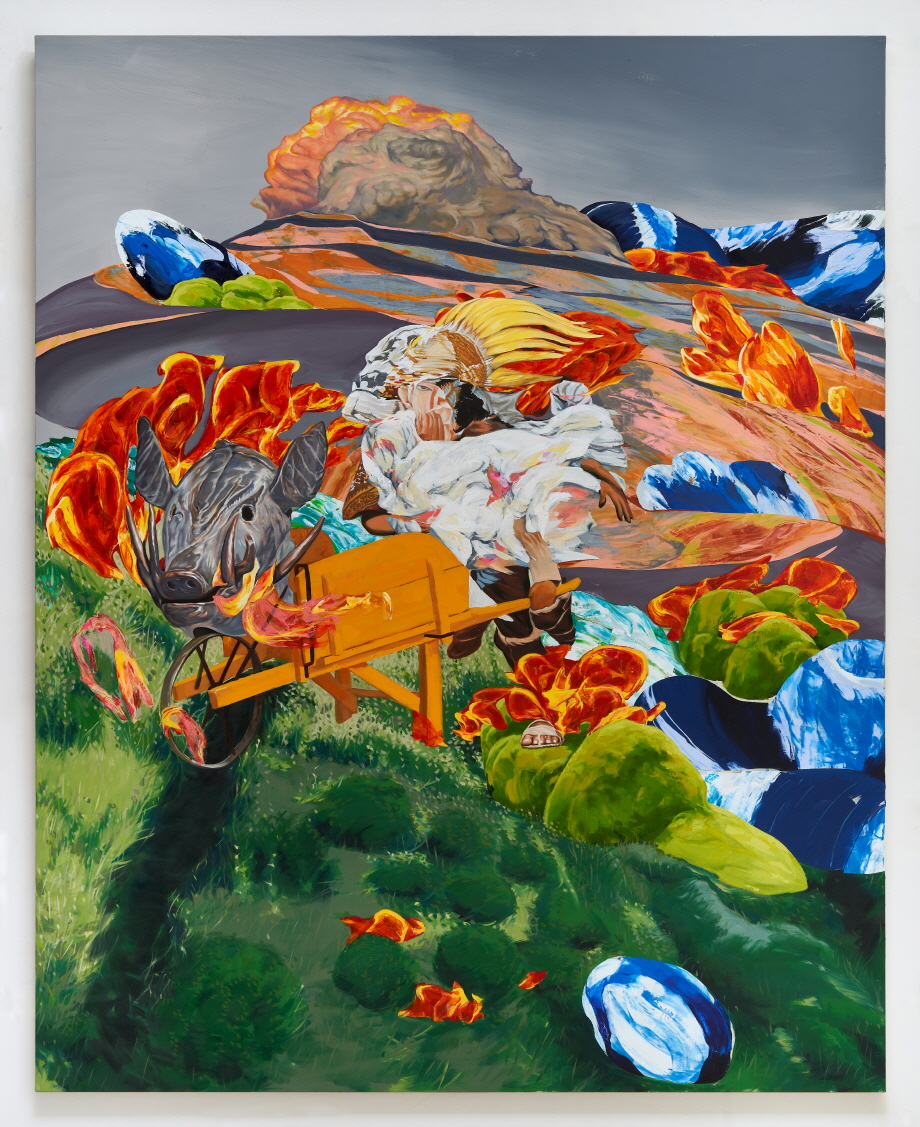
Park Jung Hyuk’s third painting series, ‘Park’s Land’, unfolds around the idea of “transformation.” When beginning this body of work, the artist was interested in exploring a sense of possibility, and transformation became the theme through which that notion could be articulated. Here, transformation does not refer to a simple shift from A to B, as in familiar mythic or cinematic narratives.
Instead, it encompasses a broader spectrum of states—what something could become, how roles shift according to circumstance, and the latent conditions inherent within a subject.
Figures and forms in the paintings appear structurally dismantled, blurred, or distorted through layered brushwork. These visual disruptions are less about depicting physical change and more about revealing multiple potential states at once.
Ultimately, ‘Park’s Land’ considers the conditions that allow transformation to occur rather than the moment of change itself. Through overlapping imagery and fluid gestures, the series presents a world defined not by what is changing, but by what can change—an expanded terrain for the artist’s ongoing exploration of painterly imagination.