Same=Different
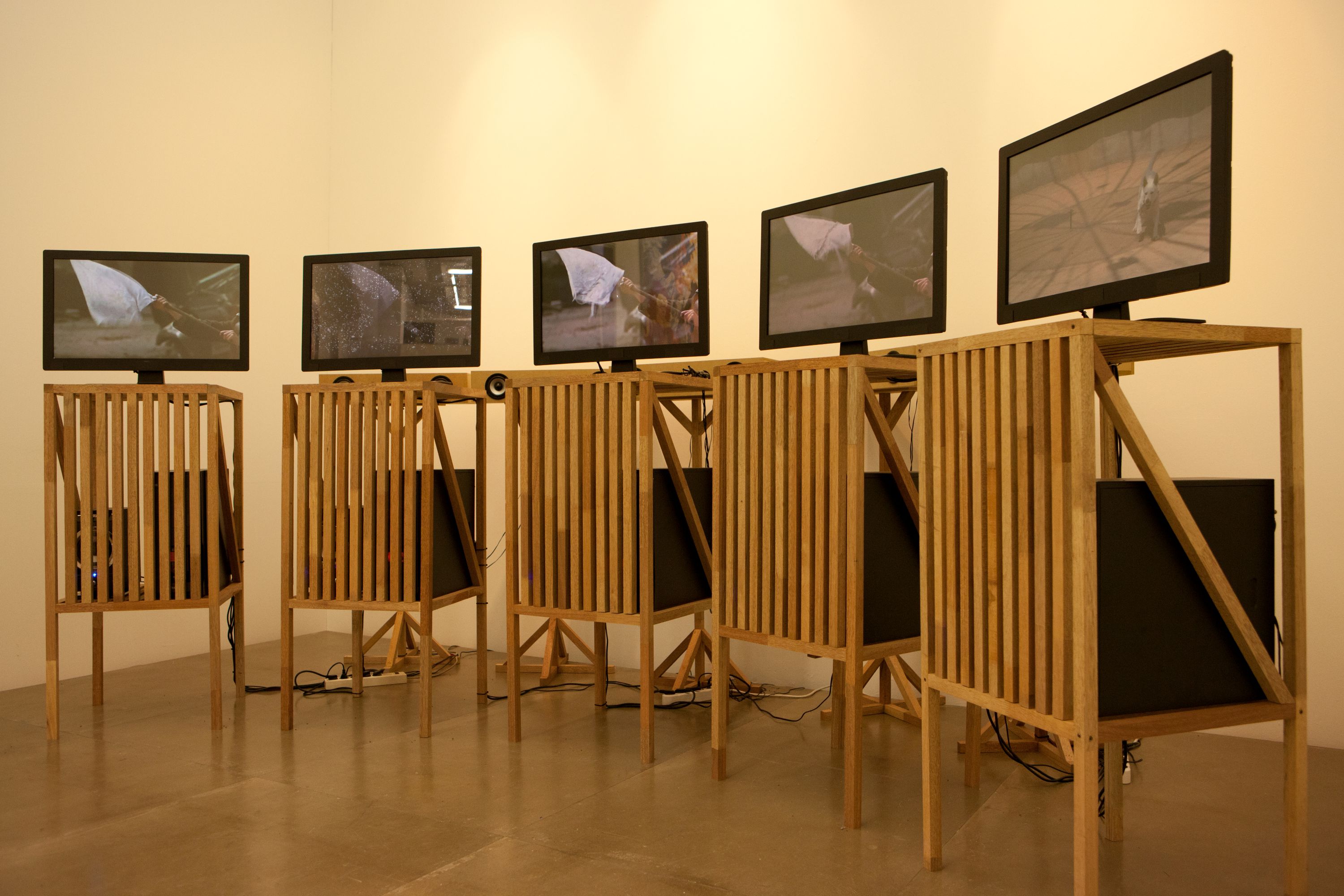
2020 Single-channel video 8min 7sec
Provenance
Artist Collection, 2026
Exhibitions
2021 《The Moment of ㄱ》, Chosun Ilbo 100th Anniversary Special Exhibition, Seoul Arts Center, Seoul
About The Work
“From the birth of the universe to the breath of humanity, Hangul renders a vast ecological panorama.”
This video is a media artwork by Park Jung Hyuk, presented in the special exhibition《The Moment of ㄱ》commemorating the 100th anniversary of The Chosun Ilbo. The artist approaches Hangul not as a mere instrument of record, but as a “living organism” that evolves fluidly according to its environment. Through the deconstruction and recombination of extensive found footage, he critically traces the contemporary value of Hangul.
■ Visual Narrative: Three Stages of Sensory Transition
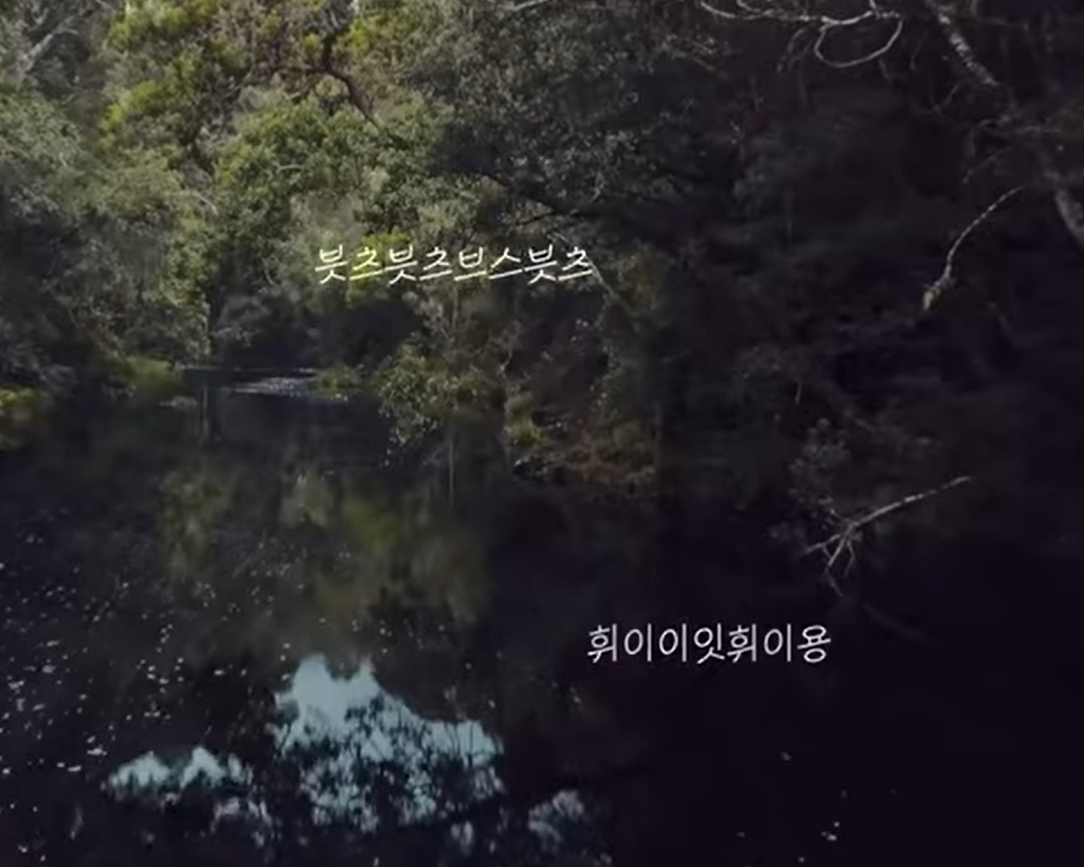
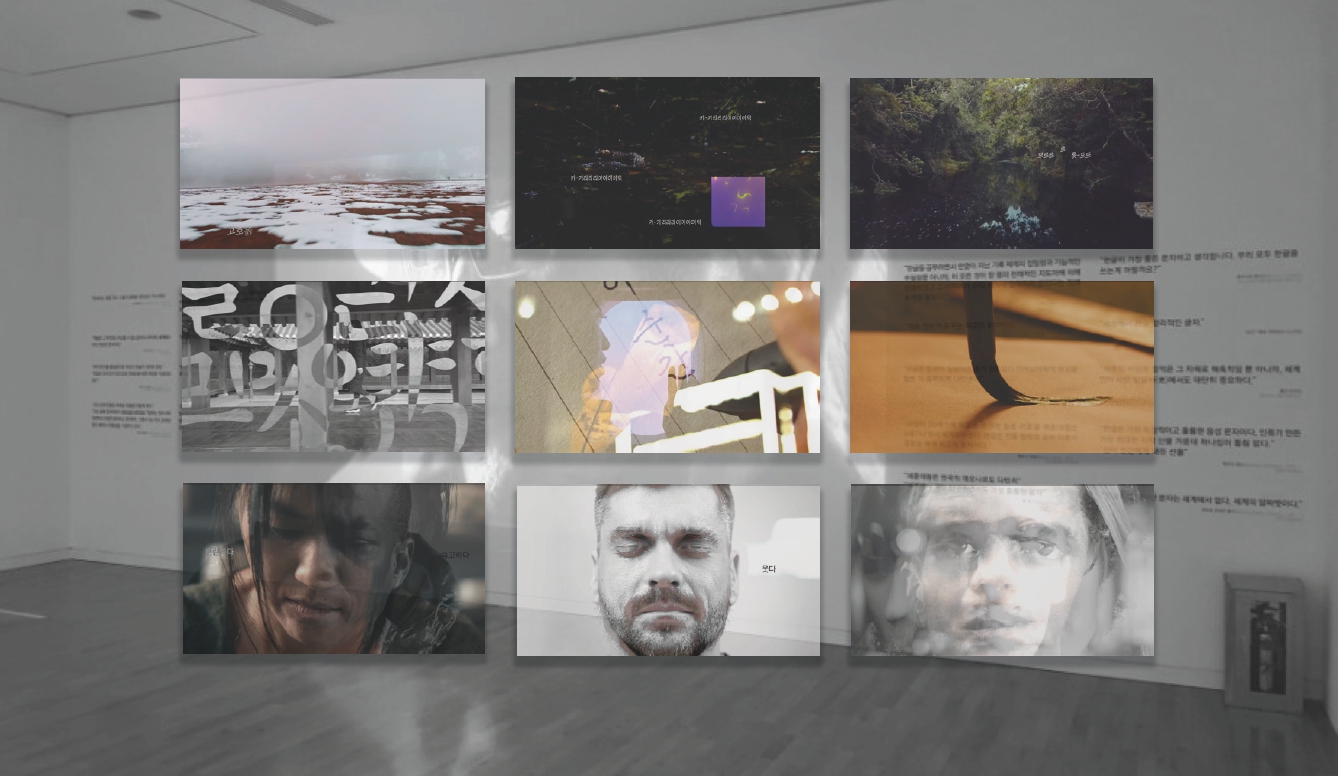
[Cosmic & Micro]: This sequence illustrates the transition from the formation of the vast cosmos to the activity of microscopic life forms. Over a soundscape in which the boundary between the virtual and the real collapses—featuring AI Alexa’s voice and the noise of drones—Hangul onomatopoeia appears as subtitles. In doing so, the work sensorially projects the condition of contemporary humanity confronted with an “essence without an original.”
[Interface & Culture]: Here, Hangul is captured as it drifts within digital networks and social media interfaces. Combined with the fervent energy of K-pop fandom, Hangul functions as the most powerful “cultural interface,” transcending nationality to convey fundamental human emotion.
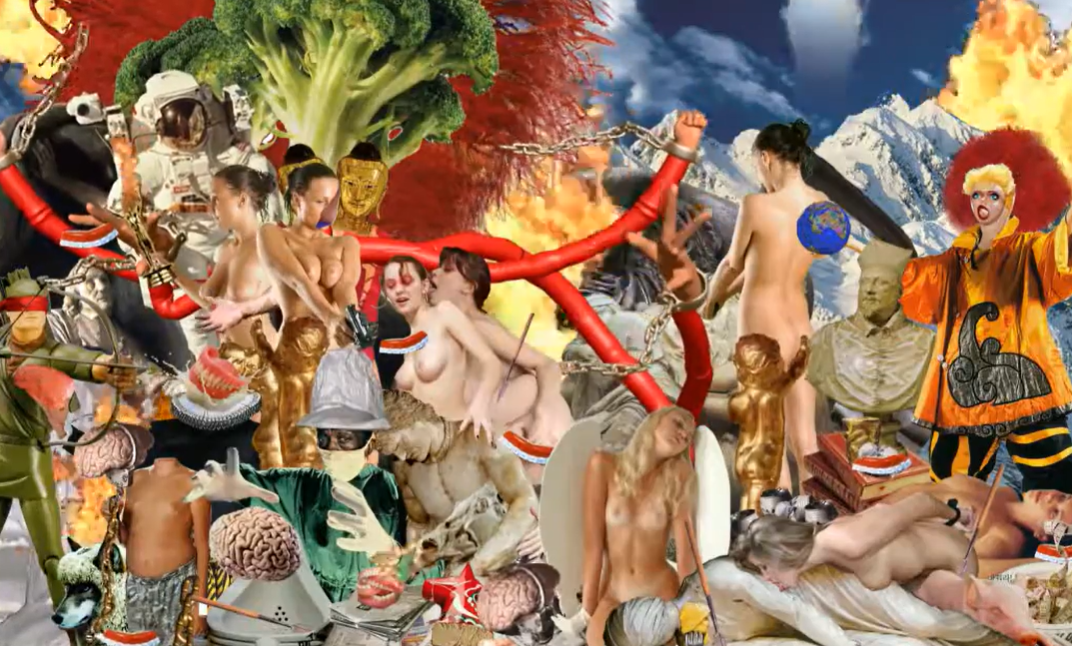
[Humanity & Unity]: The final sequence, in which faces of various genders and races continuously morph into one another, forms the climax of the work. Universal biological actions such as “to dream,” “to stand,” and “to walk” are overlaid as Hangul subtitles, declaring Hangul to be a universal instrument capable of restoring the primordial unity of humankind.
■ Director’s Critique (Curator’s Note)
Park Jung Hyuk’s Same=Different is a refined work that translates “Koi’s Law” into an artistic grammar. The artist demonstrates that as the environment surrounding Hangul expands from the local to the global—into the Digital Universe—its ontological scale likewise grows immense.
The dissonance between mechanical noise and natural sound that permeates the video is ultimately granted harmonious order through Hangul as a “flexible language.” The work emerges from the convergence of the artist’s warm gaze upon the world and his incisive media-driven insight.
Same=Different, 2020, Single-channel video, 8min 7sec ©Artist
[Artist Note]
This work uses the phonetic and cosmological principles of Hangul’s invention, and its process of development into a global writing system through discrimination, contempt, hardship, and overcoming since its creation in the fifteenth century, together with Koi’s Law, which states that the size of an individual is determined by its environment, to show—through a found-footage technique—why Hangul has come to be positioned within global culture at this moment.
I think that the spatial world and the temporal age share a moment when we choose to pay attention to them. Showing the present condition of Hangul, which I use unconsciously like breathing, is, I believe, a way of showing the contemporaneity of Hangul.

Same=Different, 2020, Single-channel video, 8min 7sec ©Artist
The video work Same=Different consists of three sections. #Same begins with the birth of our galaxy from distant outer space and then shows images of a forest ecosystem that seems to exist somewhere.
Sounds and images that recall an ordinary jungle appear, and gradually, images like a micro-universe of various groups of living beings within microscopic environments are shown. At the moment when this structure becomes visible, mechanical sounds are increasingly mixed in (such as Google-based AI voices like Alex, mobile phone alarm sounds imitating birds, and drone sounds similar to hummingbirds flying through space). This expresses the situation surrounding us now, in which environments of mixed essence exist and it is impossible to know what the original is.

Same=Different, 2020, Single-channel video, 8min 7sec ©Artist
On the screen, onomatopoeic words that describe each sound appear as Hangul subtitles.
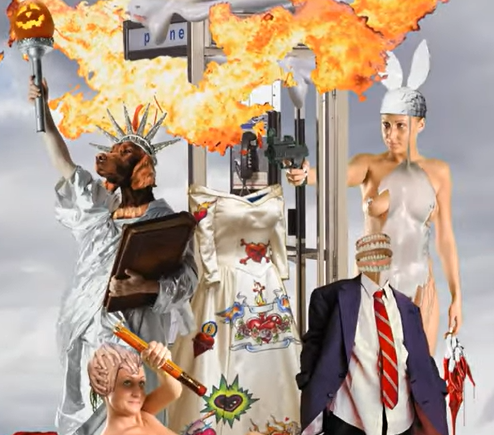
The second section, #Different, sequentially shows scenes that contain the structured phenomena of how Hangul, which has entered deeply into our environment like breathing, is used, found through internet networks such as YouTube, Instagram, and Facebook. It shows how Hangul already exists as something embodied as a culture together with K-pop.
Just as breathing is a basic human action, Hangul, chosen as a way to express the natural human emotion of liking something regardless of nationality within ARMY fandoms, expresses human sameness beyond form. At the same time, it shows Hangul acting like a thread that connects fundamental human sensibilities.

Same=Different, 2020, Single-channel video, 8min 7sec ©Artist
The third section, #Same=Different, shows symbolic humans that encompass gender, age, nationality, and race in biological forms. Texts that represent common human biological states such as “to dream, to breathe, to be angry, to listen, to see, to think, to stand, to walk…” appear as Hangul subtitles over morphing images of humans of different races, ages, and genders.

Same=Different, 2020, Single-channel video, 8min 7sec ©Artist
This means that all humans are beings who share biological sameness and essential, original emotions. It also seeks to show that Hangul is without doubt the most accurate expression and means for restoring human nature.